
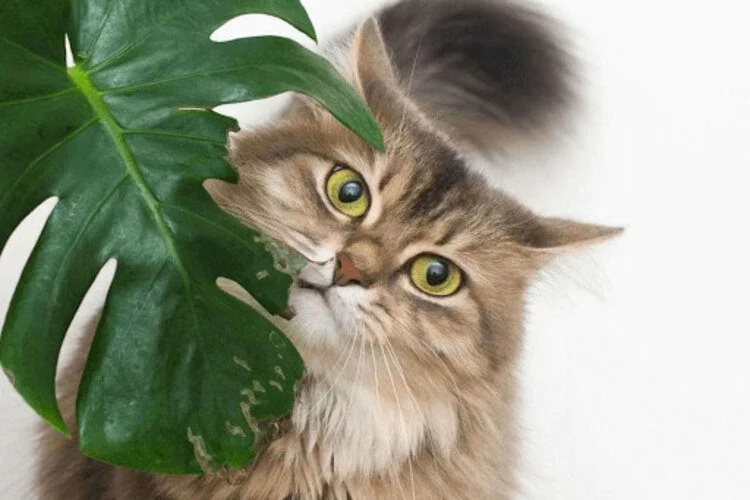
Yes. Monstera plants such as Monstera deliciosa are toxic to cats. The ASPCA identifies insoluble calcium oxalate crystals as the toxic principle. A cat that chews Monstera may develop mouth pain, drooling, vomiting or difficulty swallowing. See the ASPCA listing for Swiss cheese plant (Monstera deliciosa).
If your cat has chewed a Monstera, move the plant out of reach and contact your veterinarian or an animal poison-control service. Seek urgent care for breathing trouble, marked swelling, an inability to swallow or other severe signs. Do not rely on home remedies.
Why can Monstera hurt cats?
Monstera is a member of the Araceae family. Its leaves and stems contain tiny, insoluble calcium oxalate crystals. Chewing the plant releases these crystals and irritates tissues in the mouth and throat. The condition is not accurately described as a usually fatal allergy. Severe problems are possible, but many exposures cause localized pain and gastrointestinal upset rather than systemic poisoning. A veterinarian should assess your cat's specific exposure.
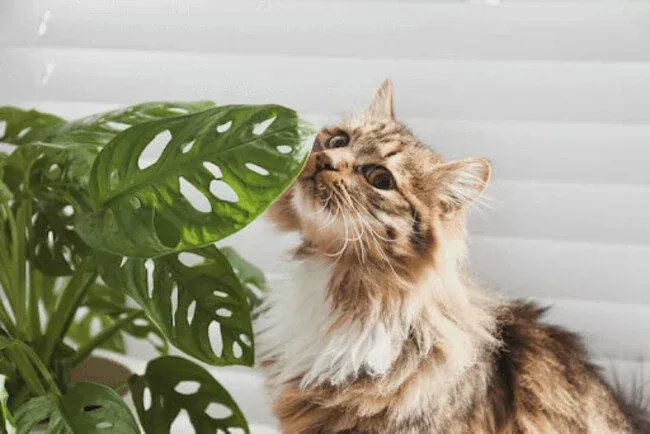
Symptoms to watch for
- Drooling, licking the lips or pawing at the mouth
- Apparent mouth pain, irritation or reluctance to eat
- Gagging, vomiting or difficulty swallowing
- Unusual swelling around the mouth or throat
- Breathing problems, which require immediate emergency care
The Pet Poison Helpline explains that insoluble-oxalate exposures often irritate the mouth and throat; severe swelling and breathing difficulties can occur in rare cases. The quantity eaten and the cat's condition matter.
What to do if your cat eats Monstera
- Prevent any more chewing and move the plant to a secure place.
- Keep a photograph or plant label and note the time and suspected amount consumed.
- Call a veterinarian or a pet poison-control center and report the plant, symptoms and your cat's approximate size. In the United States, the ASPCA Animal Poison Control Center can be reached at 888-426-4435; a consultation fee may apply.
- Do not induce vomiting, force fluids into your cat's mouth or give household remedies unless instructed by a veterinary professional.
- Seek emergency care immediately if your cat has breathing difficulty, pronounced swelling or trouble swallowing.
How to prevent Monstera chewing
The most reliable prevention is physical separation. Keep Monstera in a closed room or an inaccessible growing space, pick up fallen leaves, and avoid trailing vines that cats can reach. Cats can climb furniture, so a high shelf is not necessarily secure. Provide appropriate alternatives such as pet-safe cat grass and environmental enrichment, but do not rely on deterrent sprays or essential oils as a safety barrier.
Frequently asked questions
Is Monstera deliciosa safe if my cat only brushes against a leaf?
The main concern described in the ASPCA toxicity listing is chewing or ingestion, which releases irritating crystals. Prevent access to damaged foliage and sap, and ask your veterinarian about any symptoms.
Can a cat die after chewing Monstera?
Severe reactions are not the typical outcome, but potentially serious mouth or throat swelling can occur. Do not assume an exposure is either harmless or fatal; seek veterinary advice, particularly with breathing or swallowing difficulties.
Is a split-leaf philodendron the same plant?
Common names are confusing. Monstera deliciosa is sometimes called split-leaf philodendron but is classified in the genus Monstera. Use the botanical name to check toxicology references for your actual plant.
Sources: ASPCA — Swiss Cheese Plant; Pet Poison Helpline — Insoluble Oxalates.