
Independent gardening guides. Some links earn us a commission at no cost to you. Read our affiliate disclosure
Newsletter
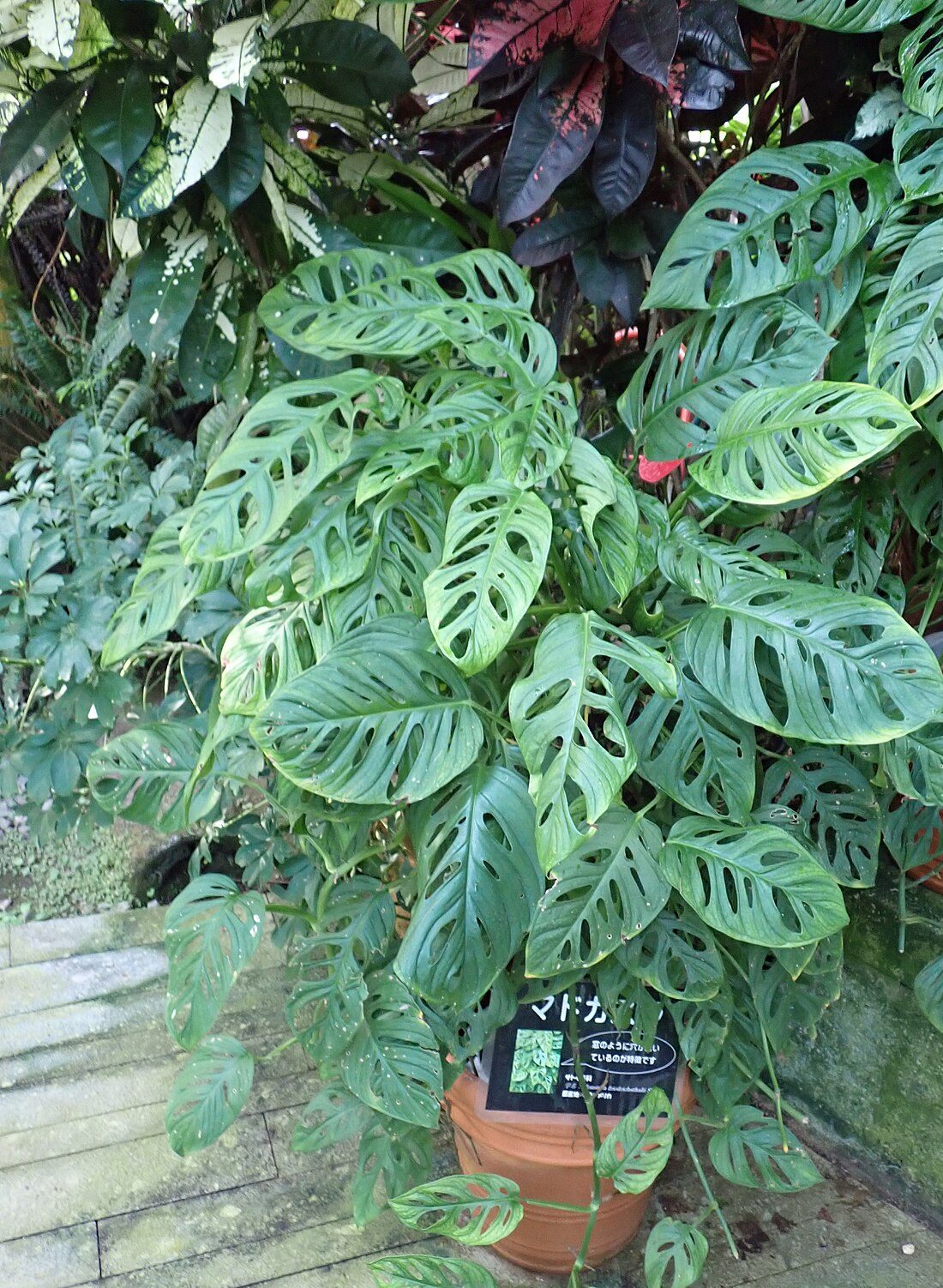
Swiss cheese vine (Monstera adansonii)

Photo: M108t, CC BY 4.0 via Wikimedia Commons

Swiss cheese vine

Monstera adansonii · Araceae

Also known as: Swiss cheese vine, Swiss cheese plant, Adanson's monstera, Five hole plant, Cheese plant, Monstera pertusa

A fast climbing or trailing vine with oval holes in heart-shaped leaves. It wants bright indirect light, humidity and a mix that drains well.

Light
Bright indirect light
Care level
Moderate
Where it grows
Indoors, Outdoors in warm climates
Cats and dogs
Toxic to pets Source (opens in a new tab)

NC State Extension's species page for Monstera adansonii says the plant is toxic to humans and pets if ingested and lists it as a problem for cats and dogs, with low poison severity from calcium oxalate crystals. The symptoms it lists (in its human-poisoning entry) are inflammation of the mouth, throat, eyes and digestive tract, vomiting, drooling and loss of appetite; the sap can irritate skin. ASPCA's "Swiss Cheese Plant" page covers Monstera deliciosa, not this species. If a pet chews this plant, contact your vet or an animal poison control service.

View My Garden

Check a problem with this plant

How to identify it

Monstera adansonii is an accepted species of climbing aroid (GBIF) from the tropical rainforests of Mexico, Central America and South America (NC State Extension). Its heart-shaped, glossy leaves carry oval holes between the main veins (RHS). NC State notes it is often confused with Monstera deliciosa, a larger plant with bigger leaves.

Not the same as Monstera obliqua. Both names are accepted, separate species (GBIF), and botanists note that perforated forms of M. obliqua can be confused with M. adansonii (Croat et al. 2024). The RHS describes true M. obliqua as rare, compact and slow-growing, taking 10 to 20 years to mature, so check a plant labelled "obliqua" carefully. The 2024 revision also recognises subspecies, including subsp. laniata (Croat et al. 2024); see Monstera Laniata care.

Light

Give it bright, indirect light. NC State Extension and the RHS both recommend this, and NC State warns that direct sun can scorch the leaves, so keep it out of strong direct sun.

In too little light, houseplants tend to grow pale and spindly or drop leaves (Iowa State Extension). If the vine looks stretched and thin, move it closer to a bright window while still avoiding direct sun. For placement ideas and grow lights, see Monstera light requirements.

Potting mix and drainage

Use a pot with a drainage hole and a peat-free, loam-based potting mix, as the RHS suggests. NC State Extension recommends moist, well-drained soil with a slightly acidic pH. Skip the gravel layer at the bottom: Iowa State Extension notes it creates a wetter zone that encourages root rot.

Decide whether it will climb or trail. NC State recommends a stake, trellis or moss pole if you want it to climb, and the RHS lists hanging baskets as another use. When repotting, move up only one or two pot sizes (Iowa State Extension).

When to water

Check before you water. NC State Extension wants the mix moist but well drained and warns that overwatering can cause root rot. A simple check from Iowa State Extension for houseplants: if the mix feels dry about an inch down, it is time to water. If it is still damp, wait.

Water thoroughly, let the excess drain away and never leave the pot standing in water (Iowa State). The RHS advises watering more sparingly in winter. See How to water Monstera.

Humidity and temperature

NC State Extension says it prefers warm, humid conditions and suggests a humidifier or a tray of wet pebbles under the pot. Keep it away from cold drafts and from temperatures below 50°F (NC State). The RHS rates it H1B: it can be grown outside in summer, with 10 to 15°C given as the minimum.

Iowa State Extension notes that misting does not meaningfully raise humidity and can spread disease; grouping plants helps. NC State lists it as hardy in USDA zones 10a to 12b. See Monstera humidity.

Feeding

Feed only while the vine is actively growing, from spring into autumn, and cut back in winter (Iowa State Extension). The RHS suggests a balanced liquid fertiliser during the growing season. Whichever product you choose, follow the product label rate.

After repotting, Iowa State suggests waiting about 2 to 4 weeks before regular feeding resumes. More detail: How to fertilize Monstera.

Propagation

NC State Extension recommends stem cuttings. The RHS lists tip or leaf cuttings with bottom heat in summer, layering in autumn, and seed sown as soon as it is ripe. NC State lists the growth rate as rapid, so a long stem trimmed for shape can supply cutting material.

Wear gloves when handling cuttings, since NC State notes the sap can irritate skin. For rooting steps, see How to propagate Monstera and Can Monstera grow in water?

Growth and size

A fast-growing vine that climbs with aerial roots when supported or trails when it is not (NC State Extension, RHS). Indoors on a trellis or moss pole it typically reaches about 3 to 8 feet tall and 1 to 3 feet wide; outdoors it can reach 10 to 13 feet (NC State).

Houseplant leaves are usually over 6 inches wide but smaller than those of wild plants (NC State); wild adult blades reach 23 to 65 cm long, and juvenile leaves may have no holes at all (Croat et al. 2024). See Monstera in the wild and How to prune Monstera.

Warning signs

  • Yellowing leaves and a wet mix: overwatering can cause root rot (NC State Extension). Check the mix and drainage, and let the top inch dry before watering again. See yellow Monstera leaves.
  • Scorched patches: direct sun can scorch the leaves (NC State). Check the light, then move it to bright, indirect light. See brown spots on Monstera.
  • Spots or a powdery coating: possible causes NC State lists include leaf spots, rust, powdery mildew and blight. Keep water off the leaves and improve air movement. See black spots on Monstera.
  • Insects on leaves or stems: NC State lists spider mites, mealybugs, aphids, whiteflies and scale. Check leaf undersides, isolate the plant and use a product labelled for the pest, following the label. See scale on Monstera.

Related guides

Sources

  1. NC State Extension Gardener Plant Toolbox: Monstera adansonii (checked October 11, 2026)
  2. Royal Horticultural Society: Monstera adansonii (checked October 11, 2026)
  3. Royal Horticultural Society: Monstera obliqua (checked October 11, 2026)
  4. Plazi TreatmentBank (Croat, Cedeño-Fonseca & Ortiz (2024), Revision of Monstera of Central America, Phytotaxa 656(1)): Monstera adansonii Schott treatment (checked October 11, 2026)
  5. Plazi TreatmentBank (Croat, Cedeño-Fonseca & Ortiz (2024), Revision of Monstera of Central America, Phytotaxa 656(1)): Monstera obliqua Miq. treatment (checked October 11, 2026)
  6. GBIF Backbone Taxonomy (species match API): Monstera adansonii Schott: ACCEPTED, SPECIES (checked October 11, 2026)
  7. GBIF Backbone Taxonomy (species match API): Monstera obliqua Miq.: ACCEPTED, SPECIES (checked October 11, 2026)
  8. Iowa State University Extension and Outreach: How to Care for Houseplants (checked October 11, 2026)

Last reviewed