
Independent gardening guides. Some links earn us a commission at no cost to you. Read our affiliate disclosure
Newsletter
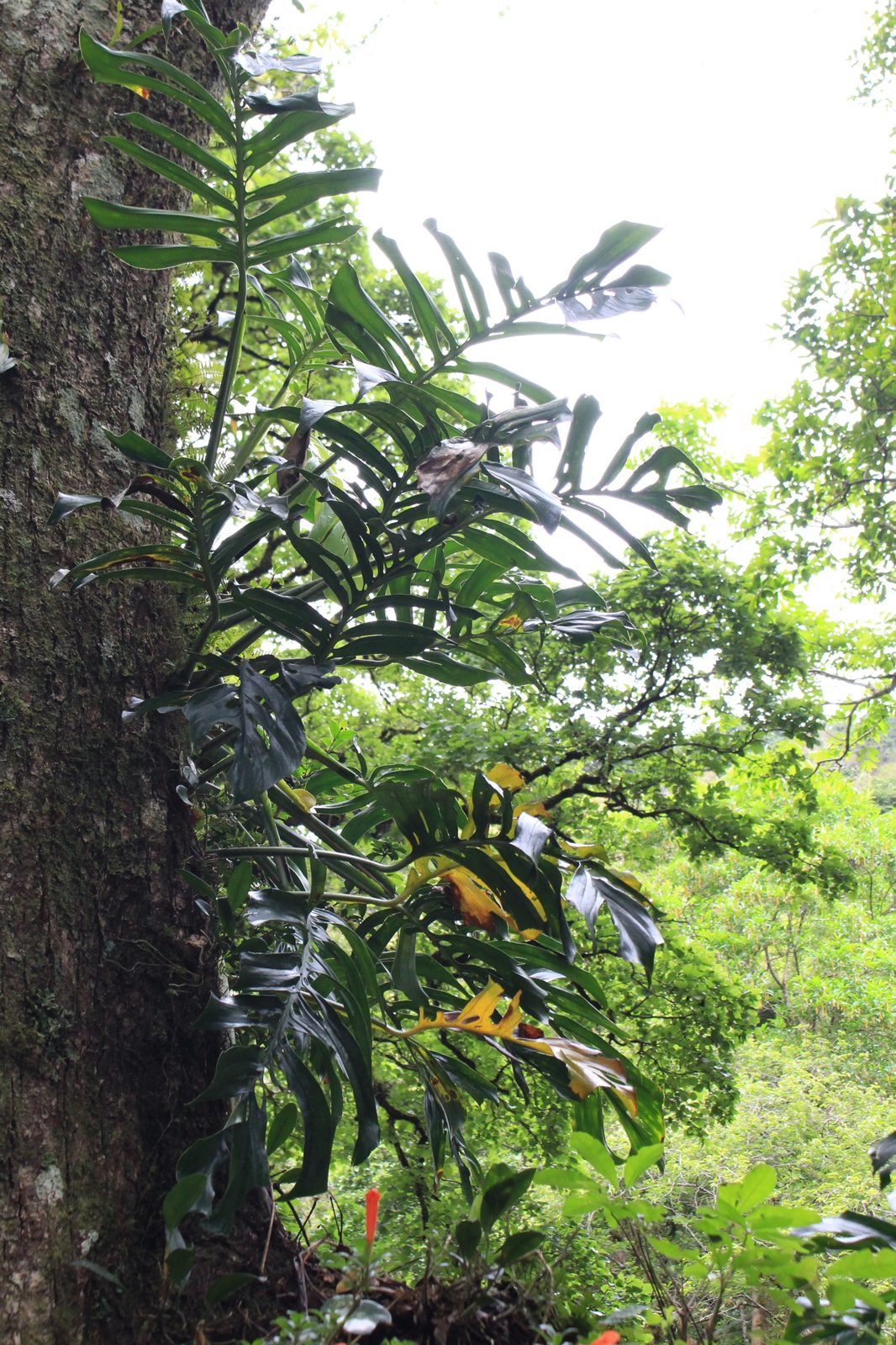
Monstera epipremnoides (Monstera epipremnoides)

Photo: Jacob Rehage, CC0 via Wikimedia Commons

Monstera epipremnoides

Monstera epipremnoides · Araceae

Also known as: Monstera epipremnoides Engl., Swiss cheese plant, Esqueleto (trade name; identity disputed)

A rare climbing Monstera from Costa Rica and Panama with deeply cut, holey leaves. It wants bright indirect light, high humidity and steady warmth.

Light
Bright indirect light
Care level
Needs experience
Where it grows
Indoors, Outdoors in warm climates
Cats and dogs
Toxic to pets Source (opens in a new tab)

NC State Extension's species page for Monstera epipremnoides says the plant is toxic to both humans and pets if ingested and lists it as a problem for cats and dogs, with low poison severity from calcium oxalate crystals. The symptoms it lists (in its human-poisoning entry) are mouth, throat and stomach irritation, inflammation, pain, swelling of the mouth, tongue and lips, drooling, vomiting and difficulty swallowing; the sap and leaves can irritate skin. If a pet chews this plant, contact your vet or an animal poison control service.

View My Garden

Check a problem with this plant

How to identify it

Monstera epipremnoides Engl. is an accepted species, described in 1905 (IPNI, GBIF). Wild plants grow in Costa Rica on both slopes of the Cordillera de Talamanca at 1200 to 2200 m, with one collection from Chiriquí, Panama (Croat et al. 2024). Adult leaves are leathery, 20 to 70 cm long, entire or deeply cut into 3 to 15 lobes per side, sometimes with holes on each side of the midrib. The leaf stalk is mottled or whitish and keeps a persistent sheath with open wings (Croat et al. 2024).

About 'Esqueleto'. Sources disagree. NC State Extension lists 'Esqueleto' as a cultivar of this species. The International Aroid Society's cultivar register lists Monstera sp. 'Esqueleto' as not yet formally described, with its base species unknown, and compares it with M. lechleriana. A plant sold as 'Esqueleto' may or may not be M. epipremnoides. See Monstera Esqueleto care.

Light

NC State Extension says this species prefers bright indirect light or dappled sunlight, and warns that direct sunlight will burn the leaves. In the wild it climbs trees under the forest canopy (NC State), in wet mountain forest in Costa Rica and western Panama (Croat et al. 2024).

Indoors, bright indirect light is bright enough to cast a distinct shadow, with no sun falling directly on the leaves (Iowa State Extension). Pale, spindly or slow growth, or dropping leaves, suggest too little light; bleached or damaged leaves, or leaves that yellow or brown and drop, can mean too much (Iowa State). See Monstera light requirements.

Potting mix and drainage

NC State Extension says it prefers a moist, well-drained soil rich in organic matter. Use a pot with a drainage hole: without one the mix stays wet and roots rot (Iowa State Extension). Skip the gravel layer at the bottom of the pot; Iowa State notes it creates a wetter zone that promotes root rot.

This is a clinging vine whose aerial roots fasten onto other structures (NC State), so give it a pole or plank to climb from the start. When repotting, move up only one or two pot sizes, ideally in late winter or early spring (Iowa State). See Best pots for Monstera.

When to water

NC State Extension says this species likes moist but well-drained soil, and recommends rainwater or filtered water. Check the mix rather than watering on a schedule: push a finger in, and if it feels dry about an inch down, water thoroughly until water runs out of the drainage hole (Iowa State Extension). If it still feels wet, wait and check again later.

Empty the saucer afterwards, because roots left standing in water rot (Iowa State). NC State notes that yellow leaves can mean either too much or too little water, so check the mix before changing anything. More detail: How to water Monstera.

Humidity and temperature

NC State Extension says this species prefers high humidity and temperatures between 65 and 80°F, and does not tolerate drafts. Keep it away from heating vents and doors that let in cold air (Iowa State Extension).

To raise humidity, NC State suggests a humidifier or a tray of pebbles covered with water under the pot. Keep the pot base above the water so the mix can drain (Iowa State). Iowa State adds that grouping plants helps, while misting does not raise humidity and can spread disease.

NC State lists it as hardy in USDA zones 9a to 11b. See Monstera humidity and Can Monstera live outside?

Feeding

NC State Extension's species page gives no feeding advice, so general houseplant guidance applies. Iowa State Extension advises feeding only while the plant is actively growing, roughly spring into late autumn, and cutting back during the winter rest. Use a fertilizer sold for houseplants and follow the product label rate.

After repotting, wait 2 to 4 weeks before regular feeding resumes, because most potting mixes already contain a little fertilizer (Iowa State). More detail: How to fertilize Monstera.

Propagation

NC State Extension says this species can be propagated by stem cuttings. NC State's propagation handbook explains that with many trailing vines each node on a stem can be treated as a cutting: a leaf, its stalk and a short piece of stem with an attached bud. Cuttings from healthy plants work best, and cuttings from struggling plants may not root (NC State).

Wear gloves when you cut, because NC State says the sap and leaves can irritate skin. For rooting in water or mix, see How to propagate Monstera. If you share cuttings from a plant bought as 'Esqueleto', pass on the original label, since its identity is disputed.

Growth and size

A robust, root-climbing vine (Croat et al. 2024). NC State Extension says it climbs trees up to 13 feet in the wild and typically reaches 6 to 8 feet as a houseplant; pinching off stem tips helps control its growth. Juvenile leaves are small, 13 to 17 cm long, and stand away from the support; they may have no holes, or holes mostly on one side (Croat et al. 2024).

Adult leaves reach 20 to 70 cm long and up to 40 cm wide, and can be deeply cut into 3 to 15 lobes per side (Croat et al. 2024). NC State notes the leaf shape changes as leaves mature, from entire, to holed, to perforations that break through the edge. See Monstera in the wild and How to prune Monstera.

Warning signs

  • Burnt patches on leaves in a sunny spot: NC State Extension says direct sunlight will burn the leaves. Check whether sun reaches the plant at any time of day and move it into bright, indirect light. See brown spots on Monstera.
  • Yellow leaves: NC State says these can mean under- or overwatering. Feel the mix an inch down and check the drainage hole; if the mix is wet, let it dry before watering. See yellow Monstera leaves.
  • Pale, spindly growth or dropping leaves: light may be too low (Iowa State Extension). Move it closer to bright, indirect light.
  • Insects on leaves or stems: NC State advises watching for whiteflies, red spiders and mealybugs, and lists fern scale as a common pest. Check leaf undersides and stems, identify the pest, and use a product labelled for it, following the label. See scale on Monstera.

Related guides

Sources

  1. NC State Extension Gardener Plant Toolbox: Monstera epipremnoides (checked October 11, 2026)
  2. International Plant Names Index (IPNI): Monstera epipremnoides Engl., Bot. Jahrb. Syst. 37(1): 118 (1905) (checked October 11, 2026)
  3. GBIF Backbone Taxonomy (species match API): Monstera epipremnoides Engl.: ACCEPTED, SPECIES (checked October 11, 2026)
  4. Plazi TreatmentBank (Croat, Cedeño-Fonseca & Ortiz (2024), Revision of Monstera of Central America, Phytotaxa 656(1)): Monstera epipremnoides Engl. treatment (checked October 11, 2026)
  5. Aroid Cultivars register (International Aroid Society): Monstera sp. 'Esqueleto' (checked October 11, 2026)
  6. Iowa State University Extension and Outreach: How to Care for Houseplants (checked October 11, 2026)
  7. NC State Extension (Extension Gardener Handbook): 13. Propagation (checked October 11, 2026)

Last reviewed