
Independent gardening guides. Some links earn us a commission at no cost to you. Read our affiliate disclosure
Newsletter
Monstera pinnatipartita (Monstera pinnatipartita)

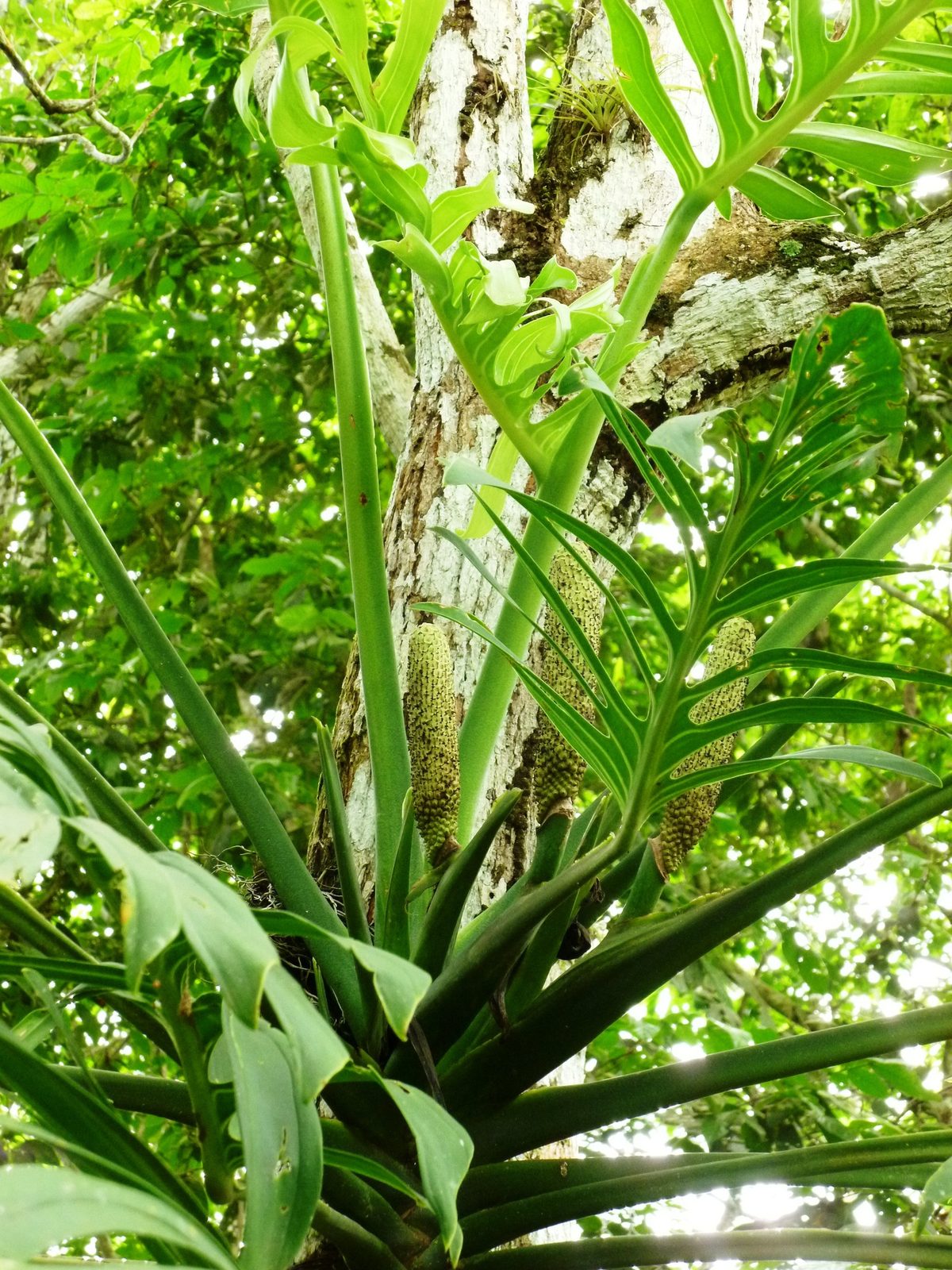
Photo: Daniel A. Monsalve Ortiz (damonsalveo), CC BY 4.0 via Wikimedia Commons

Monstera pinnatipartita

Monstera pinnatipartita · Araceae

Also known as: Monstera pinnatipartita Schott, Pinnatipartita

A climbing Monstera from Central and South America. Its plain young leaves give way to deeply divided adult leaves as the plant matures.

Care level
Needs experience
Where it grows
Indoors
Cats and dogs
Pet safety unknown

We couldn't confirm whether this plant is safe for pets. Keep it out of reach and ask your vet.

View My Garden

Check a problem with this plant

How to identify it

Monstera pinnatipartita Schott is an accepted species (GBIF) found from El Salvador and Costa Rica through Panama and Colombia to northern Venezuela, western Ecuador and Peru (Croat et al. 2024). Stems are dark green with white dots, and the leaf stalk is green, speckled to whitish, with a persistent sheath.

Young leaves are lance-shaped, unlobed and 10 to 15 cm long, so a juvenile plant looks nothing like the adult. Adult leaves are 20 to 70 cm long and deeply cut into 3 to 10 narrow lobes per side, each 1.5 to 5 cm wide. It can be mistaken for Monstera dissecta, whose lobes are wider, 4 to 10 cm (Croat et al. 2024). See Monstera pinnatipartita: care, juvenile leaves and climbing.

Light

Published light guidance for this species is scarce. In the wild it grows in tropical wet, premontane wet and lower montane rain forest, including open areas near estuaries as well as primary forest (Croat et al. 2024). As a starting point, Iowa State Extension notes that most houseplants grow and look their best in bright, indirect light.

Then watch the plant: pale, spindly growth or leaf drop suggests too little light, while scorched or yellowing leaves suggest too much (Iowa State). See Monstera light requirements.

Potting mix and drainage

Use a pot with a drainage hole; without one the mix stays wet and roots can rot (Iowa State Extension). Iowa State says a general, all-purpose potting soil works for nearly all indoor plants, and advises against a gravel layer at the bottom, which creates a wetter zone.

Support matters. In the wild this vine climbs by pressing against trees with its roots; when it can't keep climbing, it sends out hanging stems that never flower (Croat et al. 2024). Give it a tall pole or plank from the start. When repotting, move up only one or two pot sizes (Iowa State).

When to water

Check the mix rather than watering on a schedule. Iowa State Extension's general houseplant check: if the mix feels dry about an inch down, it is time to water. If it still feels damp, wait.

Water thoroughly, let the excess drain and never leave the pot standing in water, because roots that stay wet rot (Iowa State). There is little published watering advice for this species, so keep to this cautious check and watch how quickly your plant's mix dries. See How to water Monstera.

Humidity and temperature

In the wild it grows mostly from sea level to 600 m, rarely to 1000 m, in wet tropical forest (Croat et al. 2024). Published temperature and humidity thresholds for growing it indoors are scarce, so use general guidance.

General houseplant guidance from Iowa State Extension: most tropical indoor plants grow best at 40 to 50% humidity, temperatures between 65 and 75°F suit most indoor plants, and temperatures below 55°F should be avoided. Raise humidity with a humidifier, a pebble tray or by grouping plants; misting does little. See Monstera humidity.

Feeding

Feed only while the plant is actively growing, from spring into autumn, and cut back in winter (Iowa State Extension). Use a fertilizer sold for houseplants and follow the product label rate.

After repotting, Iowa State suggests waiting about 2 to 4 weeks before regular feeding resumes. This is general houseplant advice, because species-specific feeding guidance is scarce. More detail: How to fertilize Monstera.

Propagation

Published propagation advice for this species is scarce. Our general guide, How to propagate Monstera, explains stem cuttings and nodes for climbing Monstera.

Don't judge a young plant by its leaves. Juvenile leaves are lance-shaped and undivided, and the deeply divided adult leaves appear later on mature, climbing stems (Croat et al. 2024). Wild plants that can't keep climbing produce hanging stems that never flower, so give a rooted cutting something to climb.

Growth and size

A climbing vine that grips its support with roots (Croat et al. 2024). Juvenile leaves are lance-shaped, unlobed and 10 to 15 cm long. As the plant climbs, adult leaves reach 20 to 70 cm long and become deeply divided, with 3 to 10 narrow lobes per side. Adult stems have short gaps of 1 to 3 cm between leaves.

Plants that can't climb further produce hanging stems, which never flower (Croat et al. 2024). Give it a support tall enough to keep climbing. See our pinnatipartita guide and Monstera in the wild.

Warning signs

  • Yellowing leaves and a wet mix: roots that stay wet can rot (Iowa State Extension). Check the mix and drainage hole, and let the top inch dry before watering. See yellow Monstera leaves.
  • Pale, spindly growth or dropping leaves: light may be too low (Iowa State). Move it gradually closer to bright, indirect light.
  • Leaves staying simple and unlobed: normal on young plants (Croat et al. 2024). Check that the plant has something to climb.
  • Scorched or yellowing patches in a bright spot: possibly too much light (Iowa State). Check for direct sun and shade it. See brown spots on Monstera.

Related guides

Sources

  1. GBIF Backbone Taxonomy (species match API): Monstera pinnatipartita Schott: ACCEPTED, SPECIES (checked October 11, 2026)
  2. Plazi TreatmentBank (Croat, Cedeño-Fonseca & Ortiz (2024), Revision of Monstera of Central America, Phytotaxa 656(1)): Monstera pinnatipartita Schott treatment (checked October 11, 2026)
  3. Iowa State University Extension and Outreach: How to Care for Houseplants (checked October 11, 2026)

Last reviewed