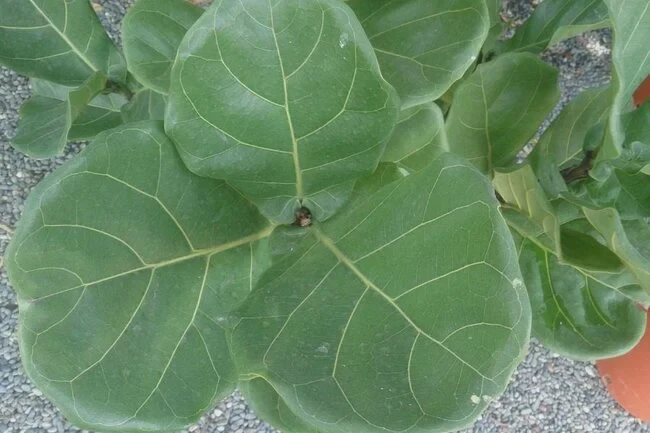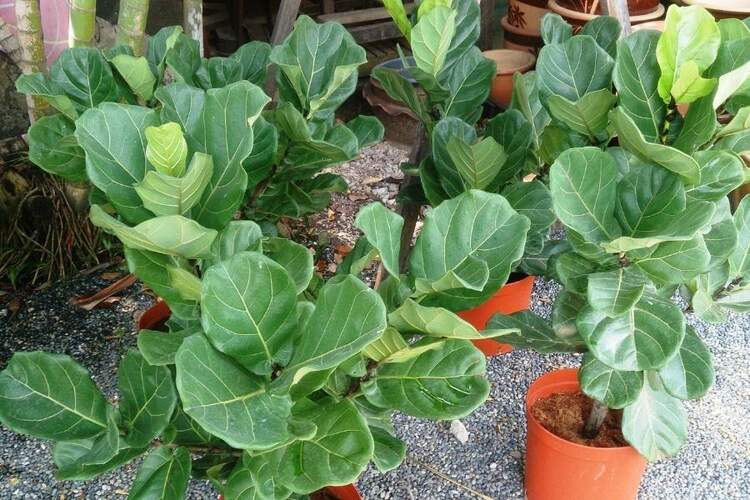
Repot a fiddle-leaf fig when roots circle tightly, grow through drainage holes or the potting mix no longer holds and drains water normally. Spring or early active growth is usually the easiest time for a healthy tree to adjust. You do not need to repot solely because a calendar says two years have passed.
Signs it is actually time
Inspect for roots winding tightly inside the container, growing out of drainage holes, or lifting the root ball. Other clues are unusually rapid drying in a pot that was previously easy to water, severely compacted old mix or persistent drainage problems. A healthy plant that is growing normally may do well without a full repot.
If the plant is wilting with permanently wet soil, inspect roots for damage first. Root rot is an exception where an earlier intervention may be warranted despite the season. See how to recognize decayed roots.
Choose a pot and potting mix
Select a container only one size larger than the present root ball, with an unobstructed drainage hole. Oversized pots hold a large reservoir of unused wet medium around the roots. Plastic pots are lighter and may hold moisture longer; unglazed terracotta dries more quickly. A decorative outer planter works when the draining inner pot is emptied after watering.
Use a quality, porous indoor potting mix that holds some moisture but also allows air to reach roots. Do not use heavy garden soil. Gravel at the bottom does not replace a drainage hole and is not needed as a routine layer.
Step-by-step repotting
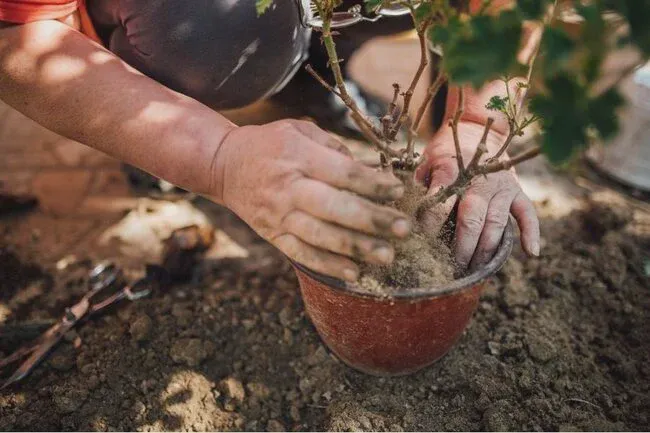
- Prepare the clean new container, fresh mix, gloves and clean shears.
- Water lightly beforehand only if the old root ball is extremely dry and brittle; avoid working in waterlogged soil.
- Hold the plant securely and slide it from its old container without yanking the trunk.
- Examine the outer roots. Loosen densely circling roots carefully and remove clearly dead, mushy sections with clean tools.
- Set the plant in its new pot at the same depth it was growing before.
- Fill around the ball with fresh mix, gently firming it without compacting it hard.
- Water thoroughly to settle the mix, allow drainage and empty the tray.
Wear gloves because the plant's milky sap can irritate skin. Avoid damaging a large proportion of healthy roots or combining major root pruning with heavy canopy pruning.
Aftercare and common mistakes
Return the fig to a familiar bright but non-scorching location. Check moisture below the surface before watering again, because the new mix may dry at a different speed. Do not add heavy fertilizer to newly disturbed roots; many fresh commercial mixes already contain nutrients.
A few stressed leaves are possible after moving roots. Watch for steady leaf retention and future healthy growth rather than trying to force immediate new leaves. For unstable trunks, see the leaning-tree guide.
What if you cannot repot a large tree?
If the tree is healthy and only the top layer of mix is tired, replace a little surface medium rather than disturbing a massive root ball. If roots are badly crowded or drainage is failing, however, top-dressing alone is not a complete solution. Choose a safe way to stabilize and lift the pot, and ask another person to help with a heavy specimen.
For more on pot types, compare fiddle-leaf fig containers based on drainage and weight.