
Independent gardening guides. Some links earn us a commission at no cost to you. Read our affiliate disclosure
Newsletter
Fiddle-leaf fig (Ficus lyrata)

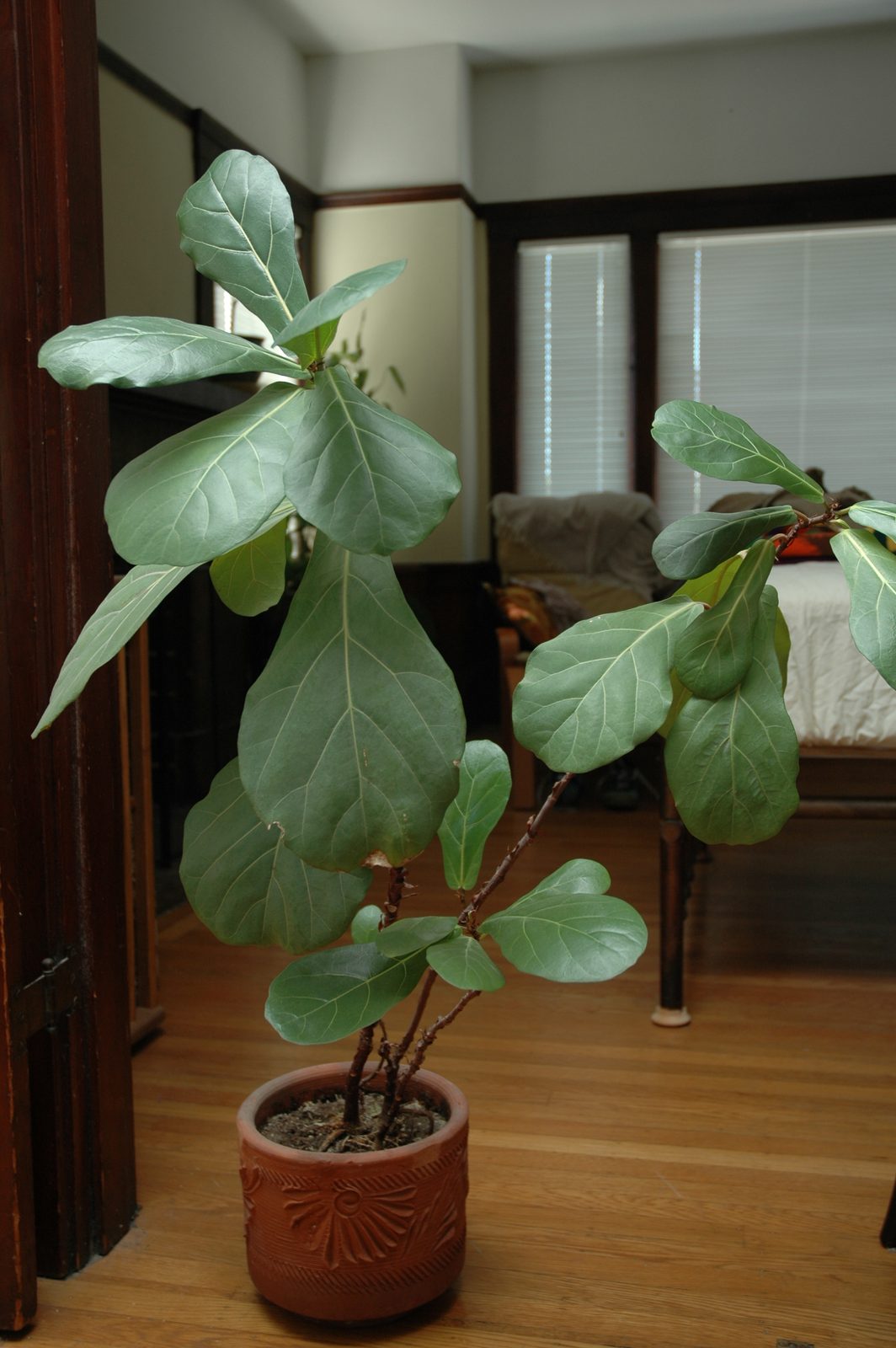
Photo: Morrisjm, CC BY-SA 3.0 via Wikimedia Commons

Fiddle-leaf fig

Ficus lyrata · Moraceae

Also known as: Fiddle leaf fig, Fiddleleaf fig, Fiddle-leaf fig tree, Banjo fig, Ficus lyrata, Ficus pandurata, Lyrata, Bambino, Compacta, Little Fiddle, Little Sunshine, Variegata

A tropical fig with large, violin-shaped leaves. It needs bright indirect light, a well-drained pot and a steady spot away from drafts.

Light
Bright indirect light, Some direct sun
Care level
Moderate
Where it grows
Indoors, Outdoors in warm climates
Cats and dogs
Toxic to pets Source (opens in a new tab)

NC State Extension lists fiddle-leaf fig as toxic to cats and dogs if eaten, with low poison severity. Symptoms it lists: oral irritation, burning of the mouth, tongue and lips, excessive drooling, vomiting and difficulty swallowing. It lists all parts of the plant, and notes that the milky sap can irritate skin. If a pet chews this plant, contact your vet or an animal poison control service.

View My Garden

Check a problem with this plant

How to identify it

Fiddle-leaf fig (Ficus lyrata, family Moraceae) is named for its large, leathery leaves, many of which are shaped like a fiddle or lyre. NC State Extension describes them as dull green above and pale green below, with prominent veins and a blade about 8 to 15 inches long. Young plants have few branches and stiff, sturdy stems that carry a milky sap. Older labels may still use the former name Ficus pandurata.

Smaller selections include 'Bambino', 'Compacta' and 'Little Sunshine', and Illinois Extension mentions 'Little Fiddle' for desks and tabletops. Ficus 'Audrey' (Ficus benghalensis) can look similar, but its leaves are smaller and oval, with a finely hairy underside.

Light

Give a fiddle-leaf fig the brightest indirect light you have. NC State recommends bright indirect light or partial shade, with protection from afternoon sun, and Illinois Extension suggests very bright indirect light, away from hot or cold drafts. For indoor figs in general, the RHS notes that some tolerate a few hours of morning or evening sun, especially in winter.

Too much direct sun can scorch the leaves, according to NC State, while small, pale new leaves often point to light that is too weak. Dust cuts the light the big leaves can use, so Clemson Extension advises keeping them dusted or rinsed; see how to clean fiddle-leaf fig leaves. If the plant leans toward the window, see how to fix a leaning fiddle-leaf fig.

Potting mix and drainage

Use a pot with drainage holes and a well-drained mix. NC State says the plant prefers moist, well-drained, loamy soil and is sensitive to overwatering. For indoor figs, the RHS suggests a loam-based compost with some fine bark, or a peat-free multipurpose compost. Iowa State Extension notes that every container needs a drainage hole, because without one the soil stays wet and roots rot.

The RHS suggests repotting into a slightly larger container every couple of years in spring. If the plant is too big to move, scrape off the top inch of compost and replace it with fresh mix. For timing and signs, see when to repot a fiddle-leaf fig.

When to water

Water by feel, not by the calendar. Push a finger into the mix: Iowa State Extension advises watering when the soil is dry to the touch about an inch down. If it still feels damp, wait and check again later. When you do water, make sure the excess can drain out of the pot.

NC State warns that fiddle-leaf figs are sensitive to overwatering, and that leaves can drop from too much or too little water, so regular checking matters more than a fixed amount. The RHS suggests letting the compost dry slightly between waterings in spring and summer and keeping it only just moist in winter, when growth slows.

Humidity and temperature

NC State says fiddle-leaf fig performs best in medium relative humidity at temperatures above 55°F. Keep it away from heating and cooling vents: NC State links brown spots to swings in room temperature near vents, and Illinois Extension advises avoiding hot or cold drafts.

For indoor figs, the RHS recommends a warm, even temperature and medium to high humidity. In dry rooms it suggests standing the pot on a tray of damp gravel, with the water kept just below the gravel surface. If brown patches appear, see fiddle-leaf fig brown leaves.

Feeding

Feed only while the plant is actively growing. Iowa State Extension advises fertilizing houseplants only during active growth, and the RHS suggests a high-nitrogen feed for indoor figs from spring to late summer to support leafy growth. Use a houseplant fertilizer and follow the product label rate, as Clemson Extension also advises.

More is not better. The RHS lists too much fertilizer among the causes of sudden leaf drop in figs. Pause feeding in autumn and winter, when growth slows.

Propagation

Fiddle-leaf fig is propagated from stem cuttings, and it can also be air layered. The RHS suggests taking semi-ripe cuttings of indoor figs in spring or summer and notes that a heated propagator helps them root. Iowa State Extension lists fiddle-leaf fig among plants suited to air layering: a wounded section of stem is wrapped in moist sphagnum moss and clear plastic until roots form, then cut free and potted.

Rooting time varies; Iowa State notes that some species take several months. Wear gloves when cutting, because NC State warns that the milky sap can irritate skin, especially when pruning or propagating.

Growth and size

In its native tropical western and central Africa, fiddle-leaf fig is a tree that reaches 60 to 100 feet. As a houseplant, NC State puts it at 2 to 10 feet tall, and it rarely flowers or fruits indoors. Young plants tend to grow as a stiff stem with few branches, and the RHS notes that the upright habit suits rooms with limited floor space.

NC State calls it relatively low-maintenance and says it may be pruned as needed. To control size, the RHS suggests cutting back indoor figs in late winter or early spring, just above a leaf. For side shoots, see how to get a fiddle-leaf fig to branch; for a stalled plant, see why a fiddle-leaf fig is not growing.

Warning signs

  • Leaves dropping: check whether the mix is soggy or bone dry and whether the plant sits in a draft. NC State links leaf drop to too much or too little water. Correct the watering and keep the plant in one bright spot. See fiddle-leaf fig dropping leaves.
  • Yellow leaves: feel the mix first. The RHS says yellowing is often a sign of overwatering, though older lower leaves also yellow with age. Let the top of the mix dry before watering again. See fiddle-leaf fig yellow leaves.
  • Brown patches: look for a nearby heating or cooling vent and move the plant away from it. See brown leaves.
  • Pale, scorched patches: check for direct afternoon sun and filter it. See bleached leaves.
  • Sticky residue, webbing or specks: check leaf undersides for scale, mealybugs, aphids, thrips or spider mites. Identify the pest, then use a product labelled for it and follow the label.

Related guides

Sources

  1. NC State Extension Gardener Plant Toolbox: Ficus lyrata (Banjo fig, Fiddle-leaf Fig) (checked October 11, 2026)
  2. Royal Horticultural Society (RHS): How to grow ornamental figs (checked October 11, 2026)
  3. Clemson Cooperative Extension, Home & Garden Information Center: Weeping Ficus (HGIC 1514) (checked October 11, 2026)
  4. Clemson Cooperative Extension, Home & Garden Information Center: Indoor Plants: Cleaning, Fertilizing, Containers & Light Requirements (checked October 11, 2026)
  5. Iowa State University Extension and Outreach: How to care for houseplants (checked October 11, 2026)
  6. Iowa State University Extension and Outreach: How to Propagate Houseplants by Air Layering and Simple Layering (checked October 11, 2026)
  7. University of Illinois Extension: Horticulturists' Favorite Houseplants (Candice Anderson and Ryan Pankau, 2021-02-19) (checked October 11, 2026)
  8. UF/IFAS Extension (EDIS): Ficus lyrata: Fiddleleaf Fig (ENH413/ST254) (checked October 11, 2026)
  9. NC State Extension Gardener Plant Toolbox: Ficus benghalensis (Ara Banyan, Banyan Tree, Bengal Fig, East Indian Fig Tree, Indian Banyan Tree, Strangler Fig) (checked October 11, 2026)

Last reviewed