
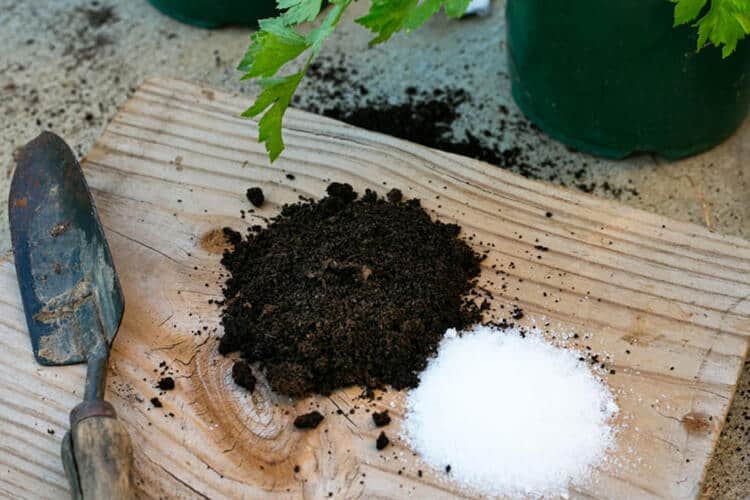
Do not routinely add Epsom salt to fertilizer. Epsom salt is magnesium sulfate: it provides magnesium and sulfur but no nitrogen, phosphorus or potassium. It may be useful where a real magnesium deficiency exists, yet extra magnesium can interfere with calcium uptake, and a foliar spray may scorch leaves. Test garden soil or follow an appropriate nutrient assessment before adding it.
Can the two products physically be mixed?
Some soluble magnesium sulfate products can be used in a fertilizer program, but that does not mean every concentrate, dry mix or foliar spray is chemically compatible. Mixing concentrates can cause precipitates or supply too much of one nutrient. Follow the fertilizer maker's tank-mixing advice and the magnesium product's instructions; if compatibility is not specified, apply separately only when needed.
When could Epsom salt actually help?
Magnesium supports chlorophyll and plant metabolism. A confirmed deficiency may be more likely in certain sandy, acidic soils, or when other nutrient imbalances restrict uptake. Yellowing between veins on older leaves can occur with magnesium shortage but is not a diagnosis by itself; root problems and other deficiencies can look similar. A soil test plus crop-specific advice is a better guide than a universal recipe.
When should you avoid it?
- When soil magnesium is already sufficient. Extra salts bring risk without a proven benefit.
- As a treatment for blossom-end rot. The usual issue is interrupted calcium transport linked to water management, not lack of magnesium.
- As an automatic 'bigger tomatoes and roses' booster. Such results are not supported for gardens without a magnesium deficiency.
- In homemade foliar and fertilizer cocktails with unverified concentrations; leaf burn or nutrient interactions are possible.
How to decide what to do next
- Describe symptoms and check soil moisture, root health and recent fertilizing.
- Arrange a soil test for garden beds; ask the testing service whether magnesium was measured, since standard panels differ.
- If a deficiency is confirmed, use the laboratory or local extension recommendation for that crop and soil. Choose an appropriate magnesium source and measured application rate.
- Recheck plant growth after correcting the underlying cause rather than repeating applications on a calendar.
Does baking soda belong in the mixture?
No general-purpose baking-soda-and-Epsom-salt fertilizer formula is supported. Baking soda adds sodium and can alter salt balance; do not put it into plant feeding solutions as an all-purpose stimulant. A properly selected fertilizer, adequate moisture, suitable light and a measured soil amendment are safer starting points.
Bottom line: mixing is a compatibility question; applying is a nutrient-need question. Answer the nutrient-need question first.