
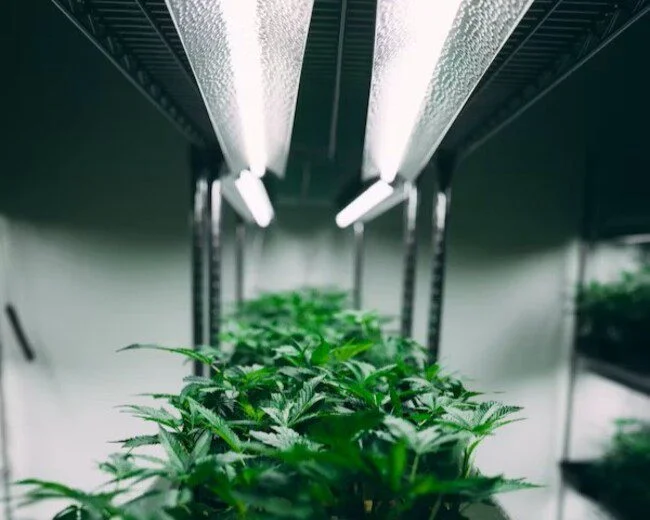
For most new home setups, a modern LED makes lighting simpler: adjustable output, typically better efficiency and less radiant heat at the canopy. Ceramic metal-halide (CMH) systems can still grow plants effectively, but they need the right ballast, greater heat management and periodic bulb maintenance.
What each technology does
CMH is a high-intensity-discharge (HID) lamp that produces light from an electric arc in a ceramic discharge tube. It needs matching control gear and cannot be screwed into an ordinary household fixture. LEDs use light-emitting diodes and electronic drivers. Both can provide plant-usable wavelengths, so the useful comparison is not whether one makes 'real' light. It is the amount of plant-usable light delivered over the canopy, the energy required and how controllable the installation is.
Compare photon output, not only watts
Photosynthetic photon flux (PPF) measures usable light produced; photosynthetic photon efficacy (PPE) expresses photons per unit of electricity. PPFD then describes light reaching the canopy. An LED with a credible PPFD map may distribute usable light more efficiently than an older CMH system, but poor LEDs also exist. Account for ballast draw and bulb replacement with CMH. Do not promise a precise yield advantage from technology type alone: crops, irrigation, nutrition and environment strongly affect results.
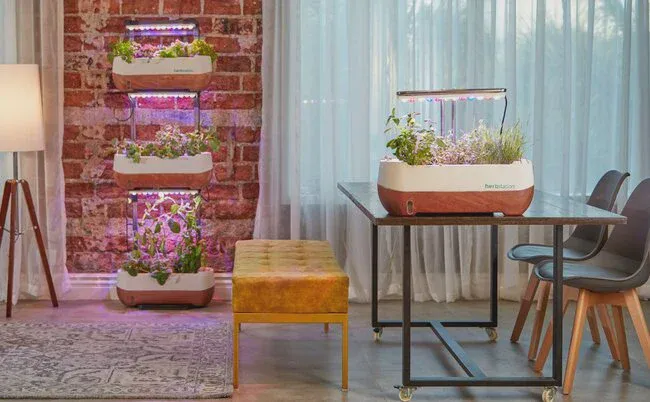
Heat, distance and ventilation
Both lighting systems add heat to the grow space; LEDs are not cold. CMH equipment typically creates more radiant heat near leaves and needs sufficient clearance, while compact LED panels are often easier in a short room. Airflow helps manage temperature, but simply placing fans under a too-powerful bulb does not guarantee safe foliage. Use mounting guidance for the particular model and check canopy leaf response. Never bypass a CMH ballast or improvise electrical connections.
Light spectrum and growth stages
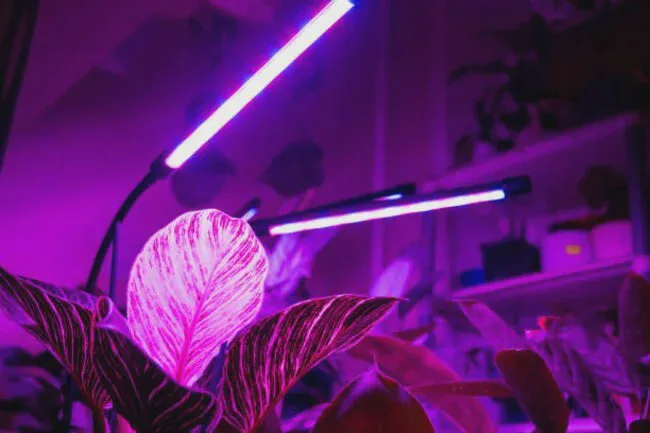
CMH can deliver a broad spectrum, and LED manufacturers design combinations of white, red and other diodes. Plants use more than two visible colors; the need for specific wavelengths depends on crop and objective. Purdue Extension's explanation of daily light integral shows why total canopy photons across the day often matter more than perceived lamp color. A dimmable LED is useful when moving from delicate seedlings to established foliage without changing the fixture height every day.
How to decide for an existing system
If you already own CMH equipment, compare current electricity costs, compatible bulb availability, ballast condition and ventilation before replacing it. For a fresh installation, prioritize reliable output maps, a safe mounting kit, relevant certification, practical dimming and manufacturer support. Also consider noise, replacement parts and installation height. A well-sized fixture used correctly beats an impressive specification that does not match the growing area.
Practical setup checklist
- Measure the growing footprint and identify plants.
- Compare PPF, PPFD, watts, heat and replacement costs.
- Read the fixture's electrical and mounting requirements.
- Choose the system that fits your budget and ventilation.
References
Related: hid vs led grow lights · fluorescent vs led grow light · how to choose a grow light