
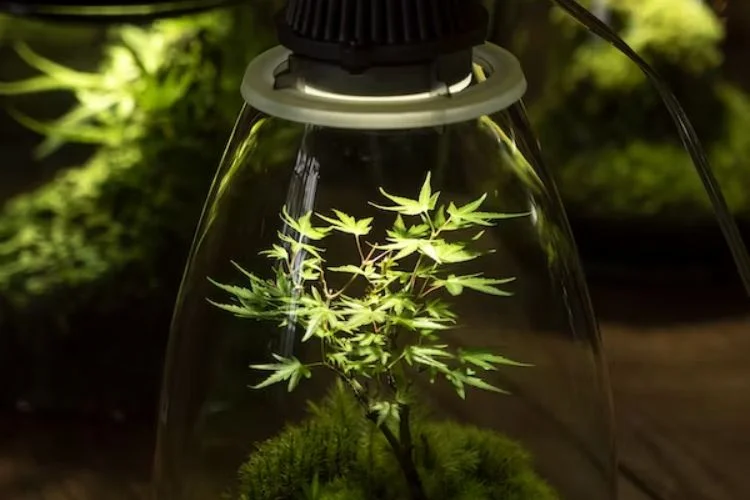
Choose a grow light by the plants it must support, the area it must cover and the amount of light reaching the leaves—not by exaggerated wattage names or purple color. For most home setups, an efficient white/full-spectrum LED with a credible PPFD map, adjustable hanging and a timer is a practical starting point.
First identify the job
One pothos on a shelf, a seed-starting tray and fruiting peppers require very different amounts of light and illuminated area. Start by identifying each crop, its stage and whether meaningful sunlight reaches it already. University of Minnesota Extension classifies indoor plants by low, medium and high light needs. Match the footprint of the fixture to your pots rather than buying the highest advertised wattage. A long shelf may need several bars; a single bright panel might cover it unevenly.
Read the right specifications
Input wattage is electrical draw and helps estimate operating expense. PPF reports total photosynthetic photons from the light, while PPFD measures the density reaching a square meter of leaves at a given position; maps are most useful when tested at stated hanging heights. Look for uniform PPFD across the growing area and explicit dimmer settings. White-light brightness in lumens or a phone's lux reading cannot reliably compare two very different horticultural spectra. Do not confuse a product name like '1000' with 1000 real watts.
Choose technology and light spectrum
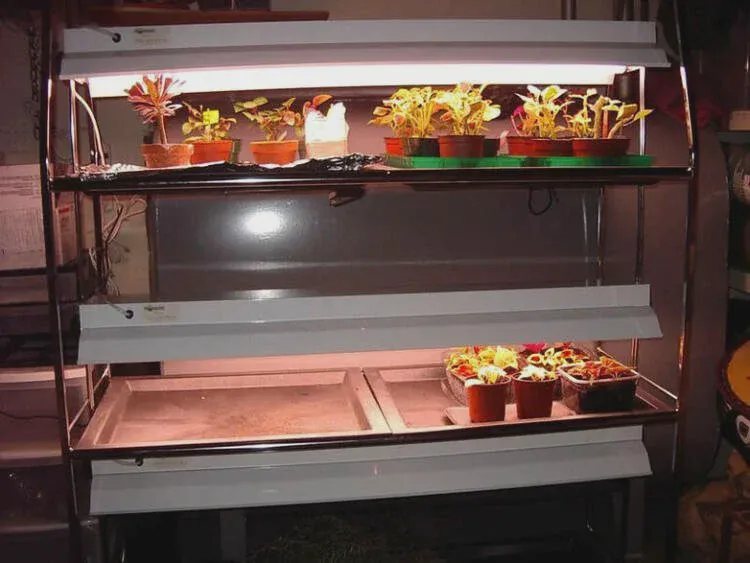
Modern LEDs are usually efficient, long-lived and available as bars, bulbs or panels. Fluorescent tubes still work well for short seedling trays but usually consume more energy for similar light delivery. HPS and metal-halide fixtures can grow plants yet need more heat management and specialized equipment. Balanced white/full-spectrum LEDs are convenient for checking leaf health. Purple red/blue lighting also works but is not inherently best. The correct daily photon dose matters more than the color seen by your eyes.
Size the fixture and mounting
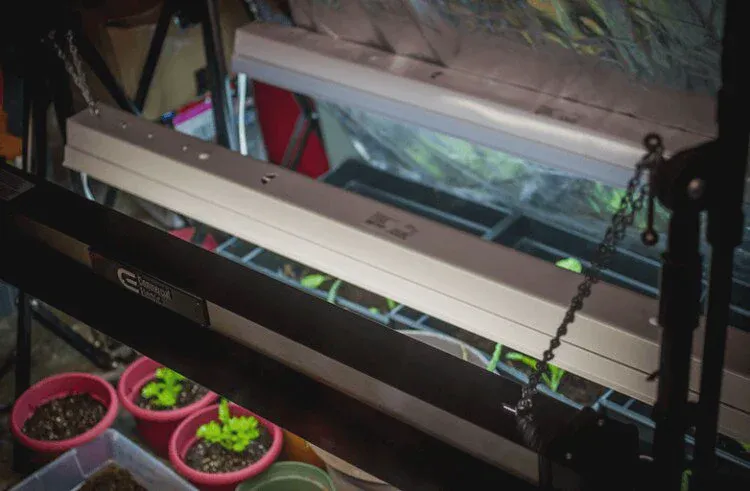
Measure the width and depth of the actual growing canopy. Then inspect the manufacturer's PPFD map and recommended height for the growth stage. Include the clearance occupied by the hanging system and the future height of the plants. Choose adjustable suspension and adequate ventilation. A fixture that perfectly covers a 2-by-2-foot shelf may not cover a 4-by-4-foot tent at productive intensity. Avoid unsafe multi-plug chains or unsupported hooks.
Estimate electricity and running time
Multiply real watts by hours per day and divide by 1000 to estimate daily kilowatt-hours, then multiply by the utility price. For example, a 100 W light running 14 hours uses 1.4 kWh each day; this is a calculation, not a promise of growing results. Seedlings and foliage plants have different recommended schedules, and some flowers need specific nights. Purdue's DLI concept combines light density and hours, explaining why a dim bulb used excessively long is not always equivalent to a capable fixture.
Questions to ask before paying
Is there an independently meaningful PPFD chart at your intended hanging height? Can the output be dimmed? Will the whole tray receive even coverage? What safety certifications, warranties and replacement drivers are documented? Can the setup be securely mounted away from water? Avoid unsupported yield percentages, unverifiable 'tested best' claims and models whose exact specifications are unavailable. More light is not always better for shade plants.
Practical checklist
- Identify crop, stage and available sunlight.
- Measure the actual plant footprint and future height.
- Compare PPFD distribution, input watts and dimmer.
- Choose a safely mountable fixture with support and a regular timer.
Sources and related guides
Read next: what size grow light do i need · fluorescent vs led grow light · how to hang grow lights