
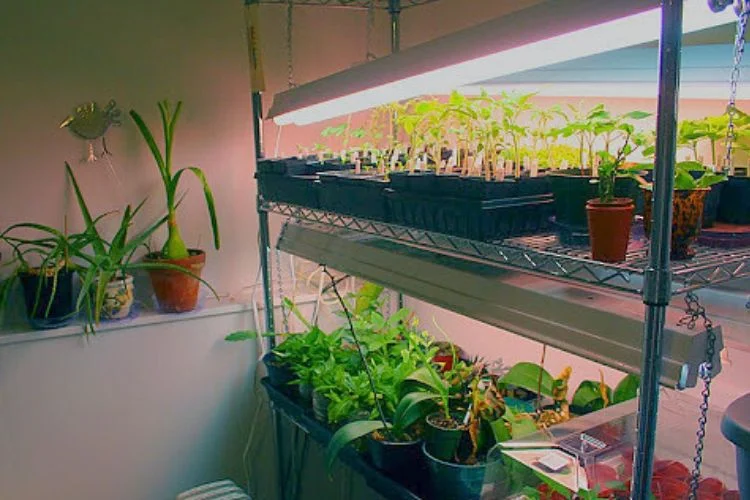
For most home plant shelves, efficient LEDs are the easiest starting choice. Fluorescent shop lights remain useful for seedlings, while HID technologies such as HPS, metal halide and ceramic metal halide are more common in larger or legacy growing systems. Incandescent bulbs are poorly suited to plant growing because they waste substantial energy as heat.
LED grow lights
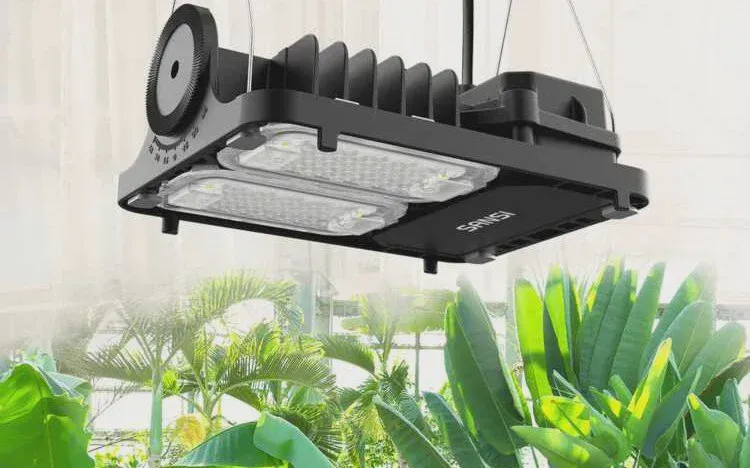
Light-emitting diodes are available as screw-in bulbs, long shelf bars and powerful boards or panels. A good fixture offers published real power, a canopy PPFD map, adequate spectrum, adjustable mounting and safe cooling. LEDs generally produce less radiant heat than older HID technologies, but a bright LED still can bleach nearby foliage. For foliage houseplants or seed-starting shelves, a balanced white/full-spectrum LED is convenient and often efficient. Compare the illuminated area, not only a claimed equivalent wattage.
Fluorescent tubes and compact bulbs
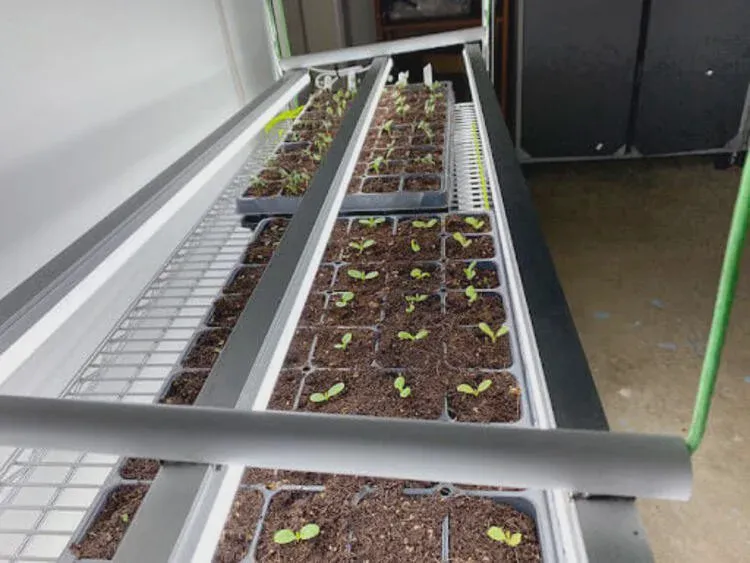
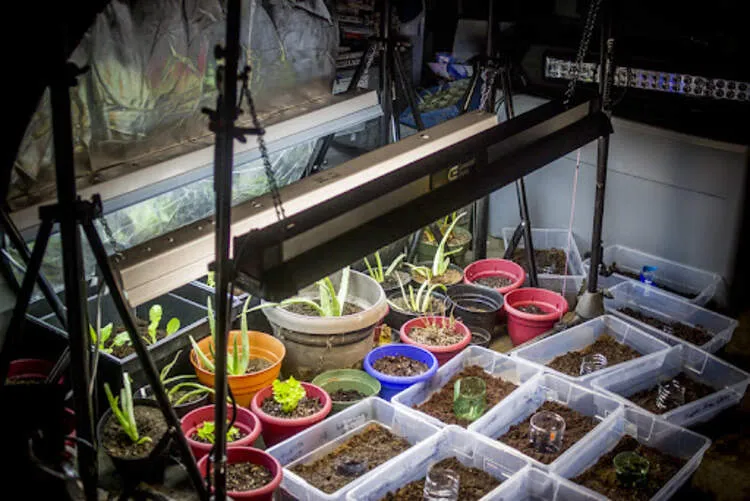
Standard fluorescent shop lights can support transplants and many indoor foliage plants when mounted close enough. Long T5 or T8 tubes cover seedling flats reasonably evenly; compact fluorescent lamps are more convenient for small spots. Fluorescent fixtures need compatible ballasts, replacement lamps and correct disposal because tubes can contain mercury. University of Minnesota Extension notes that LEDs tend to be more energy efficient, though an already-owned fluorescent installation may be an economical choice for a few trays.
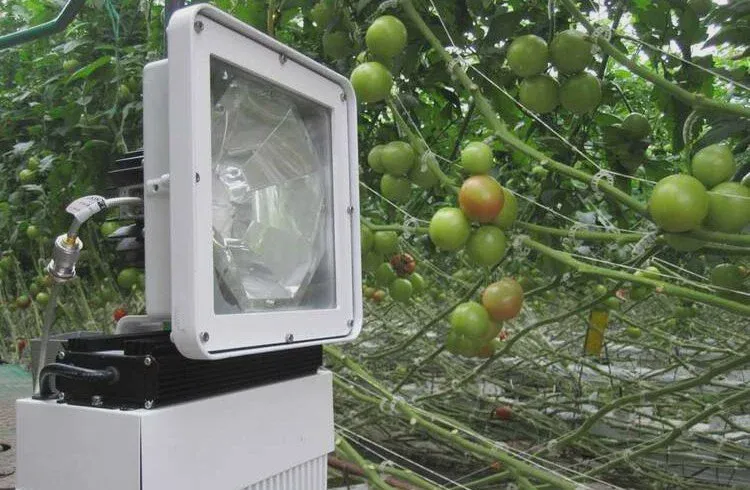
High-pressure sodium and metal halide
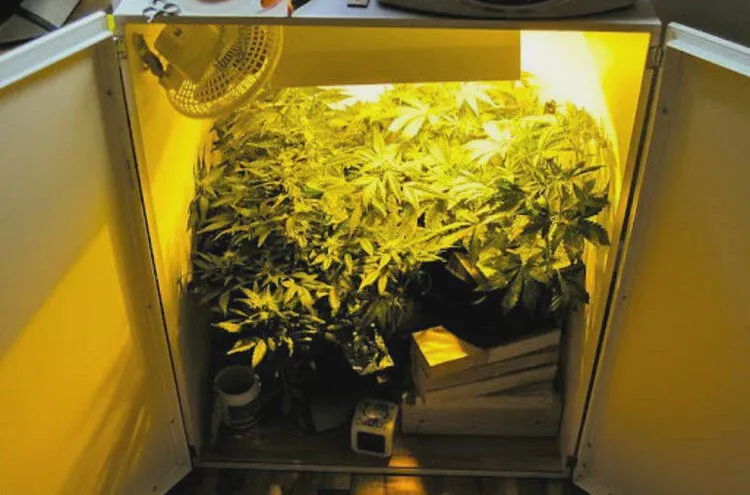
HPS and MH belong to high-intensity-discharge (HID) technologies, which use an electric arc and compatible ballast. These fixtures produce substantial useful light but also create significant heat, need greater clearance and require maintenance as lamps age. Ceramic metal halide (CMH) is another HID variant with its own compatible equipment. Such systems can suit an existing greenhouse or grow room, but they are generally more complicated than a small LED fixture for one apartment plant shelf.
Incandescent and halogen lamps
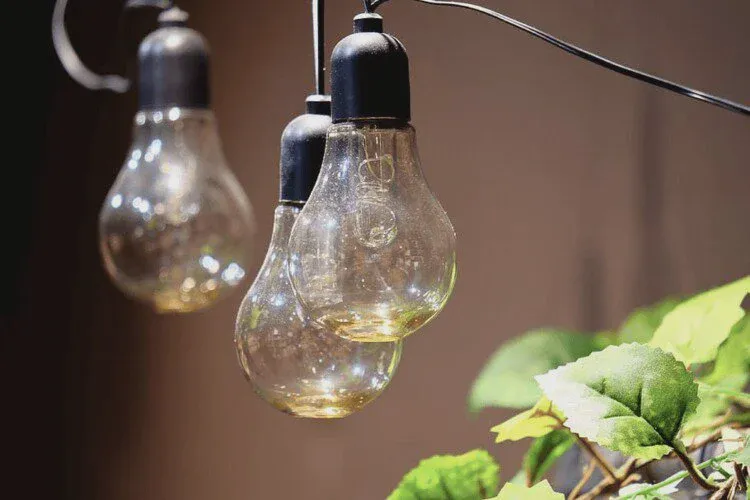
Ordinary incandescent bulbs and halogen lamps may illuminate a room, yet much of their electricity becomes heat rather than the helpful photosynthetic light a plant could use. They are particularly poor choices for placing near delicate leaves. There is no need to use a hot, power-hungry bulb when a suitable white LED can supply the useful wavelengths. Some specialized light technologies also exist, but they should be evaluated by measured crop-level output, not novelty.
Light color and spectrum are not everything
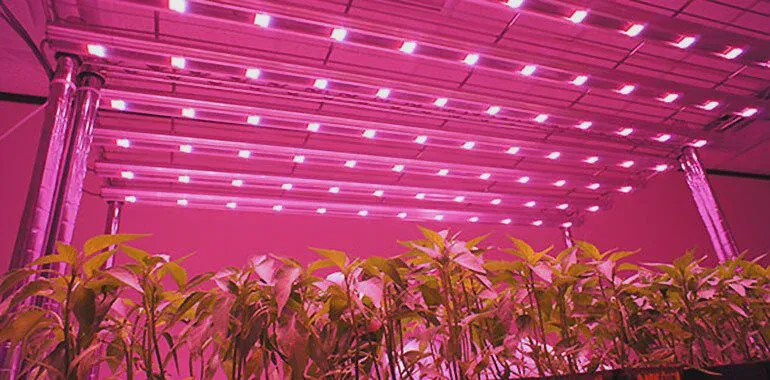
Red and blue wavelengths are important for photosynthesis, which explains purple grow lights. However, plants also use other visible wavelengths and white-looking LEDs can support all growth stages. Different flowering species can have particular day-length responses. The best fixture supplies enough useful light over the whole canopy, with an appropriate nightly dark interval; it is not necessarily the one with the most unusual color or the most LEDs.
How to compare dissimilar technologies
Watts measure electrical draw; PPF measures emitted photosynthetic photons; PPFD measures how many hit the canopy at a specified position. Purdue Extension defines DLI as the integrated daily supply. For practical shopping, ask for real input watts, a credible PPFD map at different mounting heights, coverage across the plant area, dimming, expected maintenance and independent electrical safety certifications. Two lamps with identical wattage can be very different in how well they illuminate the plants.
Simple recommendations by use case
For one pothos in a living room, a small white LED bulb in an open fixture may be sufficient. For seed trays, an adjustable LED or fluorescent bar offers even overhead light. For a densely planted grow tent, look for a panel or multiple bars with measured coverage. For a greenhouse already equipped with HID, evaluate retrofit costs, remaining ballast life and temperature control before replacing everything. All types need safe mounting and protection from watering.
Practical checks
- Match the source and spectrum to your actual crop and growing stage.
- Check PPFD at a stated distance instead of trusting an equivalency label.
- Use a stable light/dark schedule, and adjust only when new growth suggests it.
- Keep electrical fittings safely mounted and away from watering.
Credible sources
- University of Minnesota Extension — lighting guidance
- University of Minnesota Extension — lighting guidance
- Purdue Extension — lighting guidance
Related guides: how to choose a grow light · fluorescent vs led grow light · hid vs led grow lights · what size grow light do i need