
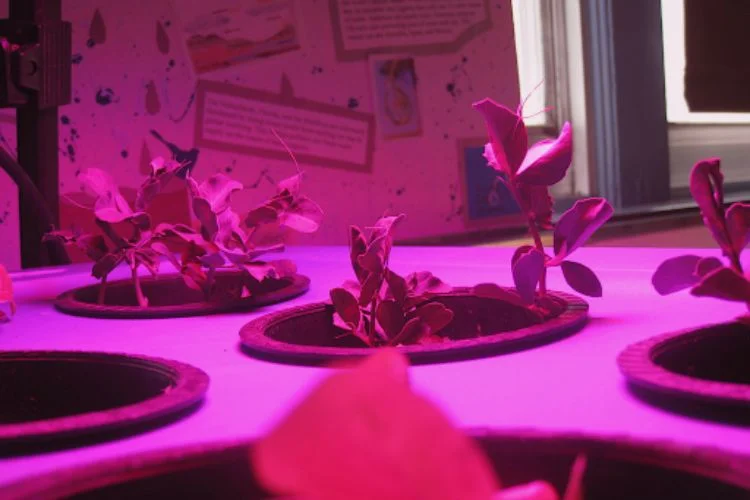
For ordinary seed-starting fluorescent or low-output LED bars, extension guidance commonly puts the lamp only a few inches above the seedling tops. University of Minnesota suggests keeping seed-starting lights within about 2–4 inches in its seed-starting guide. Powerful horticultural LED panels may require much more clearance; always use their model-specific PPFD and mounting guidance.
Why there is no universal LED distance
Light levels can fall dramatically as the fixture moves away from the crop, yet two lamps differ greatly in diode output, lenses and beam shape. The familiar 'two to four inches' guidance fits many ordinary fluorescent/shop-bar setups—not an intense grow-tent panel. A manufacturer PPFD map, taken at a known distance and dimming setting, is a better starting point for high-output lights. Check that corners receive adequate light, not just the center of the tray.
What extension services recommend
University of Minnesota Extension advises keeping seed-starting lights close—no more than four inches above seedling tops, with two inches ideal for its ordinary fluorescent/LED seed-starting context. University of New Hampshire Extension explains that distance, intensity and time combine to determine the daily light integral. A much stronger lamp may need to sit higher or run dimmer than an ordinary shop light. Following a generic 'all LEDs at 18 inches' rule can leave seedlings either stressed or starved.
How to adjust as seedlings grow
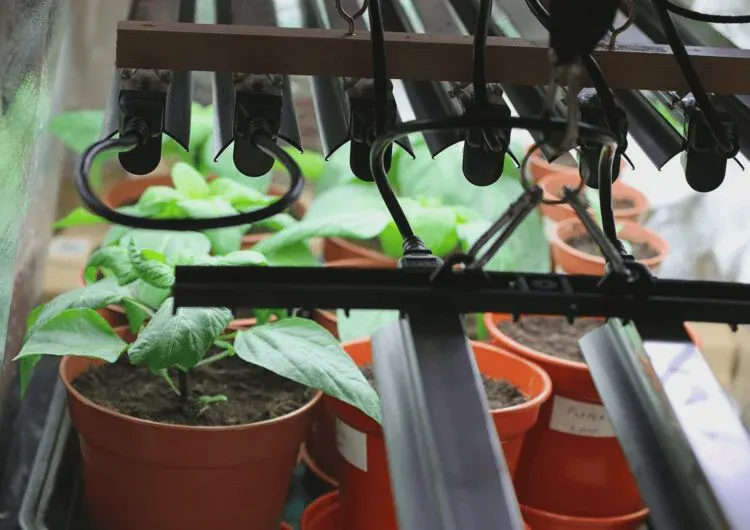
Hang fixtures on chains or rated adjustable mounts. Measure the gap from the top leaves, not the pot rim, and raise lights as foliage approaches the fixture. If stems are long and pale, assess whether intensity is too low; improve output or lower a suitable cool fixture. If upper leaves bleach, raise or dim the light and check temperature. New growth is the best place to judge improvement because stretched stems do not magically shorten.
Hours, distance and DLI
Young seedlings typically need long, regular light periods. UMN offers roughly 16–18 hours daily in general indoor-lighting guidance; crop-specific needs and lamp intensity can change the ideal. Daily light integral reflects the photons delivered over those hours. A very dim source cannot necessarily be rescued by 24-hour operation, and a bright LED may reach a suitable daily dose in less time. Use a timer, not constant illumination.
A safe shelf setup
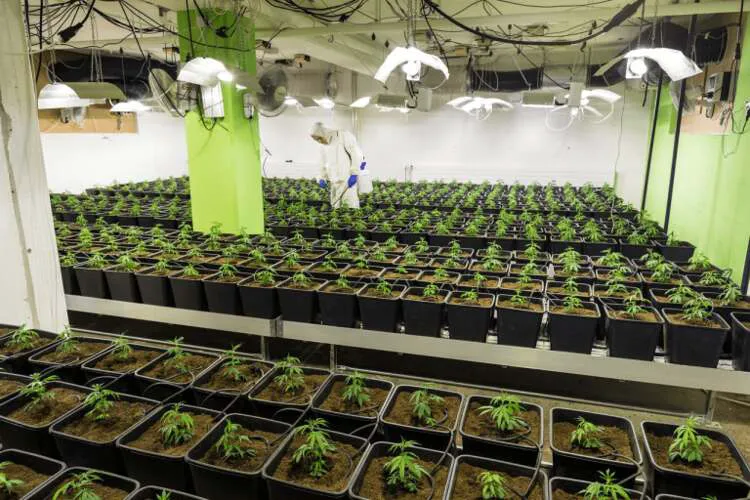
Mount all fixtures to structures rated to support them, with stable hooks and properly secured cables. Keep ballasts, drivers and outlets out of splash zones and avoid paper or fabric near a hot bulb. If several seed trays are present, arrange lights for even coverage and rotate trays only where useful. Good ventilation and proper watering are also important: light does not cure waterlogged root conditions.
Practical checklist
- Read the particular fixture's distance chart.
- For a shop-style seed bar, start near the canopy as extension recommends.
- Raise the fixture regularly as seedlings grow.
- Watch for stretching or bleaching and adjust safely.
Sources and related guides
- University of Minnesota Extension
- University of New Hampshire Extension
- University of Minnesota Extension
Read next: best grow lights for seedlings · how to hang grow lights · can you leave grow lights on 24 hours a day