
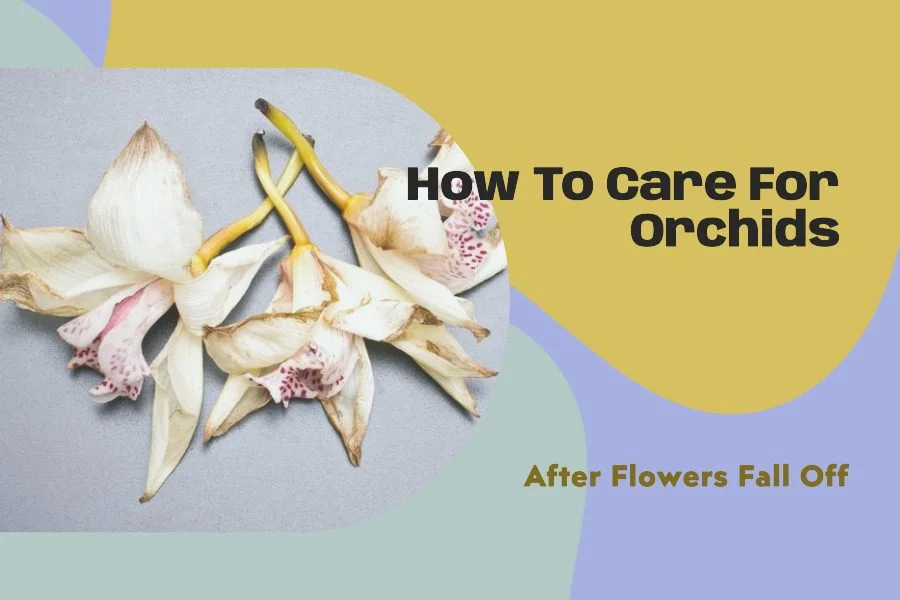
When an orchid's flowers fall, do not throw the plant away. Most healthy orchids can bloom again when their roots, leaves and growing conditions are maintained. Begin by identifying the orchid species: common moth orchids (Phalaenopsis) can sometimes form new flowers on a green old spike, but other genera have different flowering habits. The American Orchid Society (AOS) orchid-care guide explains why pruning depends on the genus.
Step 1: Decide what to do with the spent flower spike
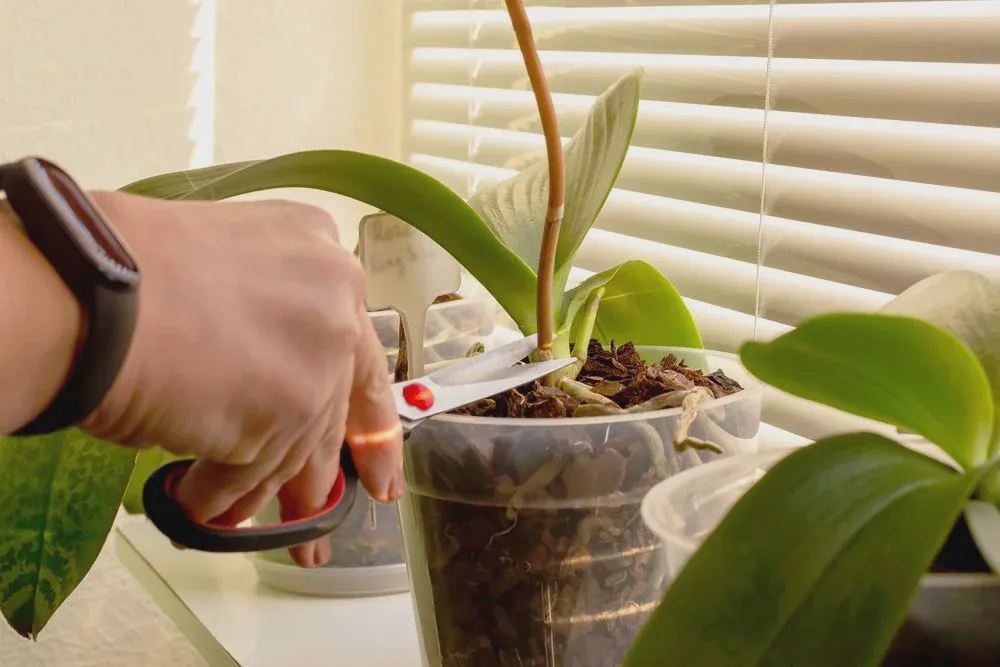
Wait until flowers have finished naturally, then inspect the spike. If a Phalaenopsis spike has turned brown and dry, trimming it near the base using clean pruners is reasonable. If the spike stays green and the plant is healthy, you may leave it or shorten it above a suitable node to see whether a secondary branch develops; this is optional and not guaranteed. A weak or stressed plant may benefit from directing energy to roots and leaves instead. Do not cut living roots or the central crown while removing a spike.
Step 2: Continue appropriate light and watering
Place moth orchids where they receive bright filtered light rather than sustained harsh midday sun. Check the potting medium before watering; water thoroughly, let the pot drain, and avoid keeping roots continually saturated. The AOS Phalaenopsis culture sheet notes that these orchids should be watered as the medium approaches dryness, with frequency varying by temperature, air movement and potting mix. Do not stop watering merely because flowers have fallen.
Maintain suitable indoor temperatures, provide airflow without cold drafts, and fertilize moderately during active growth according to orchid product labels. A dramatic new fertilizer treatment does not guarantee immediate flowering.
Step 3: Inspect roots before attempting to “rescue” the plant
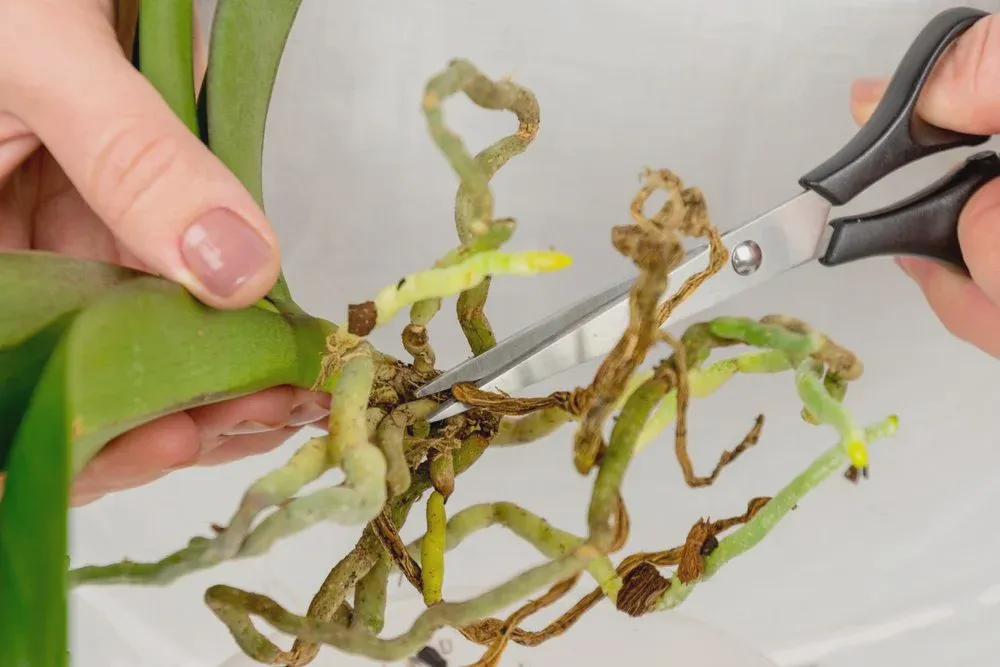
Wrinkled leaves and poor growth can occur from too little water or from root rot after overwatering. Visible healthy orchid roots are generally firm; dead roots may be hollow, slimy or mushy. Inspect carefully instead of assuming every root with a different color is dead. Remove clearly dead, decayed root material only when appropriate, using clean tools, and avoid unnecessary surgery on healthy roots.
The AOS discussion of dehydration and root damage explains why watering more can make a rotting-root problem worse.
Step 4: Repot only when there is a reason
Inspect the potting medium: decomposed bark, persistent sogginess, very poor drainage or crowded unhealthy roots can make repotting appropriate. If the medium is still in good condition and the orchid is growing well, there may be no need to disturb it just because the flowers ended. When repotting, choose a container only large enough for the living root system, use a suitable airy orchid medium, and avoid burying the crown. Time major repotting to an active root-growth phase when feasible; this varies by genus and conditions.
What helps an orchid bloom again?
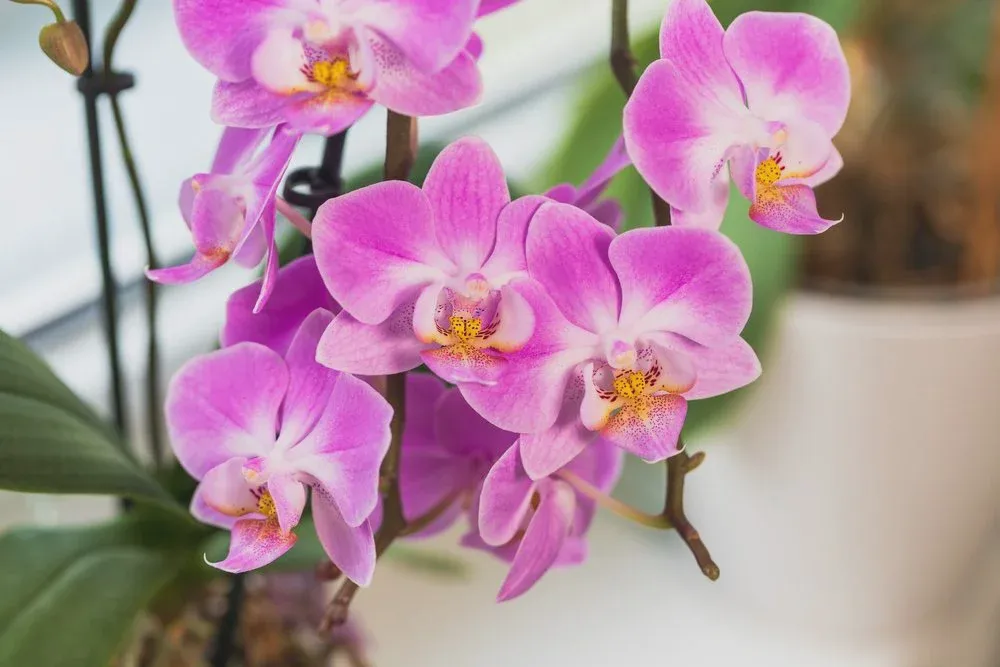
Healthy roots, suitable light, consistent plant care and an appropriate seasonal temperature pattern are more important than an arbitrary pruning or fertilizer schedule. Many Phalaenopsis hybrids respond to a modest period of cooler nights when initiating new spikes, but avoid frost or sudden cold. See our guide to encouraging a moth orchid to rebloom.
Frequent questions
Should I cut every orchid spike when flowers fall?
No. Spike care varies by genus. Only some types, especially Phalaenopsis, may rebloom from an old green spike.
Can an orchid live for years after flowering?
Yes. Many orchids are perennial plants. Flowering is one part of their life cycle, not the end of the plant's life.
Do I need to repot immediately?
No. Repot when the medium has broken down, the pot has a drainage problem or the root system needs attention. Otherwise, continuing suitable care is often sufficient.
When will it rebloom?
Time varies widely by orchid genus, cultivar, plant maturity and growing conditions. A specific “six to nine months” claim does not apply to every orchid.
Sources: AOS — Orchid Care; AOS — Phalaenopsis Culture Sheet; AOS — Watering Techniques; AOS — Dehydration.