
Independent gardening guides. Some links earn us a commission at no cost to you. Read our affiliate disclosure
Newsletter
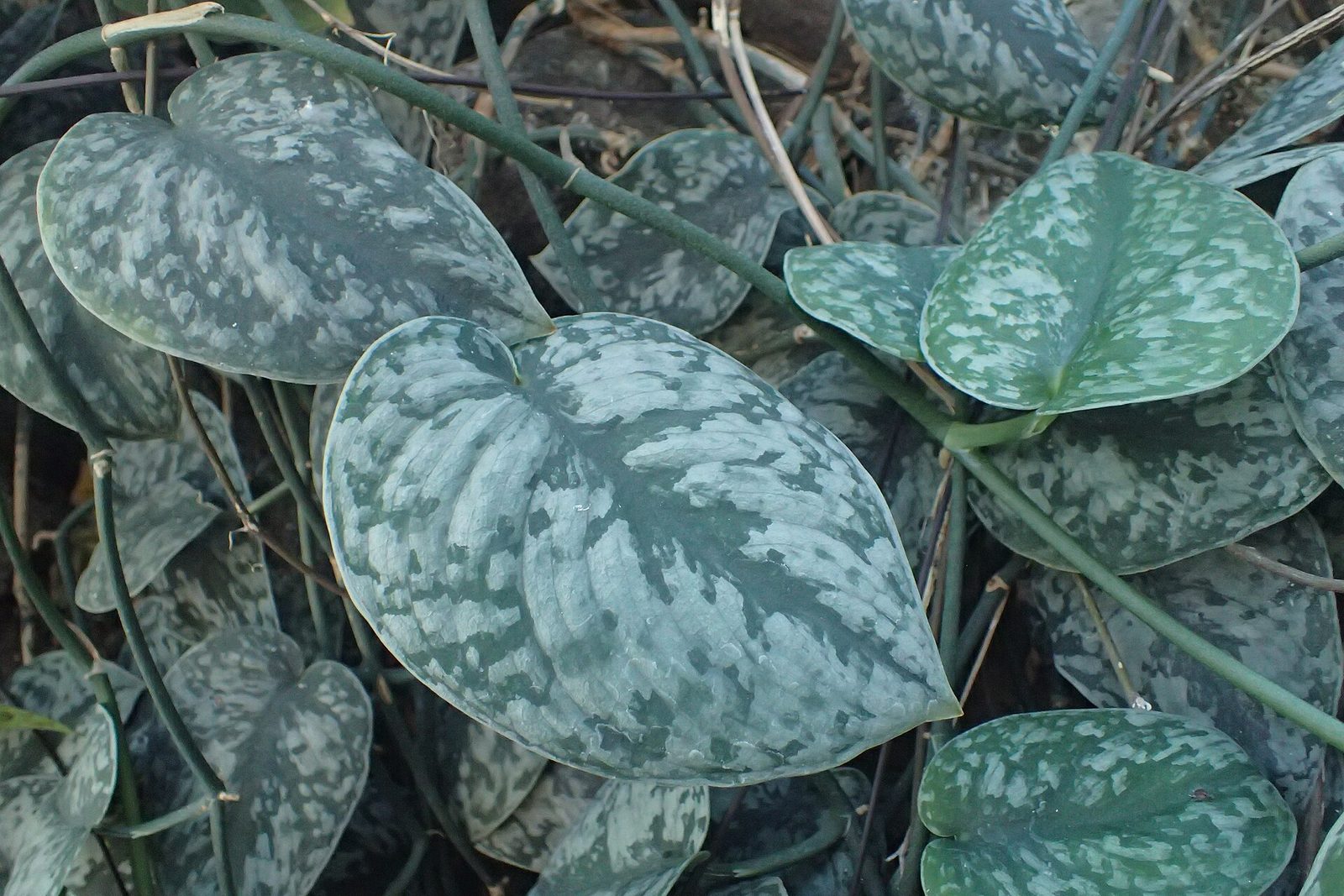
Satin pothos (Scindapsus pictus)

Photo: Krzysztof Ziarnek, Kenraiz, CC BY-SA 4.0 via Wikimedia Commons

Satin pothos

Scindapsus pictus · Araceae

Also known as: Satin pothos, Silk pothos, Silver pothos, Silver vine, Silvery Ann pothos, Scindapsus pictus 'Argyraeus', Scindapsus pictus 'Exotica', Silver Splash satin pothos, Scindapsus argyraeus, Pothos argyraeus

Not a true pothos: a slow-growing Scindapsus vine with silver-splashed, satin-textured leaves. Prefers bright indirect light. Toxic to pets.

Light
Medium light, Bright indirect light
Care level
Moderate
Where it grows
Indoors, Outdoors in warm climates
Cats and dogs
Toxic to pets Source (opens in a new tab)

The ASPCA lists satin pothos (Scindapsus pictus) as toxic to dogs, cats and horses. It contains insoluble calcium oxalates. Listed signs: oral irritation, pain and swelling of the mouth, tongue and lips, excessive drooling, vomiting (not horses) and difficulty swallowing. This is a species-level source. If a pet chews this plant, contact your vet or an animal poison control service.

View My Garden

Check a problem with this plant

How to identify it

Satin pothos is Scindapsus pictus, a tropical evergreen climbing vine in the arum family (Araceae). Despite the name it is not a true pothos: it belongs to a different genus from golden pothos, Epipremnum (Clemson HGIC). It comes from southeastern Bangladesh and western and central Malesia, and was formerly named Scindapsus argyraeus (NC State Extension).

Look for dark green leaves splashed with silver. Juvenile leaves are oval, smooth-edged, about 3 to 4 inches long and satin-textured; mature leaves may be lobed (NC State). Named selections include 'Argyraeus', 'Exotica', 'Silvery Ann' and Silver Splash. UConn Extension notes that S. pictus has a rounder leaf than its relative S. treubii. See silver pothos vs satin pothos.

Light

NC State Extension says satin pothos prefers bright indirect light and does not tolerate direct sunlight. The RHS likewise recommends bright, filtered light with shade from strong sun. A bright room with no direct sun on the leaves suits it.

It is naturally slow-growing (NC State), so slow growth alone is not a sign of poor light. Look at the leaves instead: bleached or scorched patches suggest too much light, and leggy growth suggests too little (Iowa State Extension, general houseplant guidance). See satin pothos care.

Potting mix and drainage

NC State Extension recommends a moist, well-drained potting soil, and lists high organic matter and an acidic pH. The RHS suggests a peat-free, loam-based compost. UConn Extension suggests the kind of mix used for aroids, or lightening a commercial houseplant mix with extra perlite and/or orchid bark.

Use a pot with a drainage hole and never leave it standing in water (Iowa State Extension). Clemson HGIC notes that Scindapsus is less tolerant of overwatering than pothos, so drainage matters even more. See pot and drainage guide.

When to water

Check the mix rather than following a schedule. UConn Extension says Scindapsus generally likes the top inch or two of soil to dry out between waterings. The RHS advises moderate watering while the plant is growing and sparing watering at other times. When the top of the mix has dried, water thoroughly and let the excess drain.

Never water a mix that is still wet. NC State notes that root rot can occur in wet soil and that yellow leaves may be a sign of overwatering, while curling leaves may be a sign of underwatering. See satin pothos leaves curling.

Humidity and temperature

NC State Extension says room temperatures of 65 to 85°F suit this plant best and that cooler air is not tolerated, so keep it away from cold drafts. Outdoors, NC State lists USDA zones 11a to 12b. The RHS rates it H1C: in cool climates it can go outside in summer but needs protection in winter.

UConn Extension says Scindapsus adapts well to typical homes but does not like very dry air, and tends to grow larger leaves in more humid rooms, such as a bathroom. Misting does not raise humidity around a plant; grouping plants or a humidifier works better (Iowa State).

Feeding

Feed only while the plant is actively growing. The RHS suggests a balanced liquid fertilizer during the growing season; use a general houseplant fertilizer and follow the product label rate. Iowa State Extension advises waiting a few months after repotting, because most potting mixes already contain some fertilizer.

Satin pothos is naturally slow-growing (NC State). Before assuming pale or yellow leaves mean it needs feeding, check whether the mix is wet: NC State links yellow leaves to overwatering. See satin pothos care.

Propagation

Satin pothos is propagated by stem cuttings (NC State Extension, RHS). Choose a healthy stem section that includes a node, the point where a leaf grows from the stem. UConn Extension says Scindapsus is fairly easy to propagate: keep the cutting in a moist, humid environment, and new growth tips will emerge from the node.

Wear gloves when taking cuttings: the RHS lists the plant as harmful if eaten and a skin and eye irritant. See how to propagate satin pothos for water and mix methods.

Growth and size

Satin pothos is a slow-growing vine that climbs or cascades (NC State Extension). Indoors it can be trained up a stake or moss pole, or left to trail from a hanging basket (NC State, UConn Extension). In its native habitat it climbs tree trunks to about 10 feet, but NC State says indoor plants grow 1.5 to 3 feet tall. The RHS describes a slow-growing climber or trailer to 1 m or more, needing no pruning.

Juvenile leaves are oval and undivided; mature leaves may be lobed. Tiny, insignificant flowers followed by small berries may appear on outdoor plants in summer (NC State). See Silvery Ann for one popular selection.

Warning signs

  • Yellow leaves: may mean overwatering (NC State). Check whether the mix is wet; if so, let it dry before watering again and check the roots.
  • Curling leaves: may mean underwatering (NC State). Check the mix; if it is dry, water thoroughly. See satin pothos leaves curling.
  • Mix that stays wet: root rot can occur in wet soil (NC State), and Scindapsus tolerates overwatering less than pothos (Clemson HGIC). Improve drainage and let the mix dry. See overwatered pothos.
  • Insects or leaf spots: NC State lists scale, mites, mealybugs, thrips, fungal leaf spot and botrytis. Confirm the cause before treating; use only a product labelled for the problem and follow the label. See bugs on pothos.
  • Pale, scorched patches: direct sunlight is not tolerated (NC State). Move it into bright, indirect light.

Related guides

Sources

  1. ASPCA Animal Poison Control: Satin Pothos (Scindapsus pictus) (checked October 11, 2026)
  2. NC State Extension Gardener Plant Toolbox: Scindapsus pictus (Satin Pothos, Silk Pothos, Silver Pothos) (checked October 11, 2026)
  3. Royal Horticultural Society: Scindapsus pictus (v) (checked October 11, 2026)
  4. Clemson Cooperative Extension, Home & Garden Information Center: How to Grow Pothos Indoors (Epipremnum spp.): Care, Cultivars, and Common Problems (HGIC 1568) (checked October 11, 2026)
  5. UConn Home & Garden Education Center, University of Connecticut: If Scindapsus is Wrong, I Don't Want to Be Right (checked October 11, 2026)
  6. Iowa State University Extension and Outreach (Yard and Garden): How to Care for Houseplants (checked October 11, 2026)

Last reviewed