
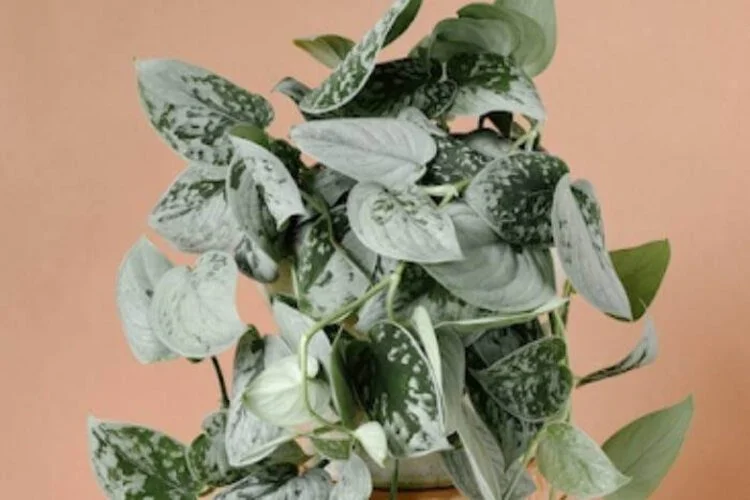
Quick answer: ‘Silvery Ann’ is a silver-marked selection of Scindapsus pictus, often called Silvery Ann pothos or silver satin pothos. It is not a cultivar of Epipremnum aureum. Keep it in bright filtered light, water after the potting medium begins to dry and avoid prolonged waterlogging. A trailing or climbing habit can both work indoors.
Identify Silvery Ann among lookalikes
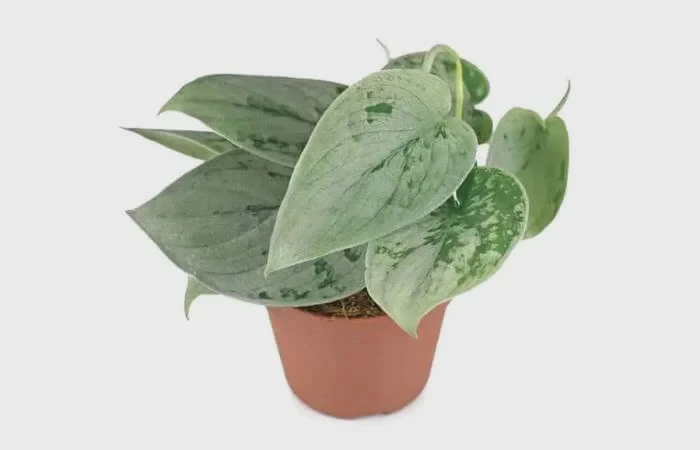
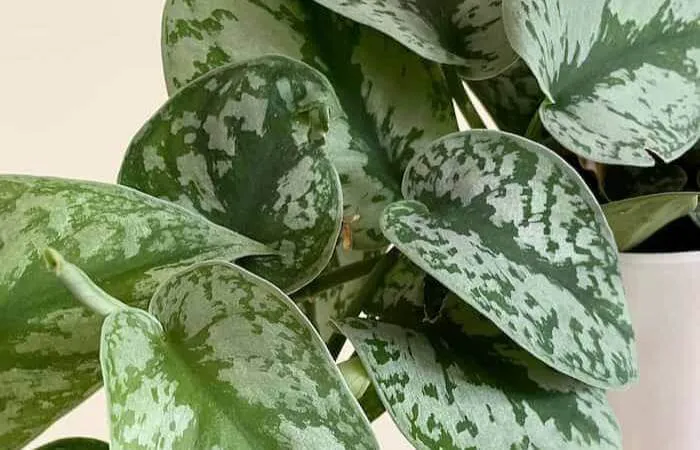
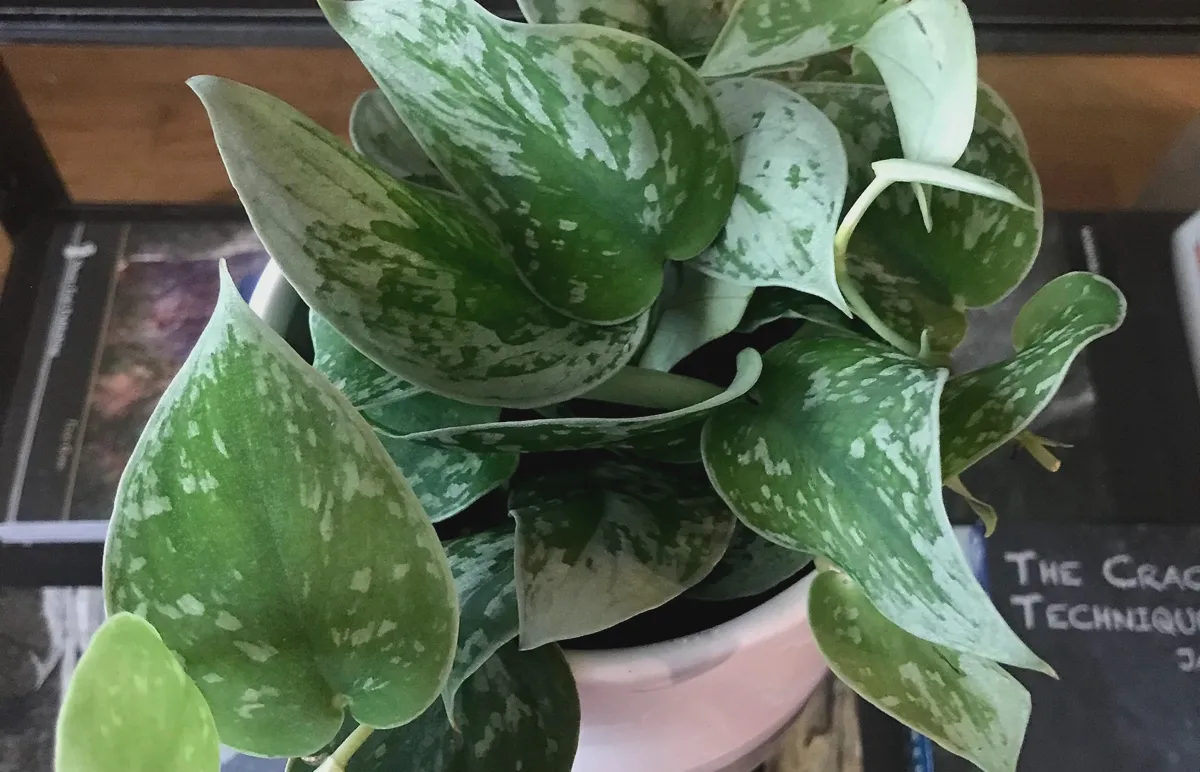
NC State Extension lists ‘Silvery Ann’ among the Scindapsus pictus cultivars. Its matte green foliage commonly shows irregular silver patches that may extend over substantial parts of a leaf. Look across several leaves rather than demanding an exact percentage of silver; variegation can differ between shoots. ‘Argyraeus’ and ‘Exotica’ are other names associated with the same species, but market labels can be mixed up.
Light and temperature
Provide bright indirect or filtered daylight, keeping leaves away from harsh summer sun that can cause dry scorch. Very dark corners slow production of new vines. NC State indicates ordinary warm-room temperatures around 65–85°F are suitable for this species; avoid cold windows and drafts. A hanging pot highlights trailing foliage, whereas a secure pole can support climbing stems.
Water and soil correctly
Use a container with unobstructed drainage and a loose mix that retains some water without remaining saturated. Check root-zone moisture; irrigate thoroughly after the upper medium approaches dryness, allowing excess to escape. Do not follow a fixed weekly schedule through both winter and summer. Leaves curling inward can indicate drought, but a heavy waterlogged pot may produce similar wilt when roots are failing.
Feeding, grooming and repotting
A complete indoor fertilizer may support active growth at the dose and interval on its label; do not feed heavily to force more silver. Clean leaves gently with a damp cloth and inspect their undersides for scale, mealybugs or mites. Only change the pot when roots genuinely crowd it or the medium no longer drains. A new container should be modestly larger and supported by fresh airy potting mix.
Stem cutting propagation
Choose a green, healthy vine and cut just below a node with clean scissors. Keep at least one node submerged in water or placed in an appropriate rooting medium, with leaves clear of standing water. Let a practical root system develop before transplanting. A cut leaf blade without a node will not form a new vine. Keep propagated cuttings away from strong sun while they establish.
Problems and pet considerations
- Curled, soft leaves: inspect whether the medium is dry or saturated.
- Brown sun-facing patches: reduce direct exposure and acclimate.
- Yellowing with wet roots: improve drainage and inspect damaged root tissue.
- Sticky deposits: look for feeding insects.
NC State lists S. pictus as a poisonous houseplant and a concern for pets. Keep it inaccessible to animals and small children.
Frequently asked questions
Is Silvery Ann a type of golden pothos?
No. It is a Scindapsus pictus selection in another genus.
Why are some leaves more silver?
Variation among shoots and plant development affects appearance; light is not a reliable way to dictate exact markings.
Does it need daily misting?
No. Prioritize appropriate light, moisture and drainage.