
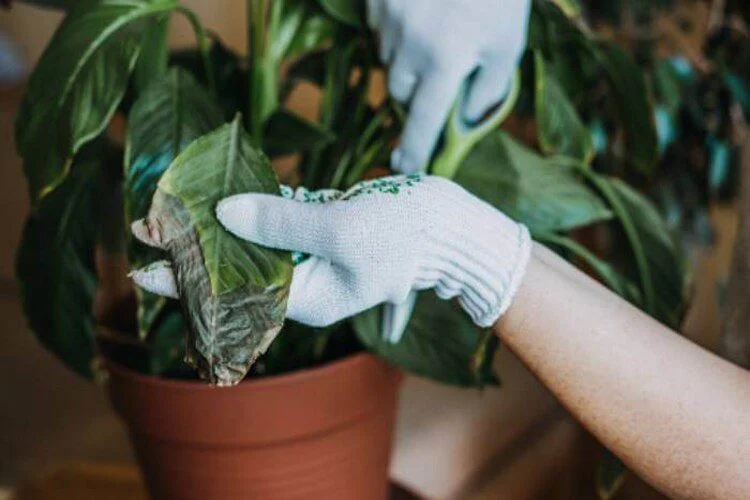
Quick answer: A pothos may droop or yellow while its potting mix remains saturated. The damaging factor is prolonged waterlogging that restricts air around roots, not one generous watering that drains freely. Start by emptying standing water, checking drainage and inspecting roots if the plant continues to decline.
Recognize a waterlogged root zone
A pot that stays unusually heavy for days, soggy mix and soft stems are stronger clues than a single yellow leaf. A sour smell and dark collapsing roots support concern for rot, but some healthy roots naturally have a darker surface. Drought can also make leaves limp, while individual older leaves may yellow as they age. Test the pot rather than diagnosing from foliage alone.
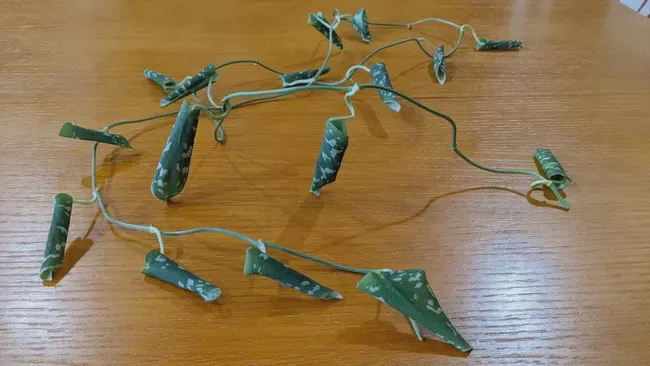
What to do immediately
Remove water from any decorative outer pot or saucer. Make sure the inner pot has clear drainage holes; never count on a layer of stones as drainage. Place the plant in bright indirect light away from cold drafts and harsh sun. Recheck deeper moisture before the next watering. If the plant keeps deteriorating while its soil is wet, gently unpot and inspect instead of waiting an arbitrary number of weeks.
When root repair or repotting is justified
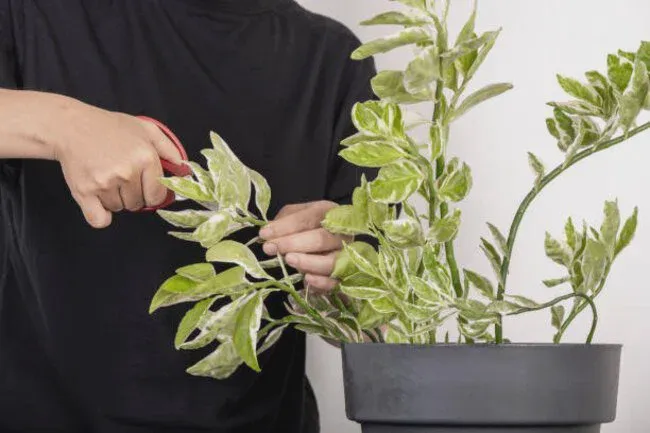
Soft, slimy or foul-smelling roots can be trimmed with clean shears, leaving sound roots intact. Repot into fresh airy media and a pot close to the remaining healthy root ball. A much larger container can stay wet longer and worsen damage. Repotting is not mandatory after a brief accidental overwatering if the medium drains and the plant recovers.
Recovery and a flexible watering routine
Keep the plant in a stable warm position and hold fertilizer until growth is again active. Feel the upper mix and judge the pot's weight before each watering. When watering becomes appropriate, soak thoroughly and drain completely. Cool winter rooms and low daylight change the interval substantially, so fixed schedules are unreliable. Monitor whether fresh foliage appears rather than expecting already yellowed leaves to become green.
Saving healthy stem cuttings
If many roots have collapsed but some firm vine remains, take healthy stem-node cuttings as a backup. Place a node in water or a lightly moist rooting medium, leaving leaf blades above the water. Do not attempt to propagate decaying stems. Keep the new planting container small and draining.
Frequently asked questions
Should I stop watering for three weeks?
Only water when the root-zone mix needs it; there is no universally safe number of days.
Will yellow leaves recover their color?
Generally not; judge plant recovery through healthy new growth.