
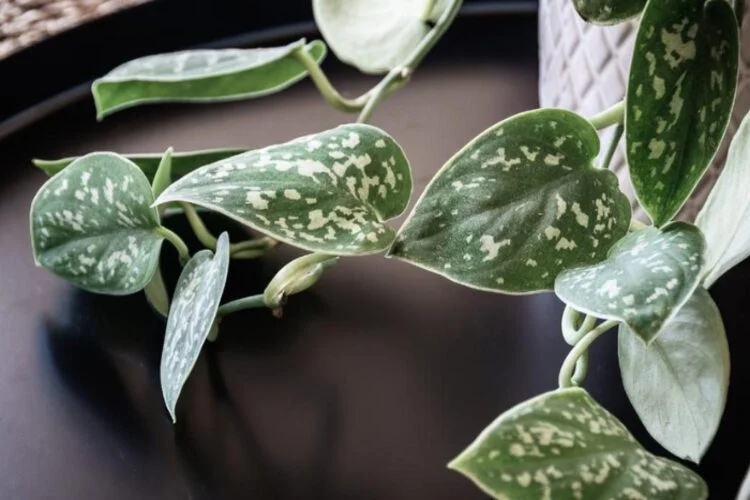
Quick answer: Satin pothos is the common name for Scindapsus pictus, not a cultivar of Epipremnum aureum. Grow its velvety green-and-silver leaves in bright indirect light, warm conditions and well-drained mix that can partially dry between waterings. Curled leaves call for checking moisture, heat and roots.
Satin pothos is not true pothos
Both Scindapsus and Epipremnum are aroids, but they are distinct genera. North Carolina Extension lists satin, silk and silver pothos as common names of Scindapsus pictus, with matte green leaves carrying metallic silver patches. The appearance differs from golden, Neon and Marble Queen Epipremnum aureum. Some seller labels use the common names interchangeably; the botanical name is more reliable.
Light and leaf color
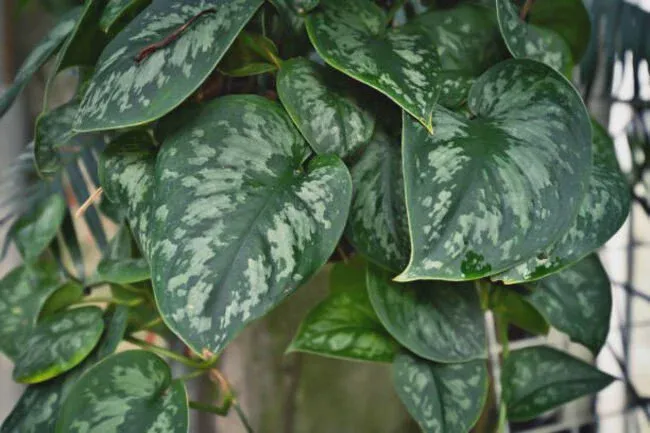
Place in bright indirect light to maintain attractive patterned growth. Harsh direct sun can scorch the foliage; very dim conditions may slow growth. The silver markings are a normal leaf trait, not mineral residue to scrub off. Keep the leaves clean with a soft damp cloth when necessary, avoiding harsh cleaners and leaf-shine products.
Watering and an airy substrate
North Carolina Extension recommends a moist, well-drained medium rather than permanently wet roots. Feel the upper portion of the mix and water thoroughly when it approaches dryness, letting excess drain. Pots with no drainage promote root stress. If leaves curl, check whether the root ball is light and dry or heavy and waterlogged before changing the routine. See the focused curling guide linked below.
Warmth, support and pruning
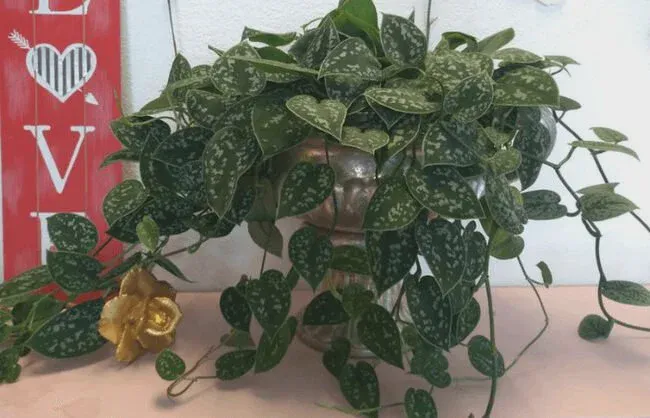
Scindapsus pictus prefers warm household conditions and does not tolerate freezing or cold drafts. Use a hanging basket or secure climbing support. Prune a leggy stem just above a node, then root healthy node-bearing stem sections in water or propagation mix. A detached leaf alone cannot grow a complete vine.
Feeding and troubleshooting
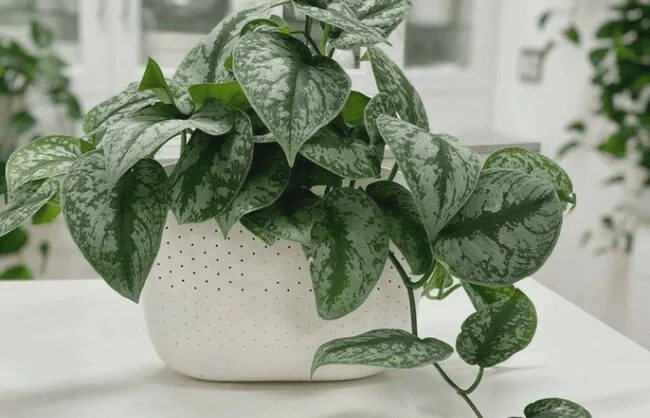
Feed lightly during active growth using a complete indoor-plant formula. Yellow leaves with wet soil require a drainage check; brown edges can follow water stress, heat or accumulated fertilizer salts. Inspect undersides for scale, mealybugs and mites if leaves develop sticky deposits or fine feeding marks. For precise care, avoid borrowing species-specific light targets from high-light desert plants.
Frequently asked questions
Is satin pothos toxic to pets?
It is an aroid and should be kept away from pets that chew houseplants; ask a veterinarian if ingestion occurs.
Do silver spots mean fungus?
No. The silver mottling is a normal characteristic of Scindapsus pictus.