
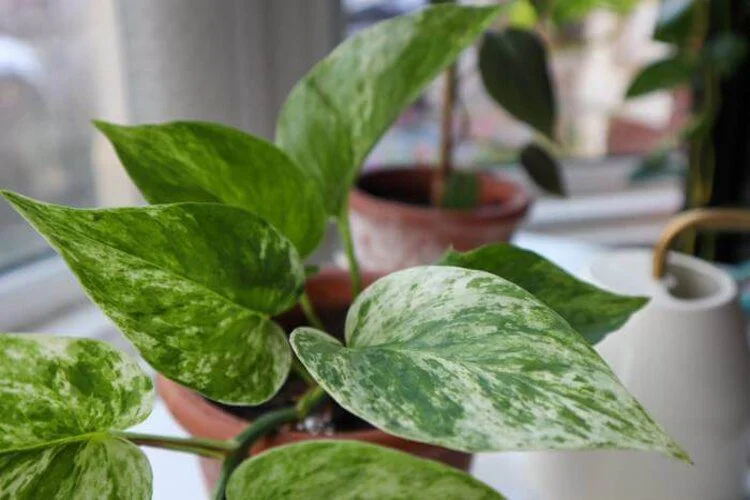
To get rid of bugs on pothos, identify the pest first. Move the plant away from other houseplants, inspect stems and the undersides of leaves, and remove visible insects by gentle rinsing or wiping. Recheck new growth and neighboring plants over the following weeks. If nonchemical measures are not enough, use only a treatment labeled for that particular pest and for indoor ornamental plants.
Different insects require different responses. Small flying insects around potting mix may be fungus gnats, while cottony clusters at leaf joints suggest mealybugs. A few harmless soil organisms are not proof of a plant infestation. The University of Minnesota Extension guide to houseplant pests explains how to recognize common pests and choose appropriate controls.
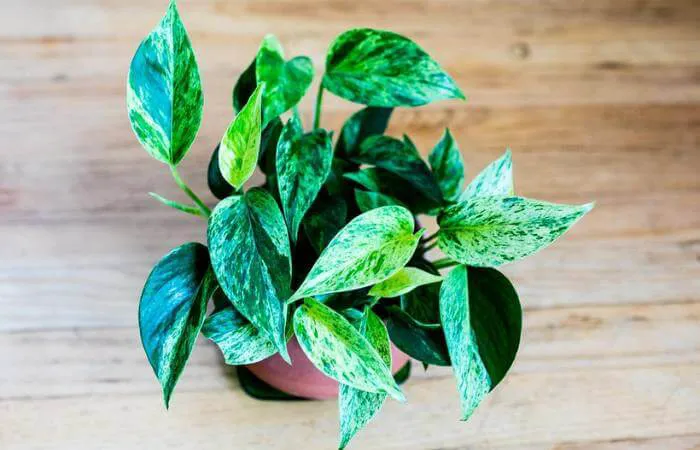
Identify the bugs before choosing a treatment
| What you notice | Likely pest | Where to look and what to do first |
|---|---|---|
| White, cottony clusters and sticky residue | Mealybugs | Check leaf axils and stem joints; gently remove visible insects and inspect the rest of the plant. |
| Fine webbing, pale speckles or stippled leaves | Spider mites | Examine leaf undersides with a magnifier; rinse foliage gently without damaging tender leaves. |
| Brown or tan bumps fixed to stems and leaf veins | Scale insects | Inspect stems and leaf undersides; remove small numbers carefully and monitor for new insects. |
| Soft-bodied clusters on new shoots, sometimes with sticky leaves | Aphids | Check new leaves and growing tips; rinse affected areas and isolate the pot. |
| Tiny flies emerging from persistently wet potting mix | Fungus gnats | Check moisture and drainage; use sticky cards to monitor flying adults and address the wet growing medium. |
| Small white insects that fly up when foliage is disturbed | Whiteflies | Examine leaf undersides for immature stages; isolate and monitor the plant. |
Springtails can also appear in damp potting mix, but they usually feed on decaying organic matter rather than healthy pothos leaves. Take a close photo or consult a local plant diagnostic service if identification is uncertain.
Six steps to remove pests safely
- Isolate the plant. Move the affected pothos away from nearby houseplants while you identify and control the problem. Inspect neighboring pots for similar signs.
- Look closely. Examine the underside of every leaf, the vine nodes, pot rim and soil surface. Check for webbing, sticky honeydew, cottony material and actual moving insects.
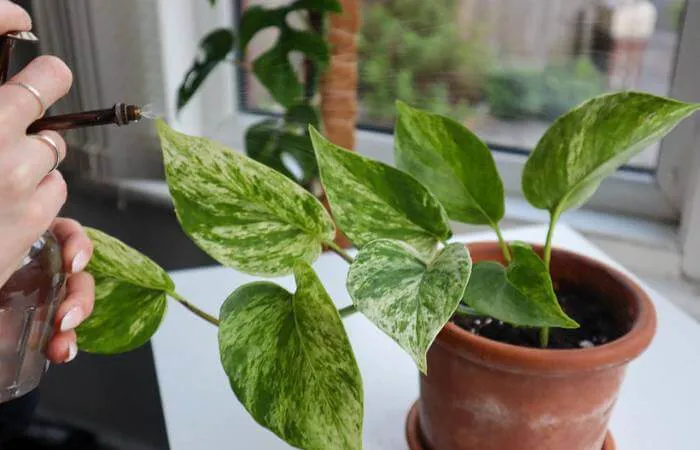
- Remove visible pests. Wipe leaves with a damp cloth or carefully rinse them with plain water. Support the vines so the water pressure does not tear foliage. Avoid repeatedly soaking an already wet pot.
- Address potting-mix problems. Fungus gnats often increase in persistently moist growing media. Allow the surface to dry to a level appropriate for pothos, improve drainage, empty standing water from saucers and remove decaying debris.
- Choose a targeted product only if needed. For persistent, correctly identified pests, consider a commercially formulated insecticidal soap or horticultural oil only if its label permits indoor houseplants and lists the target pest. Follow its dilution, plant-sensitivity, protective-equipment and reapplication instructions.
- Monitor new growth. Inspect every few days, since hidden pests and new generations may emerge after cleaning. Repeat any treatment only as directed by its label and stop once the infestation is controlled.
Which pest control methods are appropriate?
Gentle cleaning and physical removal
For a small infestation, wiping or rinsing may remove many aphids, mealybugs and mites. A cotton swab or damp cloth can help reach plant joints. Prune only badly infested or damaged portions when necessary, using clean tools. Do not strip all healthy leaves from the vine.
Yellow sticky cards
Sticky cards can help detect and reduce flying adult fungus gnats or whiteflies. They do not remove eggs or immature insects from potting mix or foliage, so pair them with correctly targeted care and regular inspection. Do not assume that a card that catches flies proves they were eating the leaves.
Commercial insecticidal soaps and horticultural oils
These products can help with certain soft-bodied pests when applied correctly. Follow the exact label: coverage, timing and leaf sensitivity differ by formulation and pest. Do not improvise dish-soap, engine-oil or garlic-oil mixtures or combine insecticides unless the product labels explicitly allow it. Homemade mixtures can damage foliage or expose people and pets to unnecessary risks. The University of Minnesota Extension explains why commercially labeled products and target-specific application matter.
What not to do
Do not spray preventively when no pest is present, apply fungicide to treat an insect problem, or assume that neem oil is appropriate for every insect. If a product is not labeled for indoor ornamental use or the insect has not been identified, avoid using it. Keep children and pets away from products and treated plants according to the label.
Why bugs return, and how to prevent another infestation
- New plants: Keep recently purchased plants separate and examine them before grouping them with an existing collection.
- Constantly wet soil: Inspect drainage and watering, particularly if fungus gnats are present. Soil moisture, not a fixed watering calendar, should guide care.
- Hidden insects: Scale, mealybugs and mites may persist in stem joints or on leaf undersides. Check multiple parts of the plant during routine care.
- Indoor growing conditions: Provide suitable indirect light, reasonable airflow and good root health. Do not overfertilize a stressed or pest-affected plant.
- Plant hygiene: Remove fallen leaves from the potting mix and clean tools used on affected plants.
Good care cannot guarantee a pest-free plant, but routine inspection and early identification make small problems easier to control. For general care, see Iowa State University Extension's houseplant guide.
Frequently asked questions
Are tiny flies around pothos always harmful?
No. Small flies hovering around moist potting mix are often fungus gnats. Adult gnats usually do not chew leaves; their presence is a reason to inspect drainage, roots and the potting mix, not to spray the leaves indiscriminately.
How do I know whether the bugs are spider mites?
Look for pale speckling on leaves and sometimes fine webbing, especially underneath the foliage. A magnifier helps because mites are very small. Confirm the diagnosis before using a mite-control product.
Should I cut off every leaf that has insects?
No. Healthy foliage can usually remain while you remove pests. Trim severely damaged portions if needed, but avoid unnecessary pruning that weakens the plant.
Why are there holes in my pothos leaves?
Holes can be caused by mechanical tearing, chewing damage or dead tissue falling out of spotted leaves; they do not identify a specific insect. See our leaf-hole troubleshooting guide.
Related pothos care guides
Read about common pothos problems, yellowing leaves, pale or white leaves, and overwatered pothos for other causes of plant stress.