
Independent gardening guides. Some links earn us a commission at no cost to you. Read our affiliate disclosure
Newsletter
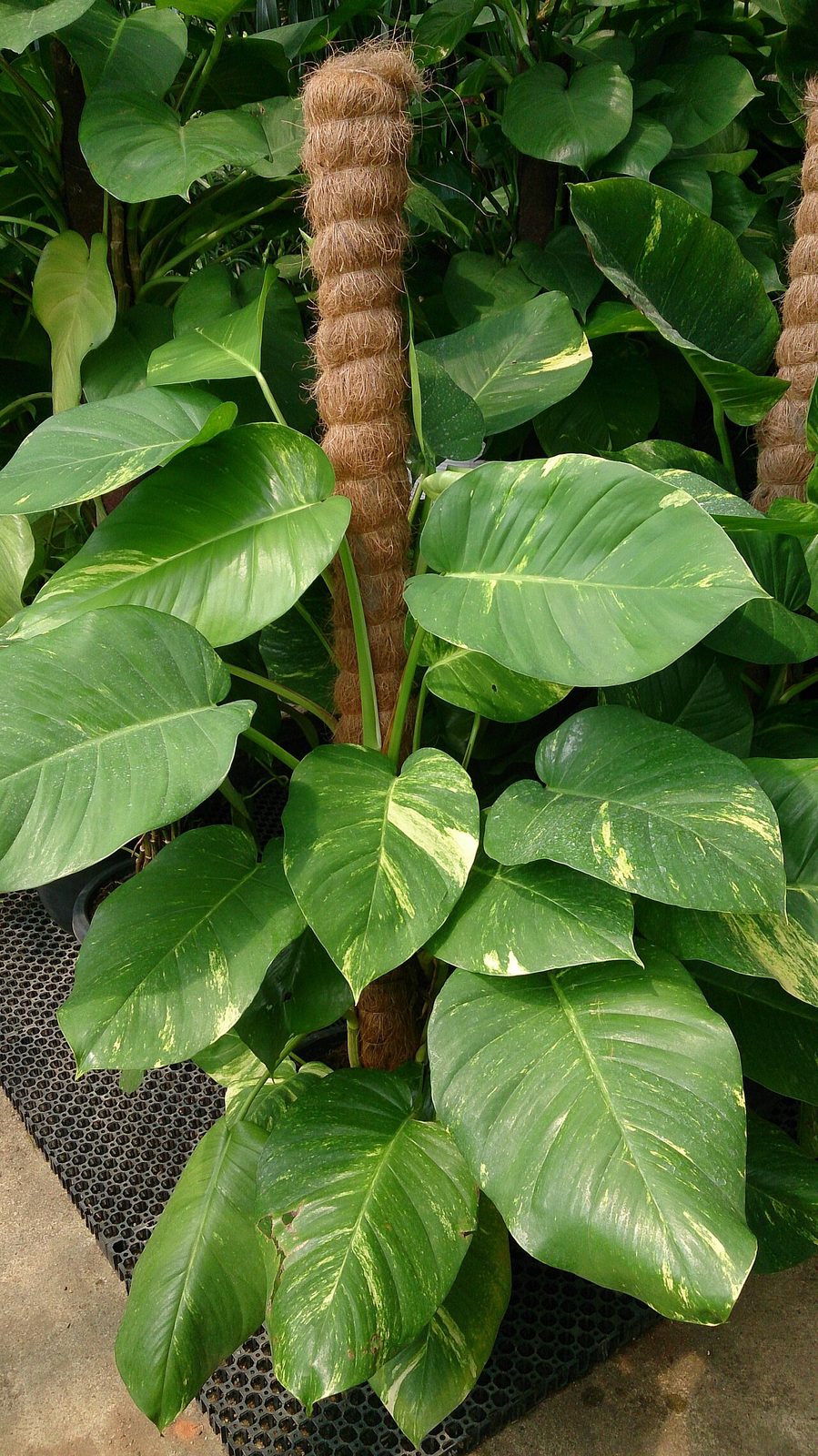
Golden pothos (Epipremnum aureum)

Photo: Mokkie, CC BY-SA 3.0 via Wikimedia Commons

Golden pothos

Epipremnum aureum · Araceae

Also known as: Pothos, Devil's ivy, Devil's vine, Taro vine, Ivy arum, Hunter's robe, Ceylon creeper, Golden pothos, Marble Queen pothos, Neon pothos, Jade pothos, Pearls and Jade pothos, Snow Queen pothos, Manjula pothos, N'Joy pothos, Scindapsus aureus, Epipremnum pinnatum 'Aureum'

A trailing or climbing vine with heart-shaped, often variegated leaves. Prefers bright indirect light, tolerates low light, and is toxic to pets.

Light
Low light tolerant, Medium light, Bright indirect light
Care level
Beginner friendly
Where it grows
Indoors
Cats and dogs
Toxic to pets Source (opens in a new tab)

The ASPCA lists golden pothos (Epipremnum aureum) as toxic to dogs and cats. It contains insoluble calcium oxalates. Listed signs: oral irritation, intense burning and irritation of the mouth, tongue and lips, excessive drooling, vomiting and difficulty swallowing. This is a species-level source. If a pet chews this plant, contact your vet or an animal poison control service.

View My Garden

Check a problem with this plant

How to identify it

Golden pothos is Epipremnum aureum, an evergreen climbing vine in the arum family (Araceae). It was once sold as Scindapsus aureus, and plants labelled Epipremnum pinnatum 'Aureum' are now correctly called E. aureum (NC State Extension). Look for glossy, heart-shaped to oval leaves about 3 to 6 inches long, grooved leaf stalks that clasp the stem, and brown aerial roots along the vine.

The popular named pothos are selections of this one species: 'Marble Queen' (green marbled with white), 'Neon' (bright yellow leaves), 'Jade' (solid dark green), 'Pearls and Jade', 'Snow Queen', N'Joy and 'Manjula' (NC State, Clemson HGIC). Satin pothos looks similar but belongs to a different genus, Scindapsus, and dragon tail plant is the separate species Epipremnum pinnatum. See types of pothos.

Light

Golden pothos prefers bright, indirect light and survives for long periods in low light (NC State Extension). Low light can make variegated forms lose or fade their markings (NC State, Clemson HGIC), so the more heavily marked selections do best in a brighter spot.

Keep it out of direct sun, especially in summer, which can scorch the leaves (RHS). Long, leggy stems with few leaves suggest too little light; bleached or scorched patches suggest too much (Iowa State Extension). See how much light pothos needs and pothos sunburn.

Potting mix and drainage

Use an airy, well-draining potting mix (Clemson HGIC). The RHS describes an open compost that holds some moisture but drains well, and Iowa State recommends a soilless potting mix rather than unamended garden soil. The pot must have a drainage hole; a layer of gravel in the bottom does not replace one (Iowa State Extension).

Empty the saucer or outer pot within 30 to 45 minutes of watering so the plant never sits in water. Repot when roots show through the drainage holes or the plant becomes root-bound (Clemson HGIC), moving up one pot size (RHS). See does pothos need drainage holes and root-bound pothos.

When to water

Water by checking the mix, not by the calendar. NC State Extension and Clemson HGIC both say to let the potting mix dry out between waterings, and the RHS advises testing with a finger and watering only once the compost is approaching dryness. Iowa State's general houseplant rule is to water when the mix feels dry about an inch down; if it still feels wet, check again in a day or two.

When it is time, water thoroughly so moisture reaches all the roots, let the excess drain, then empty the saucer. Never water a mix that is still wet: overwatering can cause root rot and blackened leaf edges (NC State). See how often to water pothos.

Humidity and temperature

Average room humidity is usually fine: the RHS notes that, unlike many tropical houseplants, epipremnums don't need high humidity. Clemson HGIC gives 50 to 70% as the preferred range, against 30 to 60% in an average home, so a humidifier or a tray of wet pebbles can help in very dry rooms (NC State). Misting does not raise humidity around the plant (Iowa State).

Clemson HGIC suggests nights of about 60 to 70°F and days of 70 to 85°F; the RHS gives 65 to 86°F (18 to 30°C). Keep the plant away from cold drafts, air-conditioning vents and direct heat. See pothos humidity.

Feeding

Feed only while the plant is actively growing, and skip winter, when NC State Extension notes the plant is dormant. Use a general houseplant fertilizer and follow the product label rate. Iowa State Extension suggests waiting a few months after repotting, because most potting mixes already contain some fertilizer.

Clemson HGIC lists low fertility as one possible cause of yellow leaves, alongside overwatering, so check whether the mix is wet before reaching for fertilizer. See pothos fertilizer.

Propagation

Golden pothos roots readily from stem cuttings, in water or in potting mix. Each cutting needs at least one node, the joint where a leaf meets the stem (Clemson HGIC). The RHS describes trimming just below a leaf joint and standing the cutting in water in a bright spot until roots form. It also describes layering: pinning a trailing stem into a pot of free-draining compost.

Pruning stems back keeps the plant bushy (NC State), and the trimmings can be used as cuttings. Wear gloves, because the sap can irritate skin (RHS). See how to make pothos fuller.

Growth and size

Golden pothos is a vine that climbs by aerial roots or trails from a pot or hanging basket. In a container it generally keeps its juvenile leaf shape; given a support to climb and adequate light, it begins to produce large, mature leaves (NC State Extension). The RHS describes mature leaves as deeply lobed and up to 90 cm long.

A moss pole or wooden support imitates the tree trunks it climbs in nature and encourages larger leaves (Clemson HGIC). NC State notes that trailing or climbing vines can reach 40 feet, and that the plant rarely flowers. See how to make pothos climb and pothos aerial roots.

Warning signs

  • Yellow leaves: check whether the mix is wet. Clemson HGIC links yellowing to overwatering or low fertility. If the mix is wet, let it dry and check the roots. See yellow pothos leaves.
  • Blackened leaf edges in a pot that stays wet: overwatering can cause root rot (NC State). Check the drainage hole and roots before watering again. See overwatered pothos.
  • Fading variegation or long, bare stems: possible low light (NC State, Iowa State). Move it to brighter, indirect light. See leggy pothos.
  • Scorched patches or dying tips: possible intense light or low humidity (Clemson HGIC). Check for direct sun first. See pothos sunburn.
  • Insects on stems or leaves: check for mealybugs, scale, thrips or spider mites (NC State, Clemson HGIC). See bugs on pothos.

Related guides

Sources

  1. ASPCA Animal Poison Control: Golden Pothos (Epipremnum aureum) (checked October 11, 2026)
  2. NC State Extension Gardener Plant Toolbox: Epipremnum aureum (checked October 11, 2026)
  3. Clemson Cooperative Extension, Home & Garden Information Center: How to Grow Pothos Indoors (Epipremnum spp.): Care, Cultivars, and Common Problems (HGIC 1568) (checked October 11, 2026)
  4. Royal Horticultural Society: Epipremnum aureum (checked October 11, 2026)
  5. Royal Horticultural Society: How to grow epipremnum (checked October 11, 2026)
  6. Iowa State University Extension and Outreach (Yard and Garden): How to Care for Houseplants (checked October 11, 2026)

Last reviewed