
Independent gardening guides. Some links earn us a commission at no cost to you. Read our affiliate disclosure
Newsletter
Dragon tail plant (Epipremnum pinnatum)

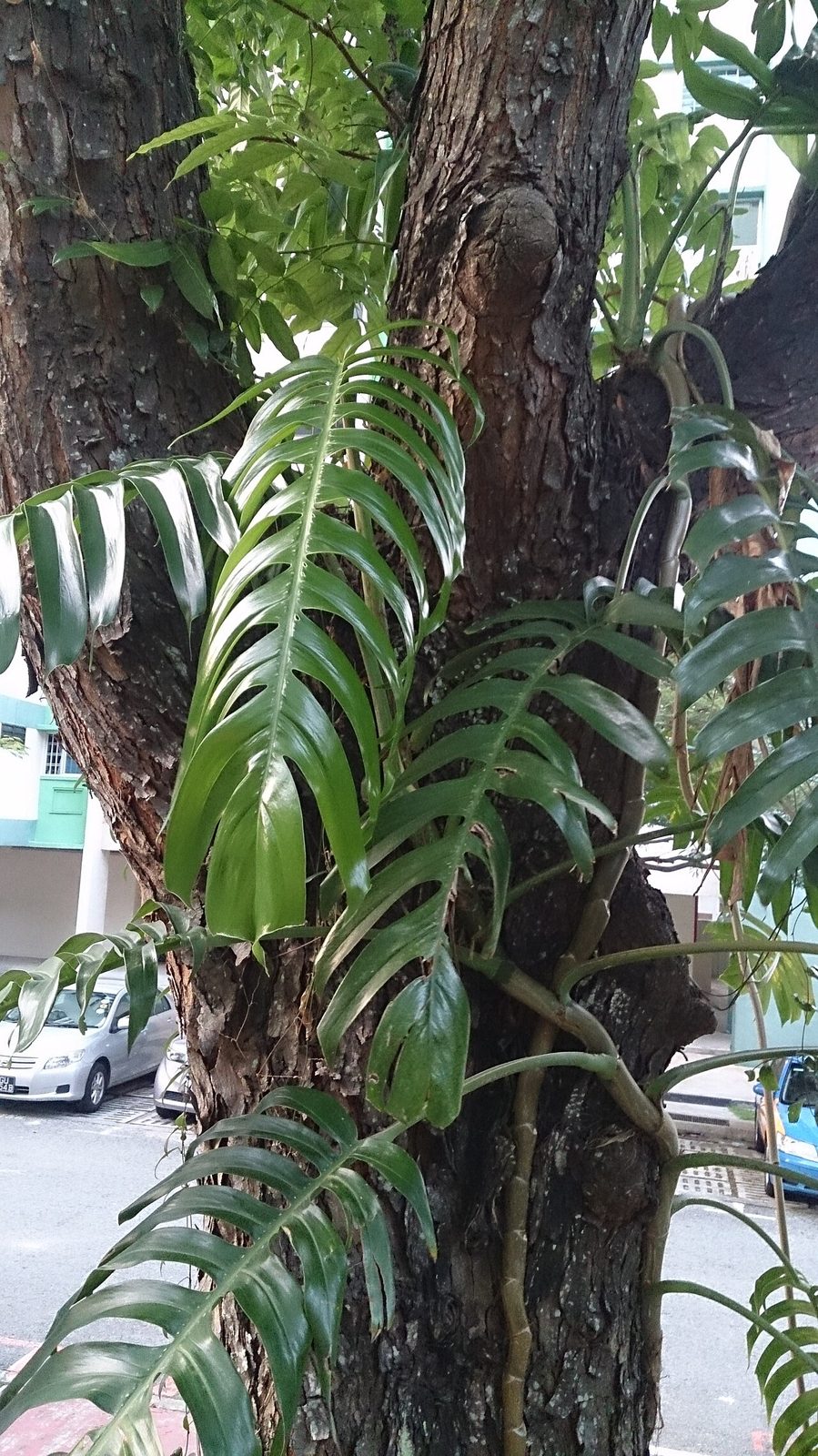
Photo: Mokkie, CC BY-SA 3.0 via Wikimedia Commons

Dragon tail plant

Epipremnum pinnatum · Araceae

Also known as: Dragon tail plant, Dragon-tail pothos, Cebu Blue pothos, Baltic Blue pothos, Skeleton Key pothos, Albo pothos, Silver vine, Taro vine, Centipede tongavine, Tibatib, Money plant, Epipremnum pinnatum 'Cebu Blue', Epipremnum pinnatum 'Baltic Blue'

A climbing aroid vine sold as Cebu Blue and Baltic Blue pothos. Young leaves are entire; climbing plants grow deeply cut leaves. Toxic to pets.

Light
Medium light, Bright indirect light
Care level
Beginner friendly
Where it grows
Indoors, Outdoors in warm climates
Cats and dogs
Toxic to pets Source (opens in a new tab)

NC State Extension's species page for Epipremnum pinnatum says it is toxic to cats, dogs and people if eaten (medium poison severity), because the leaves and stems contain calcium oxalate crystals. Listed symptoms: mouth and throat irritation, drooling, vomiting, and difficulty breathing and swallowing. If a pet chews this plant, contact your vet or an animal poison control service.

View My Garden

Check a problem with this plant

How to identify it

Dragon tail plant is Epipremnum pinnatum, an evergreen climbing perennial in the arum family (Araceae), native from India, Southeast Asia and southern China to the Philippines, New Guinea and Australia (NC State Extension). Juvenile leaves are elliptical or arrow-shaped with smooth edges. As they mature they become thick, shiny and ovate with deeply cut margins and holes (fenestrations).

Two popular houseplant selections are 'Cebu Blue', with blue-green leaves that usually stay in the juvenile form, and 'Baltic Blue', with deep blue-green leaves that develop holes (NC State). Others include 'Skeleton Key' and the white-variegated 'Albo-Variegata'. Golden pothos was once treated as E. pinnatum 'Aureum', but botanists found distinctly different vegetative features, and it is now its own species, E. aureum. See Baltic Blue vs Cebu Blue.

Light

NC State Extension says this plant prefers bright, indirect sunlight. The RHS recommends full or bright, filtered light, and its epipremnum guide warns that direct sun, especially in summer, can scorch the leaves.

Light and support together shape the leaves. NC State notes that 'Cebu Blue' grown up a stake or moss pole develops mature, fenestrated leaves like the species. Clemson HGIC says many E. pinnatum selections show their most distinctive features when grown vertically. See Cebu Blue pothos and how much light pothos needs.

Potting mix and drainage

NC State Extension recommends soil that is moist, well-drained and rich in organic matter, with a slightly acidic pH. The RHS suggests peat-free houseplant compost for this species, and its epipremnum guide describes an open, moisture-retentive but well-drained mix.

Use a pot with a drainage hole, and empty any saucer so the roots never sit in water (Iowa State Extension). NC State notes repotting may be needed about every 2 to 3 years. See does pothos need drainage holes and root-bound pothos.

When to water

Check the mix before you water. NC State Extension describes the right soil as moist but well-drained. The RHS epipremnum guide says to water only once the compost is approaching dryness, testing with a finger first, and Clemson HGIC says to let the soil dry between waterings. Water when the top part of the mix has dried, then water thoroughly and let the excess drain.

Never water a mix that is still wet. NC State warns that overwatering causes fungal and bacterial diseases that can lead to root rot. The RHS suggests watering more freely in the growing season and moderately in winter. See overwatered pothos.

Humidity and temperature

NC State Extension says this plant prefers warm temperatures and moderate humidity, and should be kept away from drafts and cold air. The RHS notes that epipremnums don't need high humidity, so average room air is usually enough.

The RHS guide to epipremnums suggests keeping plants between 65 and 86°F (18 to 30°C), away from cold draughts and direct heat. The RHS hardiness rating for this species is H1B: in cool climates it can only go outside in summer and needs protection in winter. NC State lists USDA hardiness zones 10a to 11b for growing outdoors.

Feeding

Feed only during the growing season. The RHS suggests a balanced liquid fertilizer while the plant is actively growing; use a general houseplant fertilizer and follow the product label rate. Iowa State Extension advises fertilizing houseplants only while they are actively growing.

After repotting, wait a few months before feeding, because most potting mixes already contain some fertilizer (Iowa State). See pothos fertilizer.

Propagation

Propagate dragon tail plant from stem cuttings (NC State Extension). The RHS suggests stem-tip cuttings in summer, or layering, where a trailing stem is pinned into a pot of free-draining compost. Each cutting needs at least one node, the joint where a leaf meets the stem, and pothos cuttings root in soil or water (Clemson HGIC).

Tip pruning in spring encourages branching (RHS), and the trimmings can be used as cuttings. Wear gloves when cutting: the RHS lists the plant as harmful if eaten and a skin and eye irritant. See how to make pothos fuller.

Growth and size

Dragon tail plant is a root-clinging climber. In its native habitat its sturdy vines can reach 20 to 65 feet long; indoor plants reach about 8 to 10 feet in length (NC State Extension). The RHS gives an eventual height of 2.5 to 4 m and suggests a moss pole, or letting it trail.

Leaf shape changes with age. Juvenile leaves are undivided; mature leaves appear once the plant has height to climb, and are thick, leathery and deeply lobed, up to 30 to 50 cm long (NParks Flora & Fauna Web). 'Cebu Blue' usually keeps juvenile leaves unless it climbs (NC State). See how to make pothos climb and Baltic Blue pothos.

Warning signs

  • Mix that stays wet: overwatering can lead to fungal and bacterial root rot (NC State). Check the drainage hole and the roots, and let the top of the mix dry before watering again. See overwatered pothos.
  • Scorched patches: direct summer sun can scorch epipremnum leaves (RHS). Move the plant into bright, filtered light. See pothos sunburn.
  • Insects on stems or leaf undersides: NC State and the RHS list mealybugs, scale insects, thrips and spider mites. Confirm the pest first, then see bugs on pothos or scale on pothos.
  • No holes or splits in the leaves: this is normal for juvenile growth, especially on 'Cebu Blue'. Mature, fenestrated leaves form when the plant climbs a stake or moss pole (NC State). See how to make pothos climb.

Related guides

Sources

  1. NC State Extension Gardener Plant Toolbox: Epipremnum pinnatum (checked October 11, 2026)
  2. Royal Horticultural Society: Epipremnum pinnatum (checked October 11, 2026)
  3. Royal Horticultural Society: How to grow epipremnum (checked October 11, 2026)
  4. Clemson Cooperative Extension, Home & Garden Information Center: How to Grow Pothos Indoors (Epipremnum spp.): Care, Cultivars, and Common Problems (HGIC 1568) (checked October 11, 2026)
  5. National Parks Board Singapore, Flora & Fauna Web: Epipremnum pinnatum (L.) Engl. (checked October 11, 2026)
  6. Iowa State University Extension and Outreach (Yard and Garden): How to Care for Houseplants (checked October 11, 2026)

Last reviewed