
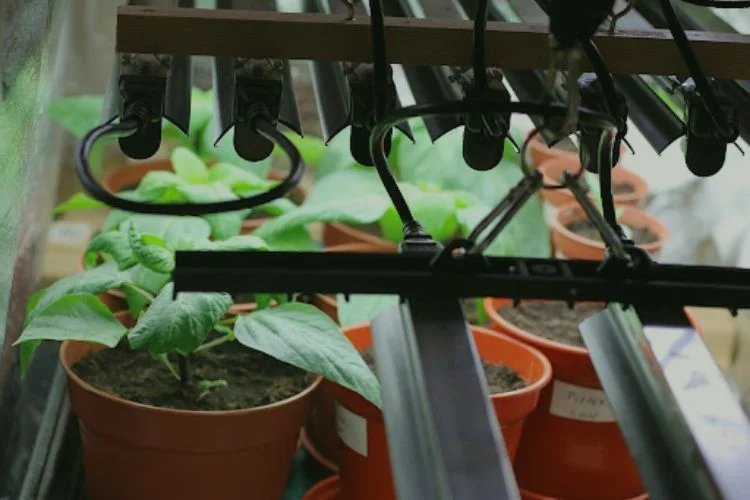
Yes. Grow lights can scorch or bleach foliage when the light reaching the leaves is too intense, and some lamps also heat nearby leaves. LEDs generally produce less radiant heat than older HID or incandescent lamps, but a powerful LED set too close can still cause light stress. The answer is to adjust intensity, distance and exposure—not to assume every brown leaf is a light burn.
What light damage looks like
Leaves closest to a lamp may become pale, bleached, crisp or papery; the top of a plant can be affected while shaded leaves look normal. University of Minnesota Extension identifies scorched and bleached leaves as possible consequences of excessive light. Leaf scorch can also come from drought, heat near a window, fertilizer injury or damaged roots. Check the position of affected foliage, soil moisture and room temperature before deciding that the lamp caused it.
Why LEDs can still damage plants
A fixture's watt rating describes its electrical draw, not the intensity actually reaching the canopy. A concentrated LED panel can deliver a high photosynthetic photon flux density (PPFD), especially at close range. HPS, metal-halide and incandescent sources add more heat pressure, but any intense source can overwhelm a plant accustomed to shade. A sudden switch from a north window to strong overhead lighting is more risky than a gradual increase. Use the maker's canopy-height and dimming guidance as a starting point, then observe the plant.
How to respond when leaves bleach or crisp
Move the fixture higher or lower its dimmer setting, check for hot air trapped near the canopy, and provide the dark period appropriate for the crop. Do not cut off every pale leaf immediately; first watch whether new leaves emerge normally after the adjustment. Damaged tissue usually does not turn green again. Check water needs by the growing medium rather than watering on a fixed schedule to counteract suspected light damage. A healthy plant should show stable new growth without further blanching.
Distance and daily exposure must be considered together
Two lights hung at the same height can deliver very different PPFD because optics, output and canopy coverage differ. A manufacturer PPFD map measured at the same hanging height as your setup is more useful than a universal number of inches. Daily light integral (DLI) also depends on how many hours the lamp runs. If leaves pale after a long exposure, increasing the distance may help; so may shortening an excessive photoperiod. Do not trade an extreme distance for 24-hour operation.
A practical safety check
Begin with a moderate manufacturer-recommended setting; keep the fixture securely mounted and away from water. Examine the newest and uppermost leaves after each change. If growth stretches and new leaves are small, the plant may need more—not less—light. If leaves bleach, move away from the brightest position. Keep plants with different light requirements on separate shelves rather than forcing every species under one lamp. These observations matter more than judging brightness by how comfortable the light looks to human eyes.
Setup checklist
- Inspect where discoloration occurs: nearest the bulb, across all leaves, or along leaf margins.
- Check fixture power, dimmer and manufacturer PPFD chart rather than relying on bulb color.
- Reduce intensity or raise the light; correct excessive heat and confirm drainage.
- Keep a regular day/night timer and record whether new growth improves.
Frequently asked question
Can a grow light burn plants without feeling hot?
Yes. Too much light can bleach leaves even with relatively cool LEDs; temperature is only part of the risk.
Further reading and sources
- University of Minnesota Extension — lighting for indoor plants
- Purdue Extension — daily light integral
Related guides: How Far Should Grow Lights Be From Seedlings · How To Hang Grow Lights · Can You Leave Grow Lights On 24 Hours A Day · Hid Vs Led Grow Lights · Do Fluorescent Lights Help Plants Grow