
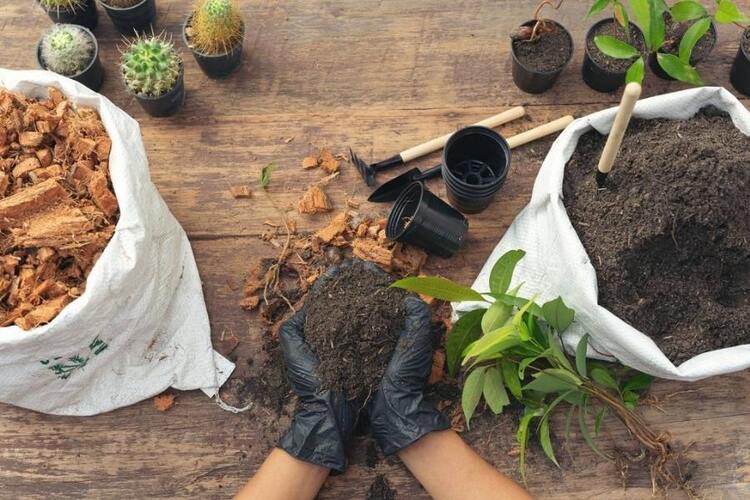
Potting mix does not spoil on a single universal date, but it can become unsuitable for growing plants. Long storage can change its texture, moisture distribution and any added fertilizer's usefulness. An old sealed, dry bag may still be usable; a damp, foul-smelling, pest-infested or diseased mix may be better discarded or kept away from indoor plants.
Five checks before using old potting mix
- Smell: an earthy odor is typical. Sour, rotten or sewage-like smells indicate poor storage or decomposition under unsuitable conditions.
- Structure: check whether the mix still loosens when gently crumbled. Fine, compacted peat or broken-down bark may drain and aerate poorly.
- Pests: look for fungus gnats and other insects. University of Minnesota Extension cautions against bringing old open bags stored outdoors into indoor pots.
- Previous plant disease: do not reuse mix from containers with root rot or seedling damping-off problems for susceptible new plants.
- Moisture and residue: inspect for waterlogged clumps, unusual crusting or heavy fertilizer salts rather than assuming a printed purchase date tells the whole story.
Can you use last year's unopened bag?
Often yes, if it was stored out of direct rain, extreme heat and contamination and still has a loose structure. Rehydrate any peat-based mix gradually if it has become hard to wet. If the bag includes precharged fertilizer, do not assume the same nutrient release remains after extended storage; check the manufacturer's instructions or use a measured feeding program later as plants grow.
Can you reuse mix from old pots?
Use more caution than with an unopened bag. Removing old roots, fluffing intact particles and adding an appropriate quantity of fresh growing medium may improve structure, but it does not sterilize disease organisms or remove accumulated salts. For seed starting, University of Minnesota Extension specifically recommends new potting mix, not reused mix, because seedlings are especially vulnerable to damping-off pathogens.
When should you throw it out?
- After confirmed serious root disease or repeated unexplained seedling collapse.
- When the mix stays waterlogged, has decayed to fine muck or smells strongly rotten.
- When pest infestation cannot be managed or the contents were exposed to animal waste, chemicals or other contaminants.
A light harmless surface fungus is not automatically proof that the whole bag is unsafe. Identify what you see and reassess watering rather than indiscriminately spraying fungicides or baking soda.
How to store bagged potting mix
Keep bags sealed or folded closed in a clean, sheltered area, off bare ground and protected from pests and standing water. Avoid treating outdoor garden soil as a substitute for a formulated container medium: garden soil is often too dense for pots and may bring pests indoors. Label opened bags and inspect them before use.
Refreshing a healthy old mix
- Remove roots, leaves and debris from a previously healthy container.
- Discard extremely fine or compacted portions; blend with fresh potting medium compatible with your plants.
- Repot into a clean container with drainage holes.
- Water to assess whether the mix wets evenly and drains properly.
- Feed only as the plant grows and after considering any fertilizer already in the mix.
The safest rule: prioritize fresh, clean media for indoor seedlings and disease-sensitive plants; reuse old media only when its history and condition support doing so.