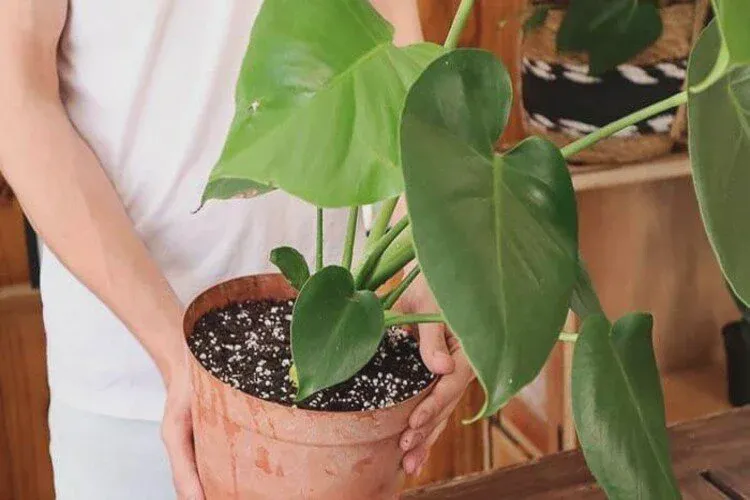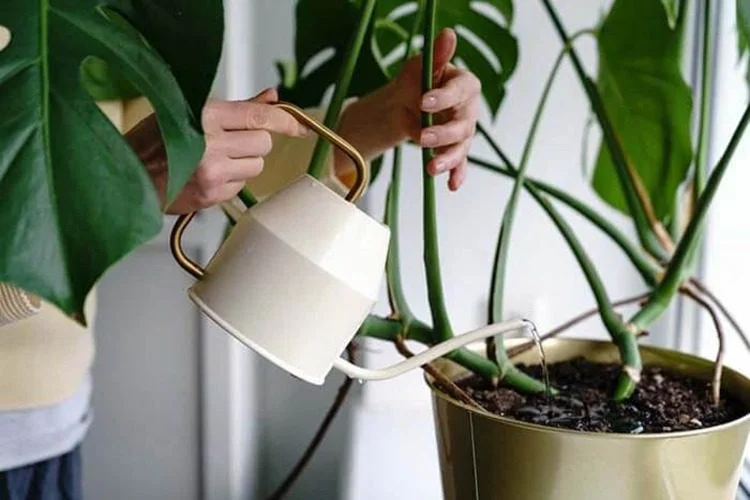
An overwatered Monstera is a plant whose root zone stays too wet for too long, limiting oxygen for healthy roots. Yellow leaves and drooping may follow, but these symptoms are shared by drought, pests and transplant stress. Check the potting mix, drainage and, if decline continues, the roots before changing your care.
Is the root ball actually too wet?
A heavy pot and moist mix below the surface long after watering suggest slow drainage or low water use. A sour odor and dark mushy roots are more concerning. An underwatered plant can droop too, but its pot is light and the mix is dry. Water may even run around a severely dried peat-based root ball without rewetting it. Gently tip out the root ball if necessary; firm roots are more reassuring than the color of a single leaf.
What the visible symptoms mean
Yellow foliage, brown patches and poor growth may occur with waterlogging, but also with very dry soil, strong sunlight and natural aging. Fungus gnats or mold on the mix can accompany chronic moisture without proving root rot. Droplets on the leaf edge are often guttation, not proof of overwatering. Evaluate several observations at once, especially root condition and how the mix drains.
Six steps to help a waterlogged Monstera
- Stop automatic calendar watering while the potting mix is still wet.
- Take the inner pot out of a cachepot and pour away all standing water.
- Check and clear drainage holes. Gravel at the base is not a substitute for proper drainage.
- Use steady, bright indirect light and avoid cold drafts; low light makes drying slower.
- If the plant continues to decline in saturated soil, gently examine the roots and trim only mushy, dead tissue with clean tools.
- Repot into clean, airy mix in a drained pot that fits the surviving root mass; avoid oversized containers.
Watering after the plant stabilizes
Allow the upper root zone to dry sufficiently between thorough waterings. Then water until excess drains from the pot and empty the saucer. How often this happens varies with season, temperature, pot material and root size. Iowa State Extension recommends testing the soil regularly rather than watering on a fixed weekday. Excess fertilizer will not cure waterlogged roots, and repeat repotting can add stress if drainage is already adequate.
How to tell whether the plant is recovering
A yellow leaf usually cannot turn green again; look for healthy new foliage, stable stems and firm roots instead. If damage spreads despite correct moisture, inspect for pests and disease. Read Monstera yellow leaves, repotting shock and how to water. Sources: Iowa State watering and container guidance, NC State Monstera profile and Iowa State houseplant disease diagnosis.