
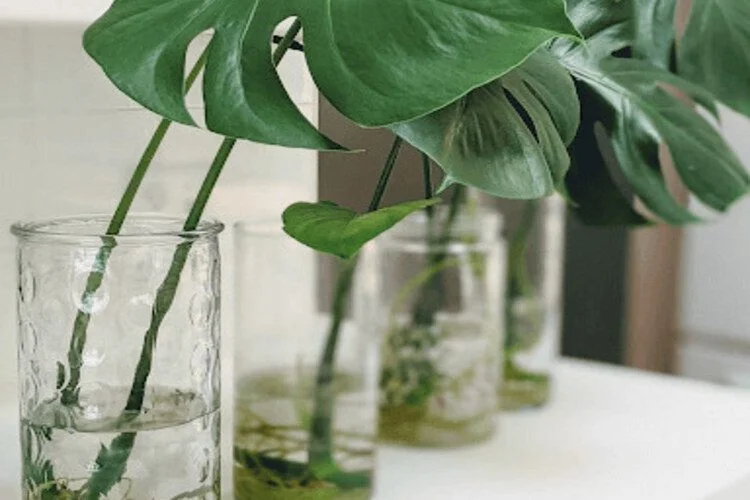
Water Monstera when the upper 1–2 inches of its potting mix have dried, then let excess water drain. This is a useful starting point from Penn State Extension, not a rigid weekly rule. Check deeper moisture in large containers and adjust for pot material, root size, indoor light and temperature. A container without drainage makes healthy watering considerably harder.
How to tell whether Monstera needs water
- Feel the potting mix. Insert a finger into the upper mix. If it is still wet, wait and check again later.
- Check pot weight and deeper moisture. Large pots can stay saturated beneath a dry-looking surface; compare how the container feels after watering and when it becomes lighter.
- Inspect the plant. Drooping and yellowing can arise from too little or too much water. Symptoms alone cannot determine which.
- Check the drainage holes and saucer. Make sure water can leave the pot and does not pool around roots.
Watering from above
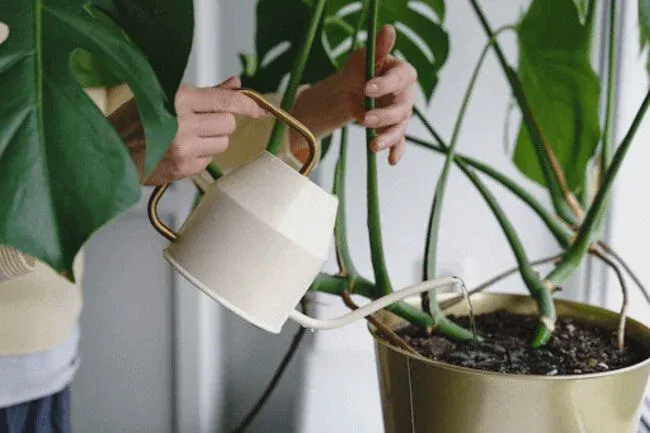
Set the pot where excess water can drain safely. Pour room-temperature water slowly and evenly around the root zone until it begins exiting the drainage holes. Allow the pot to finish draining; empty any collection saucer or decorative cover pot before returning the plant to its place. If water rushes down the sides without moistening the root ball, the mix may have become very dry or compacted and may need gentle rewetting or repotting.
Can you bottom-water Monstera?
Yes, when the inner pot has drainage holes. Set the pot in a shallow container of water and let moisture travel up through the mix. Remove it once the root zone has absorbed enough, and allow it to drain thoroughly. Do not leave the roots submerged indefinitely. Bottom watering is an alternative technique, not a guarantee against overwatering.
What changes how often watering is needed?
| Condition | Likely effect | What to do |
|---|---|---|
| Bright light and warm indoor air | Faster growth and evaporation | Check the mix more frequently; water only when needed. |
| Low light or cooler winter room | Slower water use | Allow longer intervals and inspect deeper root-zone moisture. |
| Large plastic or glazed pot | Mix can stay moist longer | Check pot size and drainage; avoid calendar watering. |
| Small terracotta pot or crowded roots | May dry more rapidly | Check for root crowding and adjust the watering routine. |
Signs of too much versus too little water
Possible overwatering or poor drainage
Persistently wet soil, yellow leaves, soft stems, unpleasant odor or mushy roots suggest checking root health and drainage. Remove the inner pot from standing water. If roots are actively decaying, inspect them and repot into an appropriately sized draining container and sound mix. Overwatering is not only about watering too often; it can also reflect poor root aeration.
Possible underwatering
Very dry mix, a lighter-than-usual pot, curling or drooping foliage and crispy margins can indicate water stress. Rehydrate gently and monitor how well the mix absorbs water. Brown tips do not repair themselves, but new leaves may emerge healthy.
Seasonal watering without a fixed calendar
Some Monstera plants continue growing throughout winter under strong artificial or window light; others slow markedly. Do not assume every tropical houseplant enters complete dormancy. Use observed soil moisture and new growth, not a rule to water once a month or every seven days.
Frequently asked questions
Should I mist Monstera instead of watering the soil?
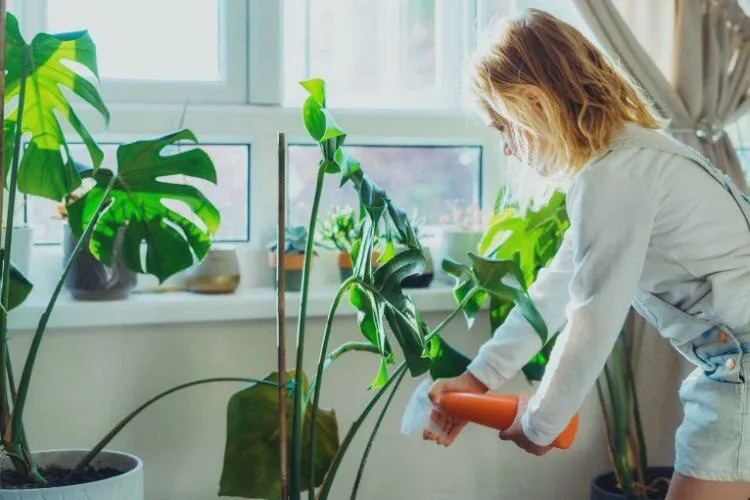
No. Misting does not replace watering roots. Occasional misting gives only a short-lived humidity change and can leave leaves wet in poorly ventilated spaces.
Can I use a decorative pot without a drainage hole?
Use a draining nursery pot inside the decorative vessel, and remove or empty it after watering. Do not leave accumulated water in the outer pot.
Is tap water okay?
Potable tap water works in many homes. If salts accumulate or your local water is unusually mineral-rich, assess the source and potting mix rather than guessing that every yellow leaf reflects water quality.
Related guides
See Monstera light, fertilizer, and drooping leaves.