
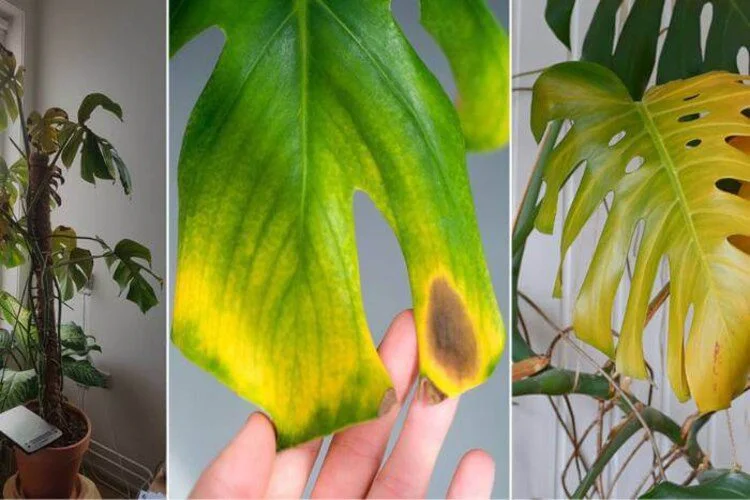
Yellowing on Monstera can be completely normal when an old leaf fades, or it can signal a root, watering, light or pest problem. The useful question is how many leaves are affected, where they are, how quickly yellowing spreads and whether the root zone is wet or dry. Resist the urge to fertilize immediately: yellow leaves are not proof of a nutrient deficiency.
One older yellow leaf versus several at once
An established Monstera periodically retires older lower leaves. If only one mature leaf yellows slowly while the plant produces healthy new foliage, that can be ordinary senescence. Widespread yellowing, sudden collapse of multiple leaves, soft stems or poor new growth deserves investigation. A leaf that has yellowed extensively will not become green again. Removing it is optional unless it is diseased or physically damaged.
Overwatering: check below the surface
Persistently wet soil and yellow leaves together can indicate roots deprived of oxygen, especially when the pot is heavy and drainage water pools in a cachepot. The roots may remain firm early on, but advanced damage can make them dark, soft or smelly. Empty standing water, check drainage holes and avoid adding more water until the mix has appropriately dried. If decline persists in saturated soil, inspect roots and repot into airy mix sized for the remaining healthy roots. Detailed steps: overwatered Monstera.
Underwatering can also yellow leaves
Dry, shrinking mix and a lightweight pot suggest insufficient moisture rather than wet roots. Some older leaves may yellow as the plant conserves water, often alongside limp or brittle margins. Water thoroughly, allowing complete drainage; if the mix has become water-repellent, rewet it gradually. Establish a routine based on measured soil dryness, not a rigid weekly schedule. As seasons or pot size change, so does drying time.
Light, cold stress and recent moves
An abrupt shift into direct sun can bleach or scorch leaves. In low light, growth slows and water use falls, making frequent watering more risky. Chilly windows, air-conditioning blasts or shipping exposure may lead to sudden yellowing and dark patches. Keep Monstera in bright indirect light and stable indoor warmth, away from intense midday sun. If the issue began just after a move or repotting, review repotting stress and temperature stress.
Pests, salts and nutritional problems
Look under leaves and into stem joints for scale or thrips before assuming a deficiency. Their feeding can create mottling or yellow patches, sometimes with sticky residue or silver scars. Too much fertilizer can injure roots and leave brown margins with yellowing; cut back on feeding rather than adding more. True nutrient issues should be considered only after light, moisture, potting medium and root condition are corrected. A healthy potting mix and conservative label-rate feeding are usually adequate for an indoor foliage plant.
A practical decision sequence
- Count the affected leaves and note whether yellowing is confined to the oldest ones.
- Test moisture below the surface and check for trapped drainage water.
- Inspect leaves, stems and new growth for insects or spots.
- Review recent changes in sun, temperature, pot or fertilizer.
- Correct the verified cause, then look for healthier new leaves rather than trying to revive old yellow tissue.
Sources: Iowa State Extension houseplant care, Iowa State Extension diagnosis of environmental problems and University of Maryland Extension on plant problems.