
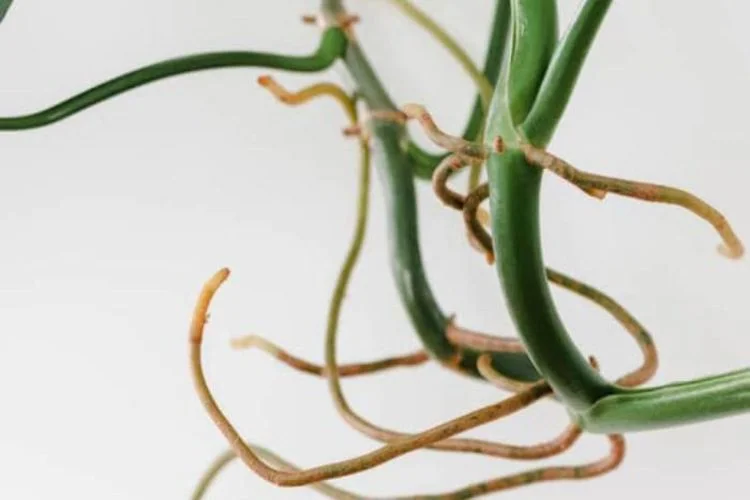
Quick answer: Aerial roots on pothos are normal growths emerging at stem nodes. They help the vine cling to trees, poles and other supports. Their appearance alone does not mean your plant is root-bound, underwatered or infected. You can leave them, guide the vine to climb, or trim an intrusive root carefully.
Recognizing aerial roots
Look for small brown or greenish nubs where a leaf joins a vine. These may elongate when they find a suitable surface. North Carolina Extension describes pothos as a climbing vine with aerial roots that can attach to supports. Some roots remain tiny on dry hanging stems and that is not automatically a care failure.
What they do
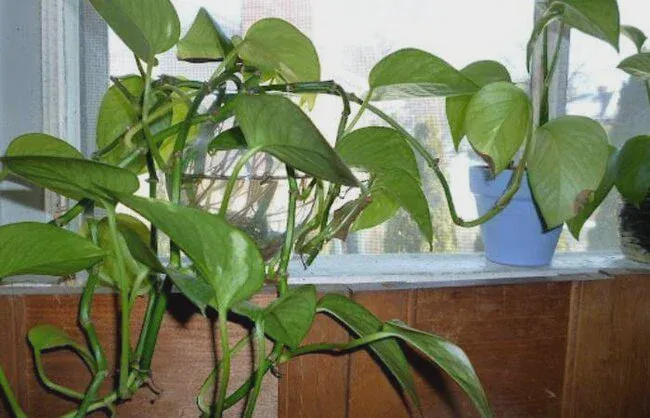
Aerial roots anchor the stem and can grow into moist support material. They do not replace a functional system of roots in the pot, and misting leaves cannot save rotted soil roots. Mature climbing vines can produce much larger foliage under suitable growing conditions. Aerial roots should not be confused with soil roots emerging from drainage holes; the latter may suggest a full root ball.
How to train a vine onto a pole
Choose a stable wood plank, trellis or moss-coated support that can bear the plant's eventual weight. Attach the support without driving it through major roots, then guide stems gently using loose plant ties. Position nodes against the support and allow time for attachment. If using a moss pole, moisten it as required while still keeping the potting medium well-drained. Do not force vines to adhere to indoor painted walls; removing roots can damage finishes.
Should you cut aerial roots?
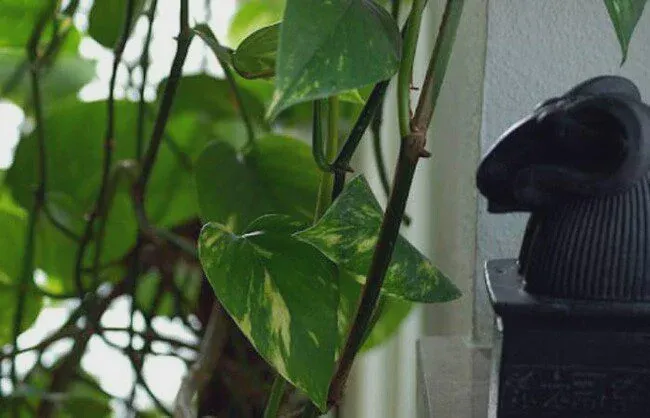
Most exposed roots can remain. If a root catches on furniture or grows where it is unwanted, trim carefully with clean shears; avoid severing a load-bearing root without supporting the vine. Tugging an attached root off a wall or pole may tear the stem. Pruning the whole vine is an option if the plant has outgrown its display space, but do so above healthy nodes.
Propagation still needs a node
For a new plant, cut a healthy section with at least one node and a leaf. Root a node in water or loose damp mix in bright indirect light. Keep leaves out of water, refresh it if cloudy and pot once roots are substantial. An isolated leaf without stem node tissue will not develop a new pothos vine. Work with clean tools and wash hands after handling the irritating sap.
Frequently asked questions
Do aerial roots mean the pot needs changing?
No. Inspect the underground roots and how the pot holds water to decide.
Should every root be buried?
No. Attached climbing roots can remain above the soil.