
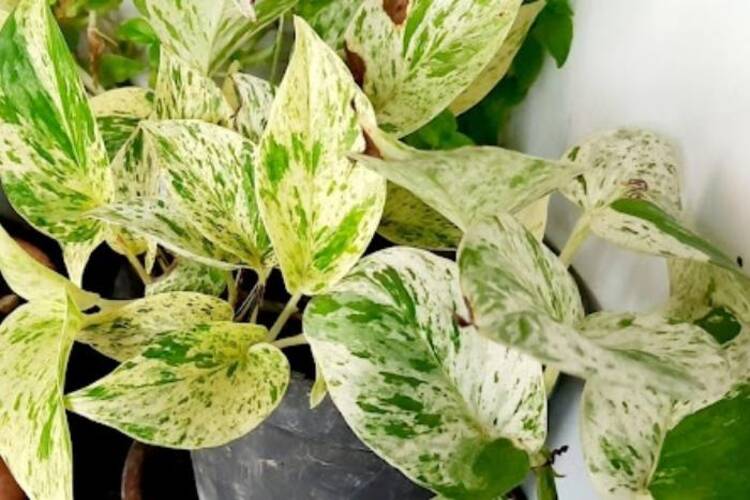
Quick answer: Snow Queen and Marble Queen are names used for white-variegated Epipremnum aureum. Marble Queen is an established cultivar; “Snow Queen” is widely used in retail for very white-looking plants, but labels do not consistently establish a separate formally documented cultivar. Compare the individual plant's pattern and condition instead of treating fixed growth rates or care differences as botanical facts.
What can reliably be identified?
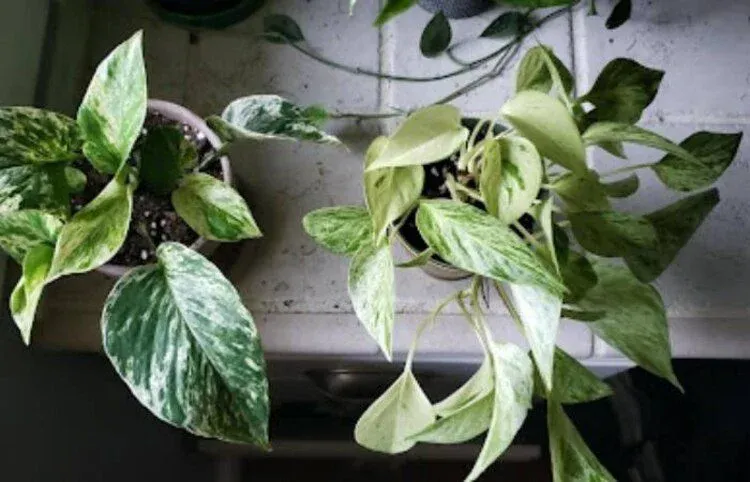
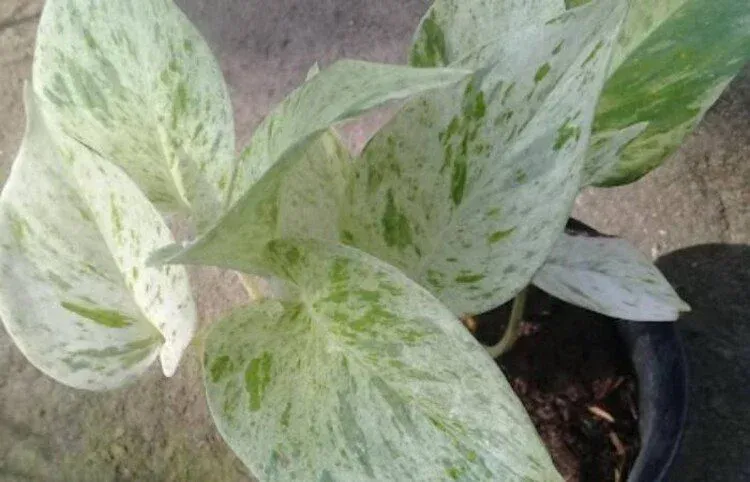
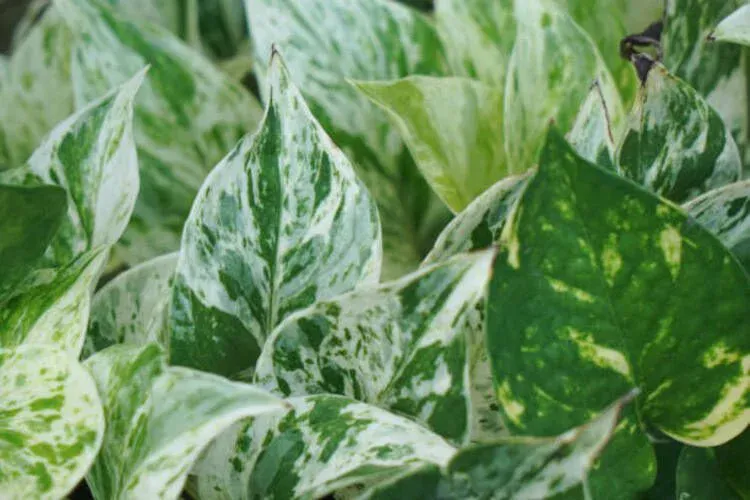
UF/IFAS specifically documents ‘Marble Queen’ as having green leaves marbled with cream or white, and the RHS covers Epipremnum aureum care. A plant sold as “Snow Queen” is often selected for a high proportion of white tissue. There is no universal percent-white cutoff or distinctive leaf-tip shape that safely identifies two separate genetic lines across nurseries. Variegation can differ among stems of the same plant.
Side-by-side identification checklist
| Feature | Marble Queen | Sold as Snow Queen |
|---|---|---|
| Botanical identity | E. aureum cultivar ‘Marble Queen’ | Usually white-variegated E. aureum; verify provenance |
| Leaf appearance | Green with marbled cream-white patches | Often very pale white-dominant leaves |
| Leaf shape | Variable juvenile heart-shaped foliage | No reliable universal shape distinction |
| Growth speed | Depends on light, roots and green tissue | High-white leaves may grow more slowly under equal conditions |
| Basic care | Filtered light and good drainage | Essentially the same principles |
How more white affects care
White leaf areas contain less chlorophyll, so a predominantly white vine has less green surface to make sugars. It may need good filtered light while being prone to scorch in harsh direct sun. Slow growth is not automatically a fertilizer deficiency. Avoid moving very white leaves into intense midday sunlight in an effort to accelerate them.
Watering and propagation
Use an airy potting mix and a container with drainage holes. Water thoroughly as the root zone approaches dryness, not according to a rigid weekly rule. Replant healthy node cuttings if you want a fuller pot. A highly variegated stem may produce different patterns over time; do not claim that propagation guarantees an identical white percentage on every leaf.
Choosing a plant at the nursery
Inspect multiple leaves and roots, not just the most photogenic pale leaf. Select a plant with firm stems, functional roots and new growth. Ask the seller which cultivar or source they used if the exact label matters to you. An established plant with green-and-white leaves may be easier to maintain than a nearly all-white cutting with very limited photosynthetic tissue.
Frequently asked questions
Is Snow Queen always a distinct cultivar?
Retail names are inconsistent; do not assume a verified genetic distinction without reliable sourcing.
Which one grows faster?
Rate depends on the individual plant and conditions; less green tissue can constrain growth.
Do they need different fertilizer?
No special high-white fertilizer is documented; use normal pothos care and avoid overfeeding.