
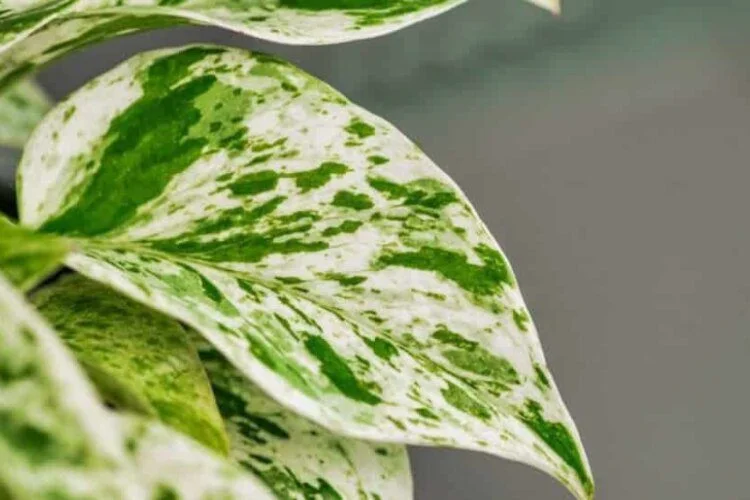
Quick answer: Plants sold as “Snow Queen pothos” are usually highly white-variegated Epipremnum aureum, closely resembling ‘Marble Queen’. Their pale leaves need useful, bright filtered light but may scorch under harsh direct sun. Use a draining potting mix, water as the root zone approaches dryness and avoid fixed sunlight-hour or feeding rules. Retail labels do not always prove a separately documented cultivar.
Identify the plant without relying on a trade label
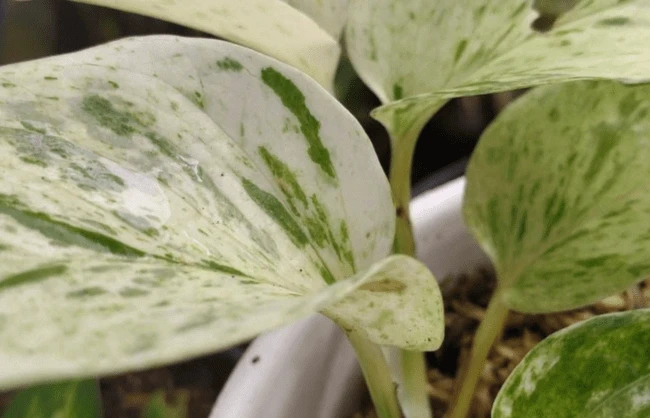
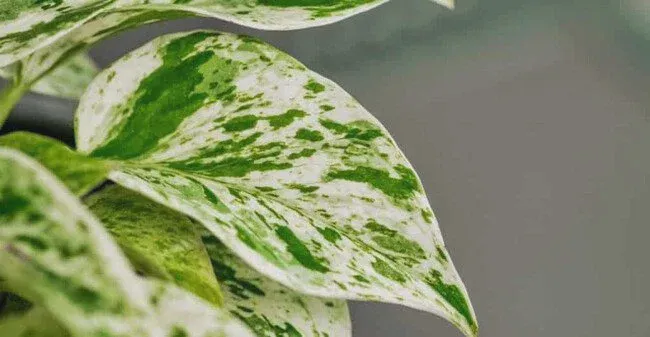
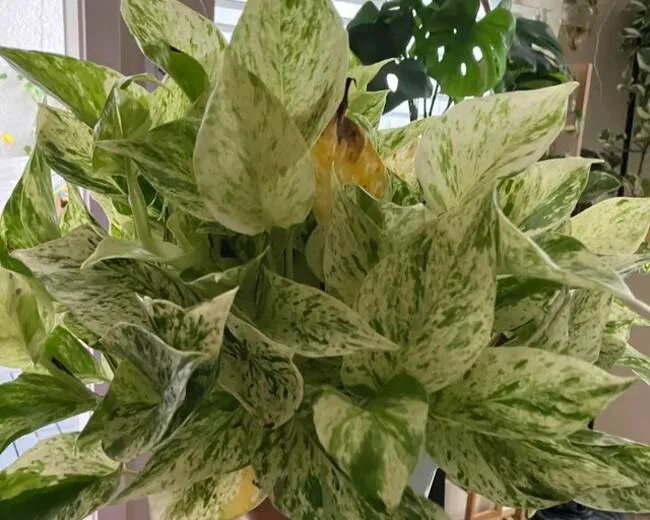
‘Marble Queen’ is a documented E. aureum cultivar with green-and-white marbled leaves. Retailers often use “Snow Queen” for plants with a particularly high proportion of white tissue, but that name is not consistently supported as a distinct, formally verified genetic line. Examine several leaves rather than relying on their pointed tips, one photo or a promised white percentage. The variegation pattern can vary between shoots on a single vine.
With less green leaf area available for photosynthesis, an extremely white stem may grow more slowly than greener stems in otherwise similar conditions. Do not try to produce more white by starving the plant or giving it unusually strong fertilizer.
How much light does Snow Queen need?
A bright window behind a sheer curtain or a position that receives strong ambient daylight without harsh midday rays is a practical choice. A little gentle morning sun may be tolerated if the plant has acclimated, but sensitive white tissue can scorch after sudden intense exposure. There is no universal requirement for four or six hours of direct sunlight each day; the relevant factors are the amount of usable light, intensity, season and exposure at the leaves.
Very dim rooms can slow growth and reduce the overall health of highly variegated vines. Where daylight is weak, a suitable white LED grow bulb or broad light may help, provided its distance and intensity match the fixture manufacturer's recommendations.
Water and soil without drowning the roots
Use an airy indoor potting medium in a container with open drainage holes. The RHS recommends allowing the epipremnum potting mix to approach dryness before watering again. Test below the surface and feel the weight of the pot; then irrigate thoroughly and empty the saucer. Do not keep the mix permanently damp simply because pothos is a tropical plant. Watering frequency changes with temperature, light, container size and mix.
If several leaves droop while the pot remains heavy and wet, check for impaired drainage and possible root decay. If the entire pot is dry and unusually light, gradual thorough rehydration is more appropriate.
Pruning, fertilizer and propagation
Feed lightly with a complete houseplant fertilizer while new growth is active and follow the product label. Pale white tissue is normal for this type of foliage; additional nutrients will not transform it into green or reliably preserve a particular pattern. During slow winter growth, reduce feeding rather than fertilizing every two weeks by default.
For a fuller appearance, trim vines just above a living node using clean shears and propagate healthy stem cuttings with at least one node in water or loose moist medium. Do not expect a detached leaf without stem node tissue to produce a new vine. Root several successful cuttings and replant around the parent only if the container can support them without becoming overcrowded or soggy.
Troubleshoot common problems
| Observation | Likely possibilities | Check next |
|---|---|---|
| Dry brown patches on white tissue | Strong sun or dry spells | Window exposure and soil moisture |
| Yellowing with heavy wet pot | Waterlogged-root stress | Drainage and root firmness |
| Long spaces between small new leaves | Insufficient usable light | Indirect window exposure |
| Sticky leaves or attached brown bumps | Scale and other insects | Leaf undersides and joints |
Existing damaged areas generally do not regain chlorophyll. Judge recovery by new foliage and stable growing conditions, not by whether a scorched patch disappears.
Safety for households with pets
All Epipremnum aureum selections contain irritating insoluble calcium oxalate crystals. The ASPCA lists golden pothos as toxic to cats and dogs, typically causing mouth irritation, drooling, vomiting or difficulty swallowing when chewed. Prevent pet access and consult a veterinarian promptly after suspected ingestion, particularly if a pet is struggling to swallow or breathe. Do not induce vomiting or give unprescribed home remedies.
Frequently asked questions
Is Snow Queen a genetically separate species?
No. It is sold within Epipremnum aureum; whether a given retail label identifies a verified separate cultivar should not be assumed.
Will an all-white leaf survive permanently?
A plant needs adequate green photosynthetic tissue overall, so extremely white cuttings can be slower or less vigorous than balanced variegated vines.
How often should I water?
Water based on the actual root-zone mix and drainage rather than a fixed weekday.