
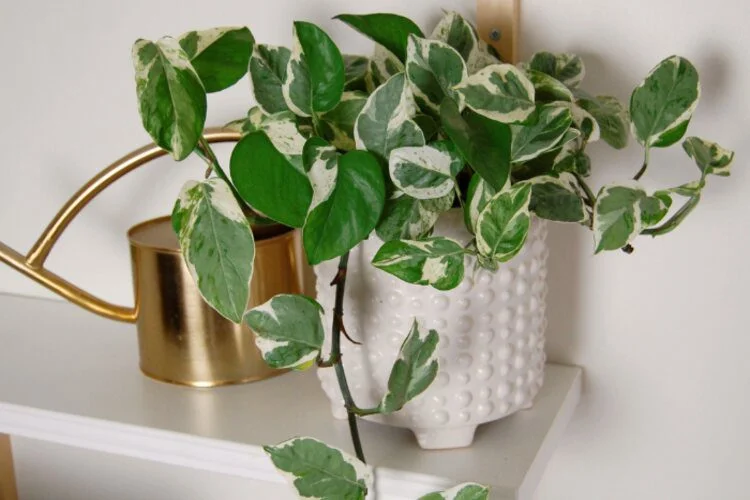
Quick answer: Pearls and Jade is a compact variegated selection of Epipremnum aureum bred from Marble Queen. Its leaves show irregular green, gray and white patches. Provide bright filtered light and a free-draining root zone. The white portions are natural variegation, not a nutrient problem to be treated with fertilizer.
How Pearls and Jade differs from Marble Queen
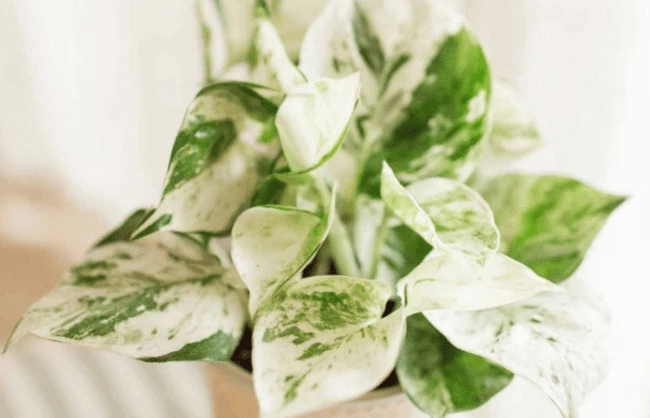
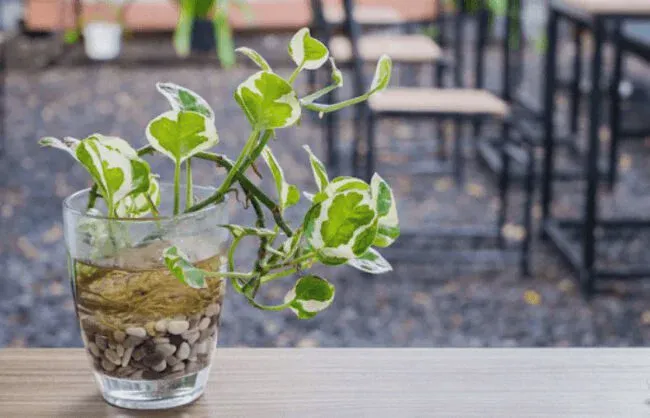
University of Florida IFAS records this cultivar as a mutation selection of ‘Marble Queen’. In its growing trial, mature leaves averaged about 7–8 cm long, compared with roughly 12 cm for the parent under those same conditions. Both leaf surfaces show irregular white, gray-green and green streaks, spots and blotches. Leaf size changes with age and light; compare several leaves before identifying a plant by one feature.
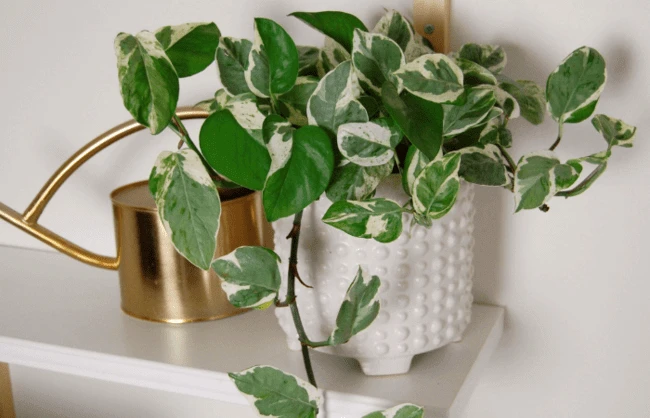
Position for the variegated foliage
Choose bright indirect or gently filtered daylight. Harsh direct afternoon sunlight can burn white sections, which contain less photosynthetic tissue. Extremely dim locations slow production of new foliage. Rotate the container occasionally for even growth and avoid moving from indoor shade into full outdoor sun in one day. Comfortable stable household temperatures are usually suitable.
Water without drowning the roots
Plant in an airy potting mix in a pot with a drainage opening. When the upper part of the medium begins to dry, water the whole root ball thoroughly and empty excess runoff. A tiny root ball in an oversized container can stay damp too long. Do not place a gravel layer at the bottom to fix a pot that lacks drainage holes.
Feeding, pruning and propagation
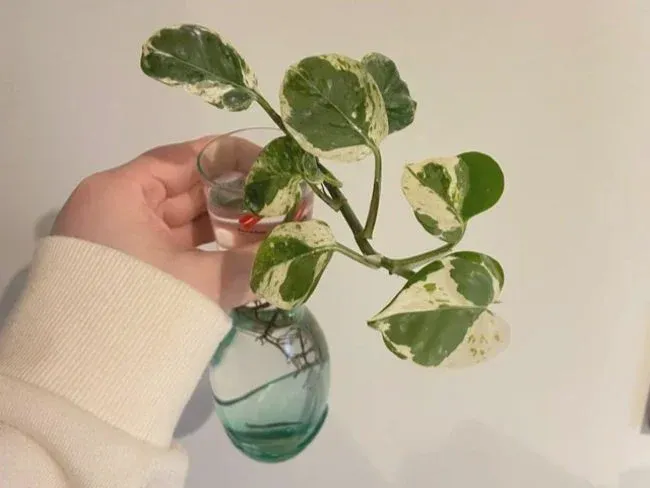
Use a complete houseplant fertilizer modestly during active growth, following label directions. Heavy feeding can create salty mix and brown leaf tips. Prune long vines above a living node. Root stem sections that contain at least one node in water or moist propagation mix. Several rooted cuttings may be planted together for a fuller display. Leaf-only cuttings cannot generate a new plant.
Symptom checks and pet safety
Crispy white patches prompt checks for sunlight and water stress. Yellow leaves alongside soggy soil suggest root-zone issues. Long gaps between leaves can indicate weak light. Like other Epipremnum aureum cultivars, this plant contains insoluble calcium oxalate and is unsafe to chew for cats and dogs; seek veterinary advice after suspected ingestion.
Frequently asked questions
Are all the leaves identical?
No. The size and location of white, gray and green areas vary naturally.
Is this a separate pothos species?
No. It is a selected cultivar of Epipremnum aureum.