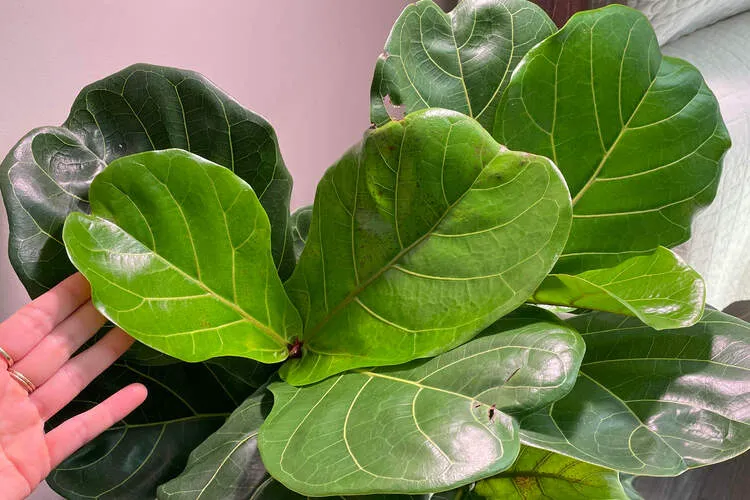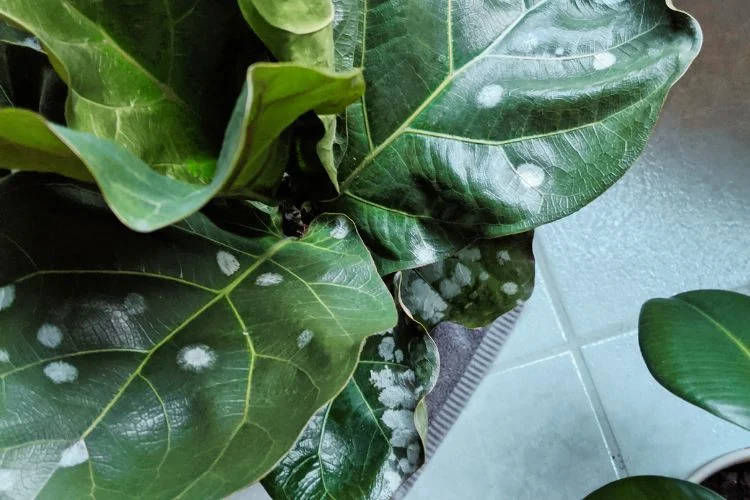
A large pale, tan or whitish patch on a fiddle-leaf fig leaf often indicates sunscald, especially after the plant was moved into stronger direct sunlight. The damaged tissue will not turn green again. First determine whether the mark is actual leaf damage or a removable deposit on the surface.
Start with what the patch looks like
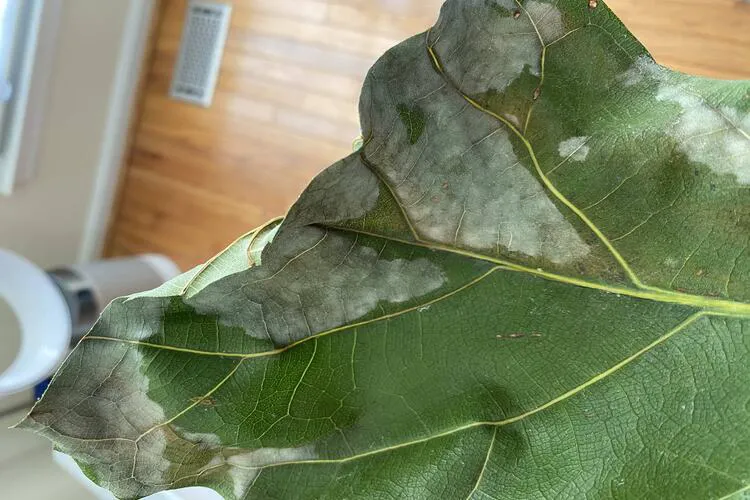
Bleached, dry patches on the sun-facing side: likely excessive light or rapid exposure after a shaded location. White marks that wipe away with water: usually dust or mineral deposits, not bleaching. Fine pale stippling, webbing or crawling pests: check for spider mites and other insects. Powdery growth: investigate a possible fungal issue rather than treating it as sunburn.
The University of Maryland Extension includes bleached or whitened houseplant leaves among signs of excess light. The location, texture, and progression of symptoms help distinguish causes; color alone cannot reliably identify a virus, fungus or insect.
What to do for sunburn
- Move the plant to bright, filtered light, away from concentrated afternoon rays.
- Keep the next location stable rather than shifting the pot repeatedly.
- Check soil moisture with a finger before watering; sun damage is not a reason to flood the roots.
- Photograph the spots and compare new growth over the following weeks.
- Remove a badly damaged leaf only when it is mostly dead or obstructs care. A partly green leaf can still contribute to growth.
If moving a fig outdoors for warm weather, acclimate it gradually in sheltered shade before introducing stronger light. Sudden exposure is a common way to scorch otherwise healthy foliage.
If the white mark is on top of the leaf
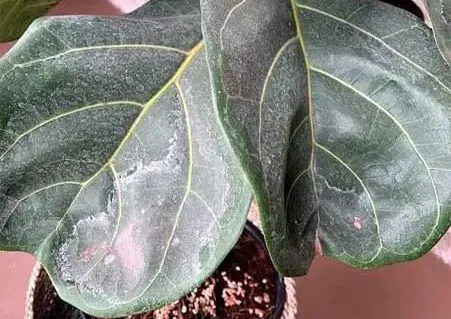
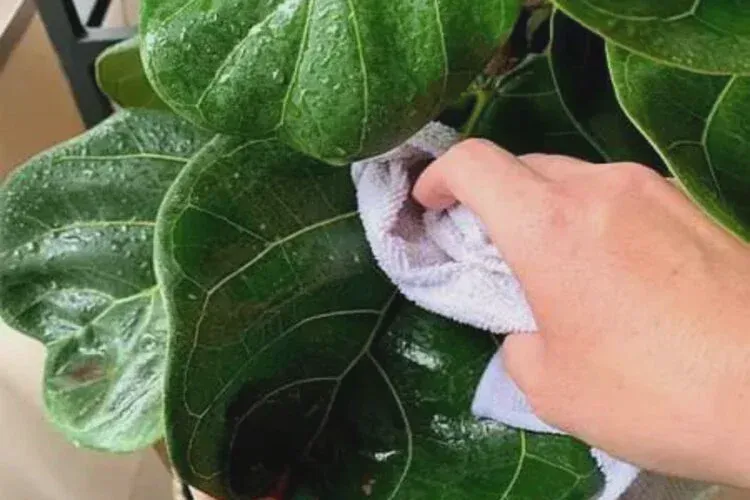
Support the leaf with one hand and wipe gently with a soft cloth dampened with plain water. If the mark disappears, it was surface residue. Avoid using rubbing alcohol, undiluted vinegar, baking soda paste, oils or improvised pesticide mixtures: those treatments can damage leaf surfaces and do not repair sunscald.
For general cleaning instructions, see how to clean fiddle-leaf fig leaves. Dry the foliage in a ventilated room and avoid keeping the leaf wet overnight.
When to investigate a different problem
If spots spread while the plant is already out of intense sun, examine the undersides of several leaves using good light. Webbing and fine speckles suggest mites; sticky residue and raised bumps suggest sap-feeding insects. Angular, wet-looking dark spots may indicate a leaf disease and need a different response. Isolate an affected plant from other houseplants while investigating, and avoid spraying unverified treatments.
Related reading: brown patches and their causes and recognizing possible bacterial leaf spots.
What recovery actually looks like
Sunburned patches are permanent on the damaged leaf. The measure of recovery is healthy new foliage and no expanding injury, not disappearance of old spots. Keep light, watering, temperature and drainage consistent. If substantial new leaves emerge without pale patches, the location is probably better suited to your plant.