
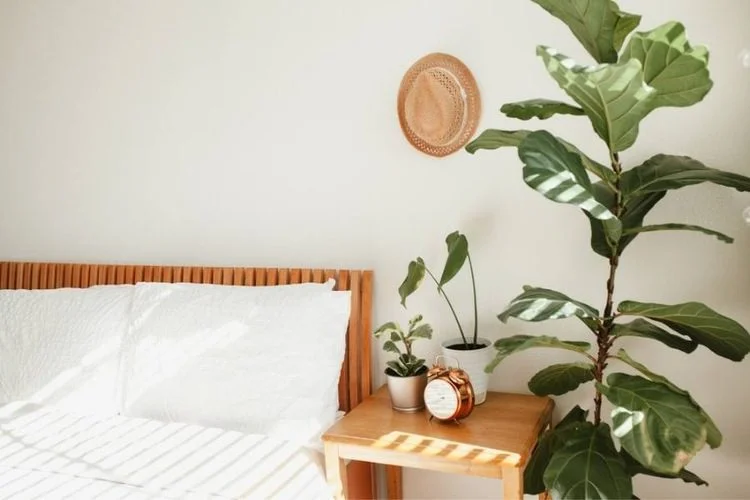
To clean fiddle-leaf fig leaves, support each leaf with one hand and wipe both sides gently with a soft, damp cloth. Plain water is usually enough to remove dust. The goal is to expose the leaf surface to light without damaging the waxy cuticle or leaving behind shiny residues.
Method 1: damp cloth for everyday dust
- Place the pot where you can reach the leaves without twisting branches.
- Dampen a clean microfiber or other soft lint-free cloth with plain water and wring it out.
- Hold the leaf from below and wipe from the base toward the tip, using light pressure.
- Use a clean area of cloth for the underside of each leaf.
- Let the foliage dry with normal room air circulation before exposing it to strong sun.
Work gently around leaf veins and new, tender growth. The cloth should lift loose dirt, not scrub marks out of the leaf tissue.
Method 2: a gentle rinse for many leaves
A small fiddle-leaf fig can be rinsed with a soft shower spray or gentle stream of lukewarm water. Protect the potting mix if it is already moist, so leaf-cleaning does not become an unplanned watering. Keep water pressure low enough that leaves do not bend or tear, and allow foliage to dry promptly.
For a large, heavy tree, wiping in place is usually safer than carrying it into a shower. If you rinse outside, avoid strong midday sun and cold conditions. Never aim a hard hose jet into leaf joints or use hot water.
Do not polish with oil, milk or food mixtures
Olive oil, coconut oil, mayonnaise, egg white and milk can leave residues, attract dust and create an unwanted film. Commercial leaf-shine sprays are not necessary for clean foliage. The University of Minnesota Extension advises that leaf-shine products can clog leaf pores. Household detergent or alcohol may also injure leaf surfaces, particularly when mixed at an improvised concentration.
If there is stubborn white residue, try plain water first and assess whether it is a mineral deposit, pest sign or damaged tissue. A pale mark that does not wipe off may be sunburn; the bleached-leaves guide helps distinguish them.
How often should you clean leaves?
Clean when a visible dust film has accumulated or leaves no longer look their normal green—not on an arbitrary daily schedule. Homes beside busy roads or open windows may accumulate dust faster than others. In between cleanings, inspect both leaf surfaces for pests while you check soil moisture.
A shiny, healthy look comes primarily from good light, appropriate watering and intact leaf surfaces. The plant does not need polish to perform normally. See how to bring back a natural leaf sheen.
If cleaning reveals pests or lesions
Sticky deposits, raised bumps, fine webbing or spreading water-soaked spots are not normal dust. Pause routine wiping and identify the cause. Separate plants when contagious pests or diseases are suspected, and avoid moving contaminated cloths between plants. For damaged leaves, see brown-leaf troubleshooting before treating.