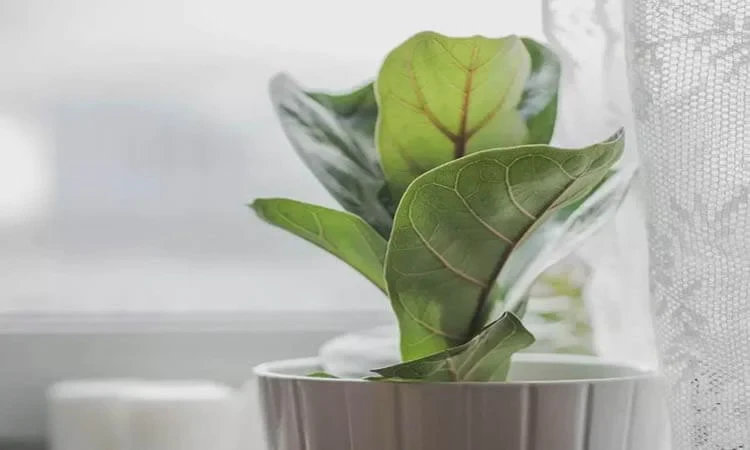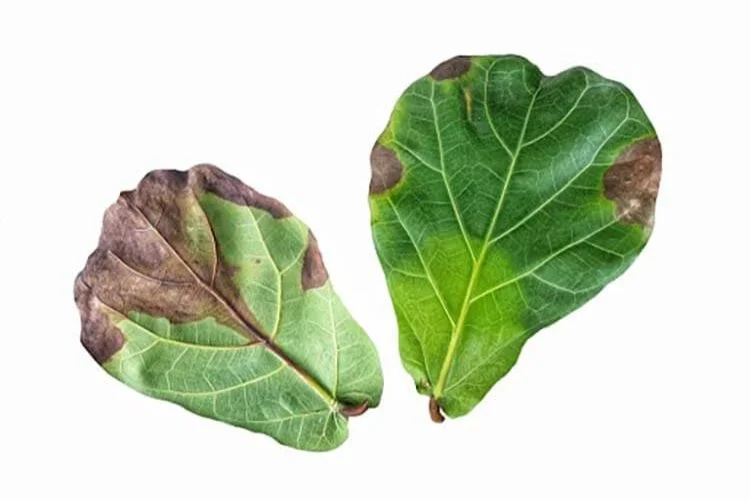
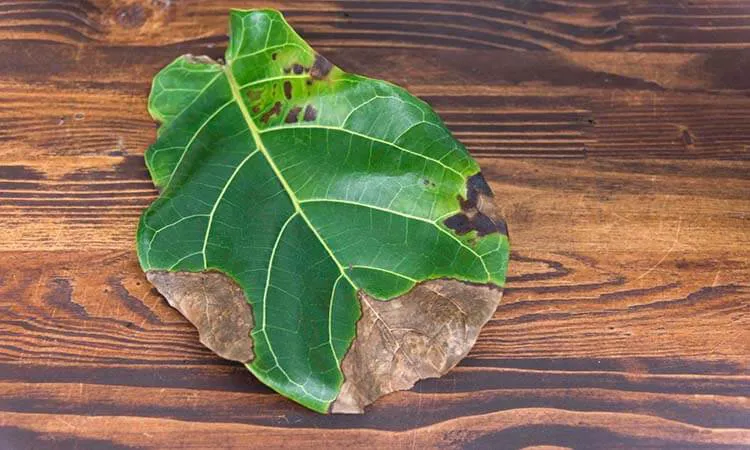
Brown fiddle-leaf fig leaves do not have one single cause. Crisp brown margins with dry soil suggest water stress; dark spreading marks with persistently wet soil call for a root inspection; pale tan patches after stronger sun may be scorch. Diagnose the pattern and growing conditions before cutting leaves or changing products.
Match the symptom to the likely problem
- Dry brown tips or margins: irregular watering, very dry air or soluble-salt buildup can contribute.
- Dark marks plus yellowing or wilt in wet soil: drainage problems and root rot are possibilities.
- Large papery tan areas on exposed leaves: suspect sunscald following a light change.
- Wet-looking or angular spots that enlarge: investigate bacterial or fungal leaf spots.
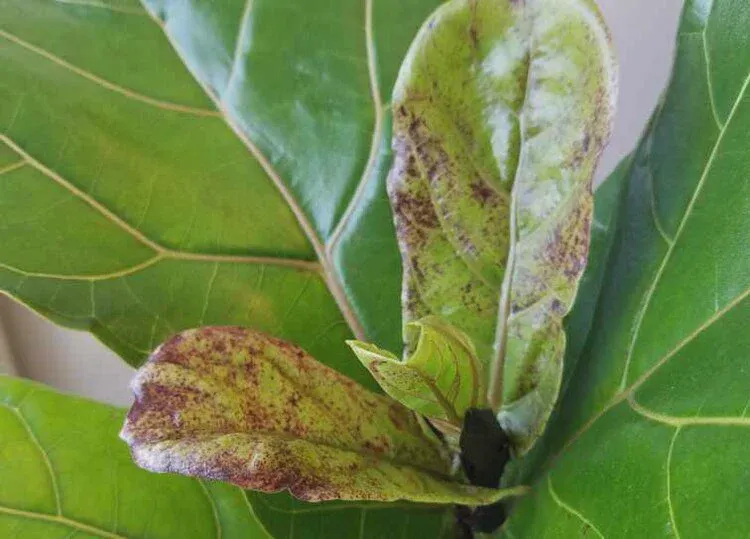
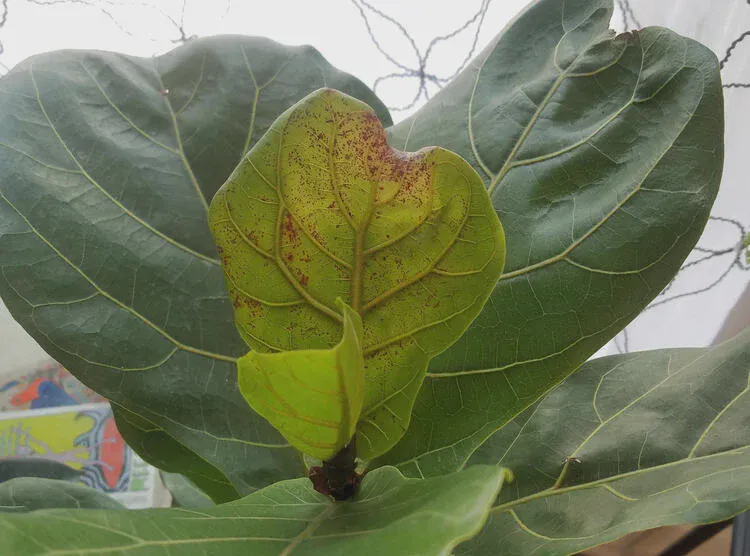
- Fine speckling: check beneath leaves for spider mites.
These are clues, not laboratory diagnoses. Several issues can occur together, and an old dry spot may remain after the original problem is fixed.
Check the roots and water before anything else
Feel the top few inches of potting mix and check the drain hole and saucer. If the mix is thoroughly dry, water slowly until it drains and discard runoff. If the mix stays saturated and the plant is wilting, lift the root ball carefully to inspect roots. Healthy roots are generally firm; decayed roots may be brown or black, soft, and fall apart when handled.
A plant that wilts in wet soil may be unable to absorb water because roots have been damaged. Do not solve that by watering more. The root rot guide explains when repotting and pruning dead roots may be necessary.
Check the light, air and recent changes
Move a newly sunburned fig to bright, indirect light. Avoid cold window glass, heaters and drafts. Large, rapid changes in room conditions can trigger additional leaf problems. If only one older leaf is affected and the rest of the plant remains firm, observe before making drastic changes.
Brown, dry edges do not automatically justify running a humidifier at maximum output. First correct inconsistent watering, inspect salts or fertilizer buildup and make sure the plant has adequate light.
When spots may involve disease
Water-soaked lesions, dark spots with yellow halos, or rapid enlargement merit closer inspection. Both fungi and bacteria can create spotting, so diagnosis from a single photograph is uncertain. Isolate the plant, remove heavily affected leaves with cleaned tools, keep leaf surfaces dry and improve air movement. Seek an extension diagnostic service if damage continues.
See the bacterial leaf-spot guide for precautions; avoid homemade antibiotics and indiscriminate chemical sprays.
Help new leaves grow normally
Dead brown areas do not regenerate green tissue. Keep any partly healthy leaf that is still useful to the plant, especially if it has few leaves left. Track the next several weeks of new growth, not whether old scars vanish. Once conditions stabilize, new leaves without spreading damage are the clearest improvement.
For sudden lower-leaf loss, follow the leaf-drop troubleshooting steps.