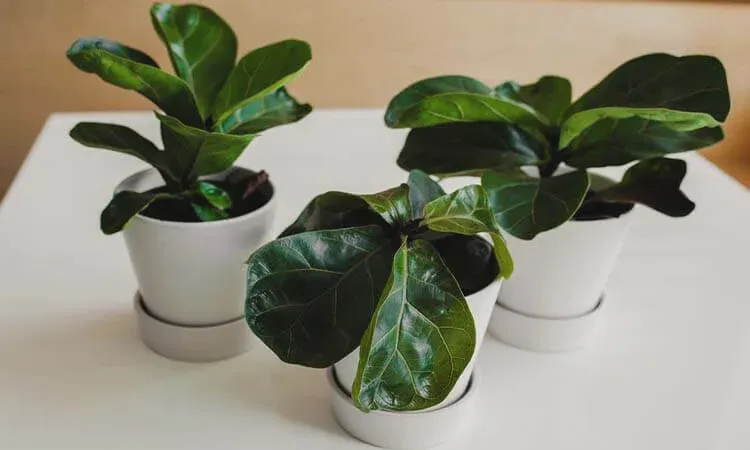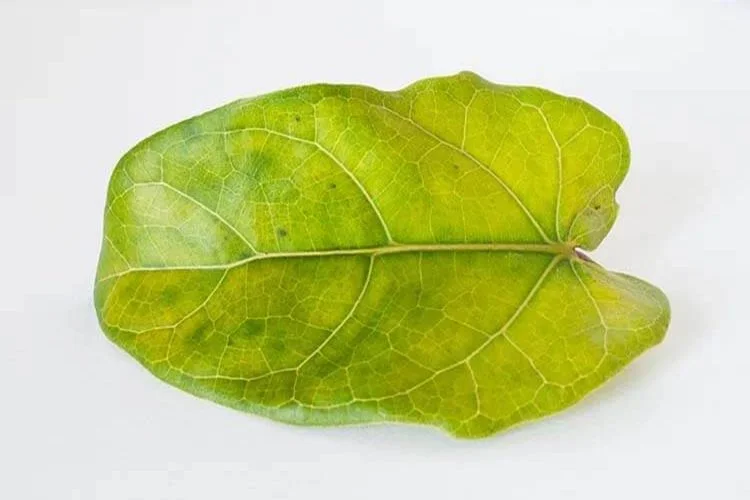
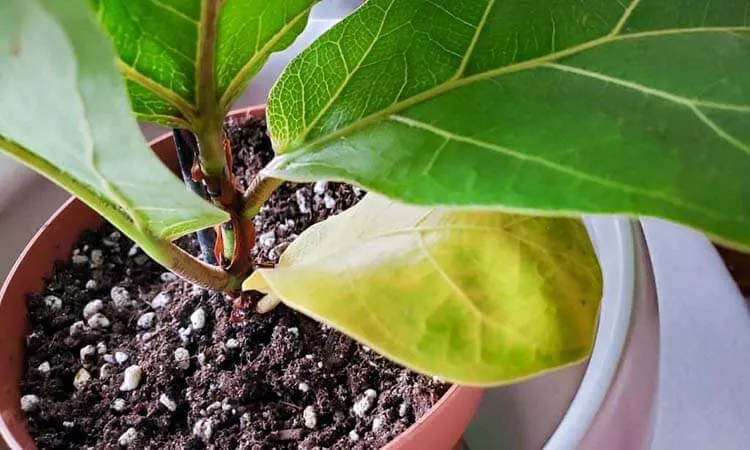
One older leaf turning yellow at the bottom of a fiddle-leaf fig can be normal aging. Multiple yellow leaves, especially alongside wet soil, wilting or stalled growth, suggest a care problem that needs checking. Start with soil moisture, drainage and light rather than adding fertilizer immediately.
Is it one old leaf or several leaves at once?
A lone lower leaf on an otherwise vigorous plant is often less alarming than simultaneous yellowing across the canopy. Note the pattern: older versus new growth, rapid versus gradual change, and any brown spots or drooping. Yellowing is a symptom shared by several problems, not a diagnosis by itself.
Look at whether the leaves remain firm, whether soil has been slow to dry and whether the plant was moved to a darker location. Taking a dated photo can make progression easier to evaluate without repeatedly disturbing the roots.
Wet soil and poor drainage
The most useful first check is to put a finger about two inches into the mix. If it feels persistently wet and leaves are yellowing, stop watering on a calendar schedule and make sure the pot drains. Empty standing water beneath the container. Yellowing accompanied by wilting while the roots are wet can mean that root damage has already reduced water uptake.
If poor drainage is severe, gently inspect the root ball. Soft, dark, disintegrating roots point toward decay, whereas firm roots are more reassuring. Follow the root rot rescue steps rather than simply moving the plant into direct sun to dry it.
Insufficient light or abrupt conditions
Fiddle-leaf figs generally prefer bright indirect daylight. A dim corner reduces the plant's ability to use water and can contribute to slow growth and lower-leaf loss. Move it gradually to a brighter spot without exposing unacclimated foliage to harsh afternoon sun. Cold drafts and sudden moves can also stress a plant.
Do not infer that yellow leaves need unrestricted direct sun. Strong light can cause bleached patches instead. Learn the distinction in the sunscald guide.
Other possibilities: pests, salts and roots
Check leaf undersides and stems for webbing, tiny speckling, cottony clusters or brown raised bumps that suggest mites, mealybugs or scale. Heavily root-bound plants may struggle to take up water evenly. Excess fertilizer can leave salts in the mix, damaging roots and leaf edges; a white crust on the rim or mix is one useful clue.
Do not make a routine of heavy feeding to revive a yellow tree. If the problem is wet roots or salt stress, adding more fertilizer can make matters worse. Repot only when tight roots, exhausted or compacted mix, or damaged roots justify it.
Steps for the next few weeks
- Keep the plant in a consistent bright, filtered-light location.
- Check soil moisture before watering; soak the mix when needed and drain thoroughly.
- Inspect pests and damaged roots only when symptoms point there.
- Remove a completely yellow dead leaf if desired, but avoid stripping healthy foliage.
- Watch the next leaves for healthy growth rather than expecting an already-yellow leaf to turn green.
For accompanying dark spots, compare the brown-leaf patterns.