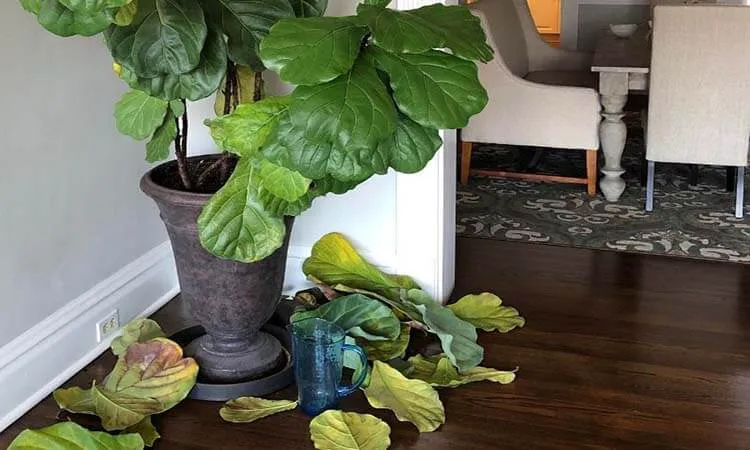
A fiddle-leaf fig may drop leaves after a move, an abrupt change in light or temperature, prolonged dryness, or persistently wet soil that damages roots. A few aging lower leaves are different from many leaves falling in a short period. The soil and recent care history provide better clues than the fallen leaf alone.
What happened before the leaves fell?
A recent relocation: a plant moved from a bright nursery or window to a darker room may shed foliage while adjusting. Very dry soil: leaves can wilt, crisp and fall after water stress. Wet soil with yellow leaves: investigate drainage and possible root damage. A cold draft or heating vent: repeated temperature swings can stress the canopy.
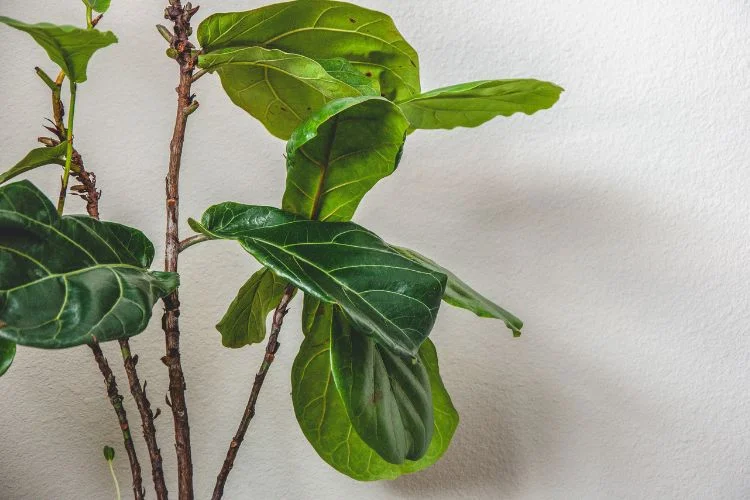
Check whether leaf loss is localized to older leaves or occurring through the whole plant. Note whether the stems remain firm and whether new buds are present.
A practical five-step rescue check
- Put the fig in a stable place with generous filtered daylight.
- Insert a finger about two inches into the mix and check the weight of the pot.
- If dry, water until runoff appears and empty the saucer; if wet, postpone watering.
- Check drainage holes; if the mix stays waterlogged and the plant declines, inspect roots for rot.
- Look beneath remaining leaves for webbing, scale insects, sticky residue or other pest clues.
Do not simultaneously repot, hard-prune, fertilize and move the tree outdoors. Multiple drastic changes make it harder to learn which problem mattered and can add stress.
How to read a yellow or brown fallen leaf
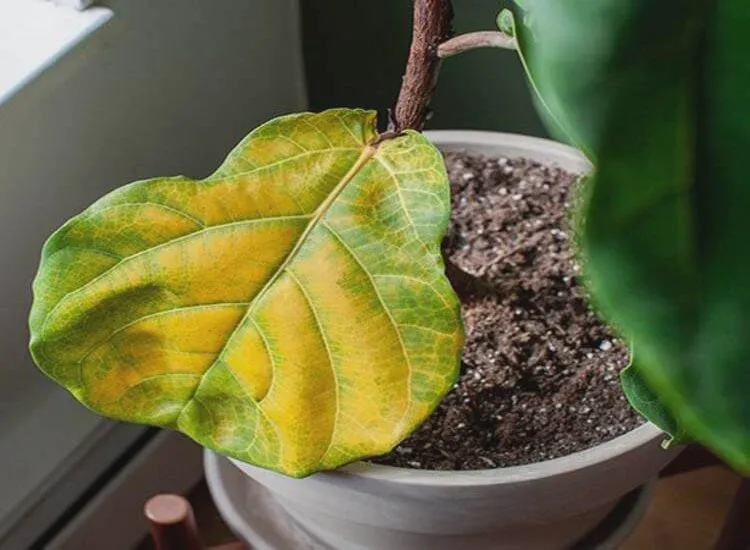
A yellow leaf may be an aging lower leaf, but widespread yellowing alongside wet soil suggests too much retained moisture. Crisp, uniformly dry leaves can occur after underwatering. Soft dark spots with wilting in wet conditions raise concern for root rot. None of these patterns is definitive on its own; cross-check against the soil and roots.
For more detail on the distinctions, read yellowing leaves or brown spots.
What not to do while it recovers
Do not water on a fixed weekly schedule, leave the pot standing in water, or give large doses of fertilizer to a distressed root system. Avoid removing healthy leaves to force new growth. Leaf drop can slow once conditions improve, but bare portions of old stems do not necessarily fill back in without new shoots.
If the stem is soft at the base, the roots smell rotten or loss continues despite improving conditions, follow the root inspection and recovery steps.
How to recognize improvement
Over the following weeks, look for leaves staying attached, stems remaining firm and healthy buds or fresh foliage during active growth. Recovery is slower in low-light winter conditions than when the plant has strong spring or summer light. Be patient and adjust your watering to how quickly the pot actually dries.