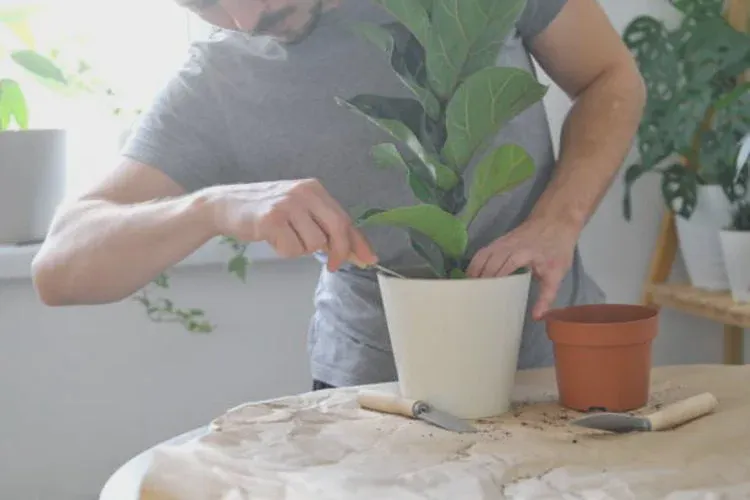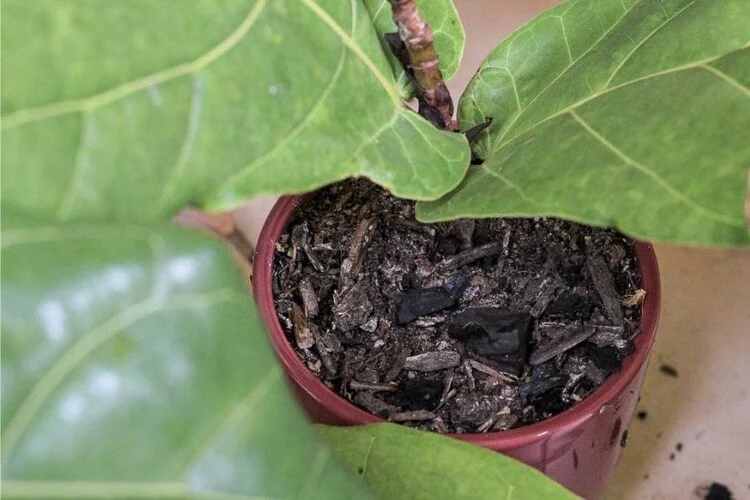
Fiddle-leaf fig root rot is most concerning when a plant wilts or yellows despite moist soil and its roots are soft, dark and deteriorating. Roots need air as well as water. A waterlogged pot can stress them and encourage root-rotting organisms. Leaf color alone cannot confirm the diagnosis; inspect the root system.
Recognize the signs before unpotting
Common clues include repeated wilting when the mix is wet, yellowing leaves, slowed growth, dropped lower leaves or a soft, discolored stem base. Persistent saturation is a warning, but a brown root is not automatically diseased: healthy older roots may be naturally darker yet remain firm.
University of Maryland Extension describes rotten roots as dark, soft or mushy, sometimes with outer tissue that slips away. If a plant is merely thirsty, its potting mix is dry and the roots are generally intact. Check both conditions before committing to a rescue operation.
How to inspect and rescue a damaged plant
- Move the pot to a work area and put on gloves; ficus sap can irritate skin.
- Slide the root ball out carefully, supporting the base without pulling hard on the trunk.
- Inspect a few roots and the crown for firmness, discoloration and any sour or decaying odor.
- Trim clearly dead, soft roots with clean, sharp tools. Keep firm, functioning roots whenever possible.
- Discard waterlogged old medium if root decay is present and use a clean pot with a drainage hole and fresh porous indoor potting mix.
- Set the root ball at its previous depth, water to settle the fresh mix and allow excess to drain. Then reassess soil moisture before the next watering.
If nearly all roots or the stem base have rotted, recovery is uncertain. A healthy stem cutting may be the only salvage option; severely infected plants may need disposal.
What not to use as a shortcut
Do not assume that hydrogen peroxide, household bleach, baking soda or an unlabelled fungicide will cure decay throughout the root system. Root rots have several possible pathogens and require appropriate diagnosis; some causal organisms are fungus-like water molds. Drainage, clean potting material and removal of diseased tissue are the central practical steps for a home grower.
Also avoid adding rocks to the bottom of a pot as a substitute for drainage. A container needs a real exit for excess water. See repotting instructions for choosing a container and mix.
Prevent repeat problems
Check moisture several inches into the pot instead of watering every seven days automatically. Water until it flows from the drain hole when the plant actually needs it, and empty the saucer afterward. Use a pot sized to the roots, keep the fig in bright indirect light and avoid an oversized container that retains excessive damp medium.
If the plant has recovered enough to push new leaves, reduce unnecessary handling and wait until active growth before applying diluted fertilizer according to the label. Routine root checks are unnecessary when growth is normal and the soil drains well.
How to judge the outcome
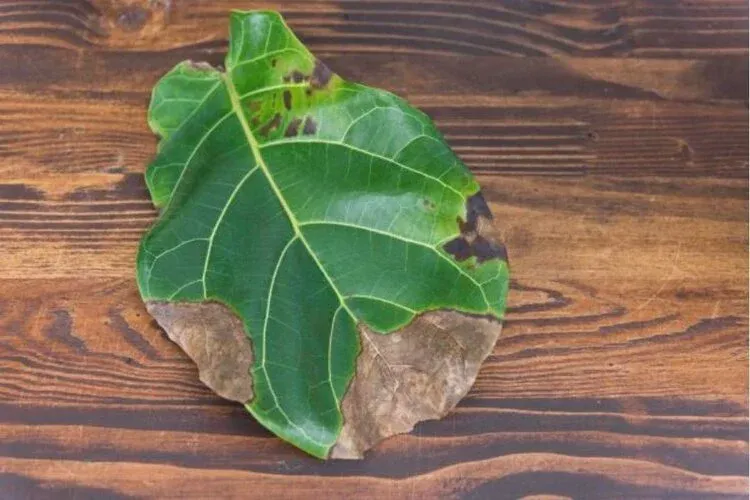
A dying leaf will not become green again. Monitor whether the remaining leaves hold, the stem stays firm and new growth appears. If decline continues while soil is correctly managed, consult a local extension plant diagnostic service; fungal, bacterial and environmental problems can overlap. Related reading: brown leaves and saving a declining tree.