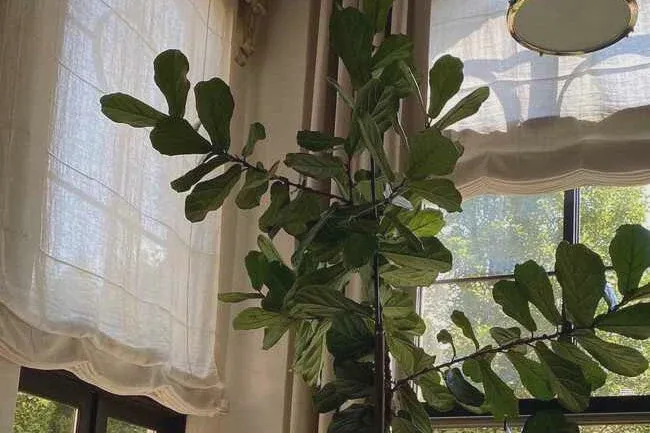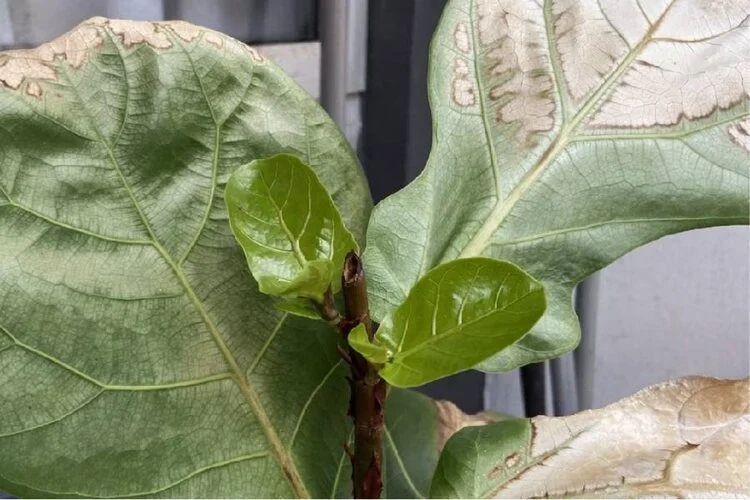
If your fiddle-leaf fig is wilting, losing leaves or developing brown patches, start by checking the potting mix and root health. An apparently dying tree may recover when its growing conditions are corrected, but a soft stem base or extensive root decay can make rescue difficult. Avoid changing everything at once.
Triage: is the stem still alive and firm?
Look for flexible living stems and at least some green foliage or intact buds. A few brown leaves do not mean the whole tree is dead. A trunk that is becoming soft near the soil line, roots that fall apart or a canopy collapsing while the soil stays wet requires more urgent attention than a single dry lower leaf.
Photograph the plant and note when problems started. Recent moving, repotting, cold drafts or a shift in window light are useful clues. Continue with the most direct checks before adding products.
Step 1: check moisture and drainage
Insert a finger into the potting mix around two inches deep, and lift the pot to judge its weight. If very dry, water thoroughly until runoff drains out, then empty the saucer. If still damp, do not add more water merely because leaves droop. Verify that the pot has an unobstructed hole rather than water accumulating in a decorative cachepot.
If the plant stays wilted in wet soil, inspect the roots. Healthy ones are firm; decayed roots are often dark, soft and mushy. The root-rot rescue guide covers sanitation and repotting when damage is confirmed.
Step 2: move to a stable, bright spot
Fiddle-leaf figs favor bright indirect light and warmth. Choose a spot with good daylight and no prolonged blast from heaters or cold air-conditioning. If the plant has lived in dim light, introduce stronger light gradually rather than putting it into intense afternoon sun. Avoid frequent movement while it is settling.
Turning a pot a little from time to time is reasonable for balanced growth, but not a substitute for the amount of light the tree receives overall.
Step 3: inspect leaves for pests and disease
Look for fine pale speckles and webbing, cottony clusters, hard raised scale insects, sticky residues or expanding, wet-looking leaf lesions. Brown areas alone cannot distinguish a pathogen from sun damage or water stress. Separate an affected plant from nearby houseplants if infection is suspected and identify the problem before applying a pesticide.
For spreading lesions, avoid wetting the foliage, improve air movement and remove heavily affected leaves with clean shears. Explore the brown-spots diagnosis guide when symptoms are unclear.
Step 4: decide whether to prune, feed or repot
Remove fully dead leaves or clearly rotten roots as needed, but do not strip the plant's remaining healthy foliage. Repot only when root damage, severely compacted media or a pot-bound root ball makes it useful. Fertilizer cannot replace damaged roots; wait until growth resumes and follow a houseplant product's label rather than adding large doses to a stressed tree.
For weak or leaning growth, see how to support the trunk without causing more damage.
Signs of recovery and when to stop
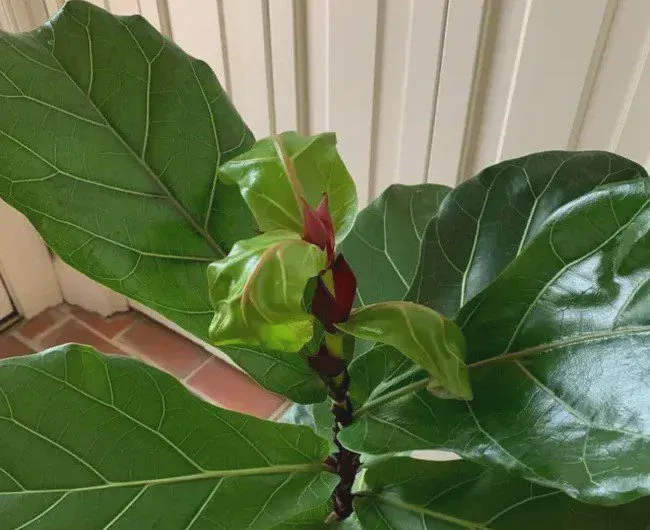
Look for no further rapid leaf loss, firmer growth and eventually healthy emerging leaves. Old brown patches will not reverse, and recovery can be slow, especially in lower winter light. If the root system is largely destroyed or the lower trunk is mushy, it may be more realistic to take a cutting from healthy tissue or replace the plant.