
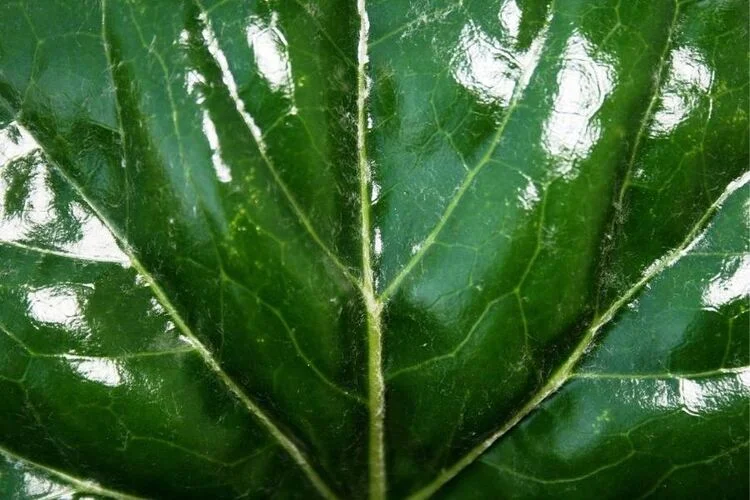
The safest way to make fiddle-leaf fig leaves look shiny is to remove dust with a soft cloth dampened with plain water. Healthy leaves already have a natural surface sheen. You do not need oil, milk, mayonnaise or a commercial leaf polish to create it.
What gives healthy leaves their natural look?
Ficus lyrata has large, thick, dark-green leaves with a naturally smooth upper surface. Dust and dried mineral residue can make them look dull. Replacing dust with an oily film may look glossy temporarily, but it is not the same as restoring a clean, functioning leaf surface.
If a leaf is dull because of sunscald, yellowing or dead patches, cleaning will not reverse tissue damage. Distinguish surface debris from an injured leaf before trying to change its appearance.
A three-step, no-polish method
- Use a soft, clean microfiber or cotton cloth lightly dampened with plain water.
- Support the leaf from underneath and wipe gently from its base toward the tip; avoid scrubbing or pulling on the stem.
- Repeat on the lower surface with a clean section of cloth, then let the leaf air-dry away from intense direct sun.
For multiple dusty leaves, a very gentle lukewarm rinse can work if the plant is small enough to move safely. Keep water out of already-wet potting mix, allow excess to drain and avoid leaving water sitting in folds.
Why skip oils and leaf-shine sprays?
Leaf-shine products are unnecessary and may interfere with leaf pores, according to the University of Minnesota Extension's spring houseplant guidance. Kitchen oils and food mixtures can also attract dust and leave uneven residue. Soap, alcohol, vinegar and baking soda are not everyday leaf polishes and may injure plants if improvised.
Use clear water as the default. If residue persists, examine whether it is mineral staining, pesticide residue, pests or leaf damage. The related leaf-cleaning tutorial explains gentle rinsing and common mistakes in more detail.
How often should leaves be wiped?
There is no need to wipe leaves daily or on a fixed weekly interval. Clean when enough dust is visible to dull the leaf or when you see buildup while checking for pests. Too much handling can tear foliage or damage new growth. In dry, dusty indoor environments this may be more frequent than in other homes.
After cleaning, return to ordinary care: filtered daylight, proper drainage and water according to pot moisture. Avoid moving the plant into harsh sunlight merely to make the leaves appear glossier.
When a dull leaf needs a different fix
Stippled pale leaves may have spider mites; irregular brown tissue may be sun damage, water stress or a disease; yellow leaves may be aging or stressed. Products marketed for shine do not solve these underlying issues. Examine the underside, growing medium and conditions. For common patterns, see bleached foliage and brown foliage.
Measure success by clean green leaves and healthy new growth, not an artificial mirror-like finish.