
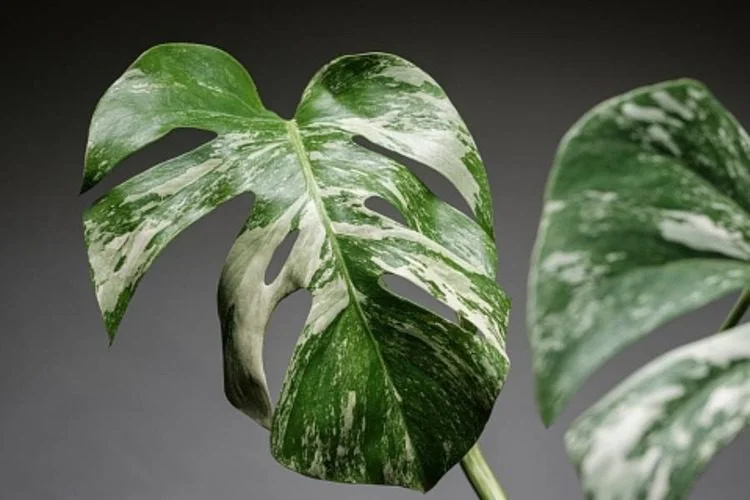
Quick answer: A black spot on a Monstera leaf can be old tissue damaged by direct sun, prolonged wet roots, a leaf-spot problem, cold exposure or physical injury. The pattern and the plant's growing conditions matter more than the color. First inspect the potting mix, root firmness, leaf undersides and how quickly the mark changes. Do not automatically spray a fungicide, add fertilizer or repot a healthy plant.
Read the spot before choosing a treatment
| What you observe | Possible causes | First action |
|---|---|---|
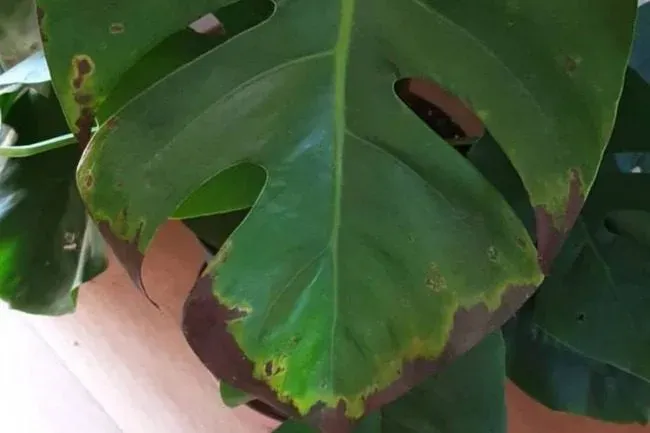
| Dry, papery dark patch on a sun-facing leaf | Sudden exposure to strong direct sunlight | Move into bright filtered light and watch new growth |
| Soft black sections, yellowing and heavy wet pot | Root stress from poor aeration; possible decay | Examine drainage and root condition before repotting |
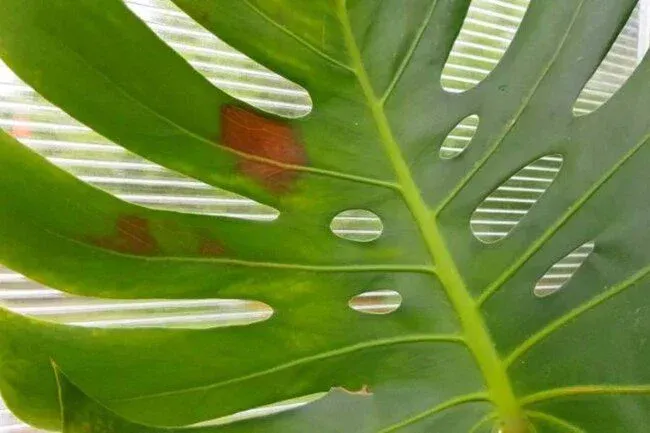
| Small expanding dark circles or wet-looking lesions across leaves | Possible fungal or bacterial leaf spots | Isolate, reduce leaf wetness and seek diagnosis if spreading |
| Dark edges after a cold draft or transport | Temperature injury | Keep away from cold glass and heating/cooling vents |
| One stable dark mark near a crease or scrape | Physical damage | Monitor; treatment may not be necessary |
Check whether the root zone stays too wet
Monstera roots need moisture and oxygen. Constantly wet, compacted potting mix can make roots struggle and can promote decay. Feel the mix below the surface, lift the pot to gauge weight and confirm that drainage holes are open. An outer decorative pot must not hold standing water after irrigation.
Unpot only if evidence points to a root issue, such as soft dark roots, foul odor, prolonged saturation or progressive wilting despite wet soil. Healthy roots should not be disturbed merely because one leaf has a mark. If rot is present, remove clearly collapsed tissue with clean tools and replace waterlogged medium in a suitable draining pot.
Separate leaf-spot disease from sun or pest damage
Several fungi can produce tan, brown or black lesions on indoor foliage. University of Maryland Extension notes that spots may enlarge and merge, and emphasizes reducing leaf wetness and improving air circulation. But a dark spot alone cannot establish which organism, if any, is responsible.
Look for patterns on new leaves. Isolate a plant with spreading wet or expanding spots. Avoid repeatedly wetting foliage; water the potting medium directly. If damage continues, ask a local extension or plant diagnostic service rather than guessing at a fungicide. Inspect the undersides of leaves for scale, thrips or mites as well.
What to do today: a five-step check
- Photograph the same affected leaf and a nearby healthy leaf in good light.
- Touch the upper and deeper mix. Does it feel waterlogged or bone-dry?
- Inspect drainage holes and empty a water-filled cachepot.
- Think back to recent changes: move to a sunny window, cold transport, fertilizer, or pest exposure.
- Make one evidence-based correction; monitor new leaves before changing several other variables.
Damaged leaf cells will not turn green again. Success means the spots stop spreading and new foliage emerges healthy, not that existing black tissue disappears.
Should you remove affected leaves?
A leaf with mostly green tissue still contributes energy to the vine. You can leave a stable, localized spot in place. Remove severely diseased or collapsed foliage when recommended by a diagnosis, and clean your cutting tools afterward. Do not remove all leaves on a weakened plant at once.
How to prevent recurring spots
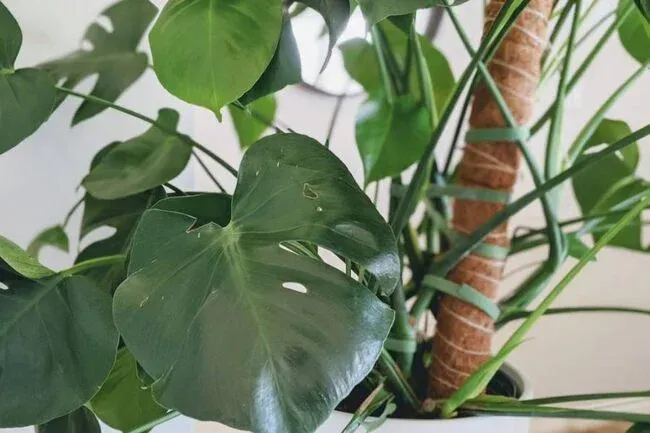
- Grow in bright indirect light rather than sudden harsh sun.
- Check moisture before watering; saturate the root ball when necessary, then let excess drain.
- Use a pot with an actual drainage hole and appropriate airy substrate.
- Avoid cold drafts and prolonged wet leaves.
- Inspect new purchases and monitor leaf undersides for pests.
Frequently asked questions
Do black spots always mean root rot?
No. Sunscorch, cold damage, insects, leaf disease and mechanical injury can darken a leaf. Check the root zone rather than making a diagnosis from color.
Will black spots heal?
No. Brown or black dead tissue does not become green again, but healthy leaves can continue growing when the cause is corrected.
Should I use fungicide?
Not without evidence of a fungal problem. Disease-control products vary by pathogen and label; improving environmental conditions is often the first step.