
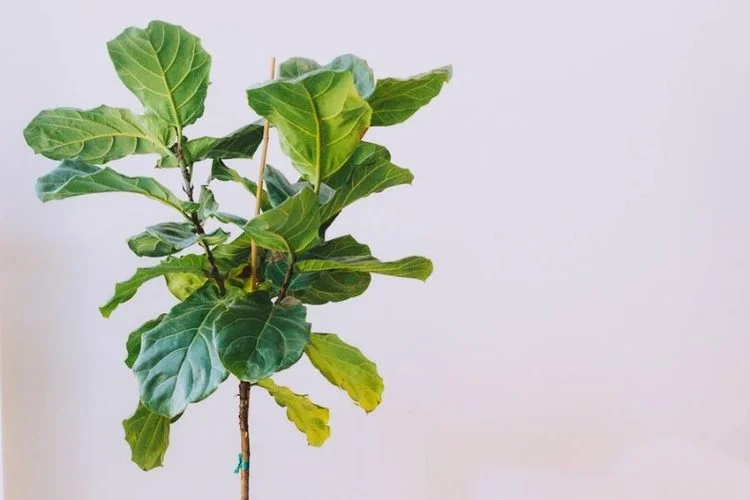
To encourage a fiddle-leaf fig to branch, a healthy plant can be pruned just above a leaf node during active growth. Removing the shoot tip may allow buds below the cut to develop into new shoots. The response varies with the plant's health, light and growing conditions, so no method guarantees two or more branches.
Before you prune: choose a healthy plant
Wait until the plant has firm stems, functioning roots and enough leaves to sustain growth. A fig struggling with pests, root rot or a major relocation needs recovery first. Bright filtered light and a warm stable environment make new shoots more likely than a dim winter corner.
Prepare sharp, clean pruning shears and gloves. Ficus lyrata produces milky sap that can irritate skin, and the leaves and sap should be kept away from pets and children who may chew them.
How to make the branching cut
- Decide the approximate height at which you want more side shoots.
- Find a healthy leaf node on the stem; this is where a leaf attaches and dormant buds may sit.
- Make a clean cut just above the node, leaving the node intact.
- Blot sap if necessary, dispose of cut material safely and clean the shears.
- Return the plant to stable bright indirect light and continue normal soil-based watering checks.
Do not make repeated cuts immediately if a bud fails to open. Let the plant respond over the active growing period and keep a record of which nodes produce growth.
Pruning, pinching and notching are different
Pruning removes a portion of stem and is the clearest way to reduce height and encourage buds beneath the cut. Pinching removes a soft growing tip on a younger shoot; it may redirect growth but often is not practical on an older woody stem. Notching injures tissue near a node in an attempt to influence bud growth, but results are inconsistent and there is a risk of damage or infection.
For most home growers, one deliberate clean pruning cut is easier to control than repeated notches. Treat claims that a cut always creates a fixed number of branches with caution.
Aftercare that supports new shoots
Keep the plant where it receives generous but non-scorching daylight, water only when the potting mix needs it and maintain free drainage. Do not compensate for pruning with heavy fertilizer doses. A houseplant fertilizer at label strength may be appropriate during strong active growth, but nutrition is not a substitute for light and healthy roots.
Rotate the pot gradually if growth consistently favors one side. If a top-heavy trunk is leaning, review support and stability options.
What if the fig does not branch?
Check the basics before cutting again: dim light, winter slowdowns, soggy roots and a weak canopy all reduce the chance of vigorous new shoots. Give the plant time to recover, and look for swelling buds or new leaves below the cut. Older bare woody sections may be slower to respond.
For a tree that is growing too slowly overall, see why new fiddle-leaf fig growth stalls, and for cramped roots consult the repotting guide.