
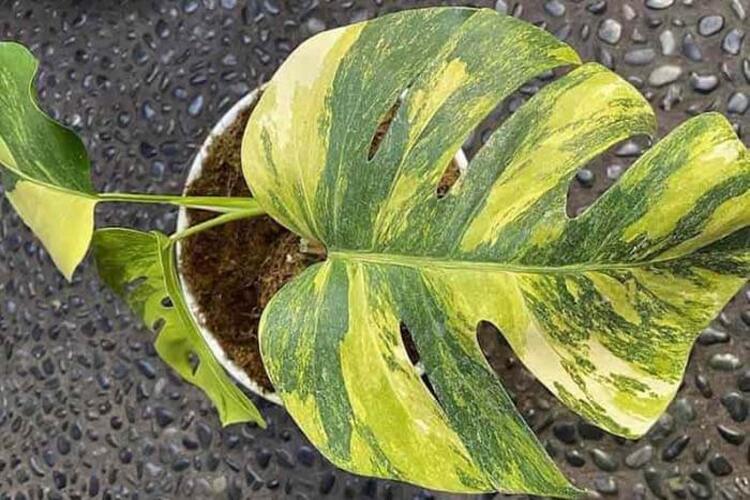
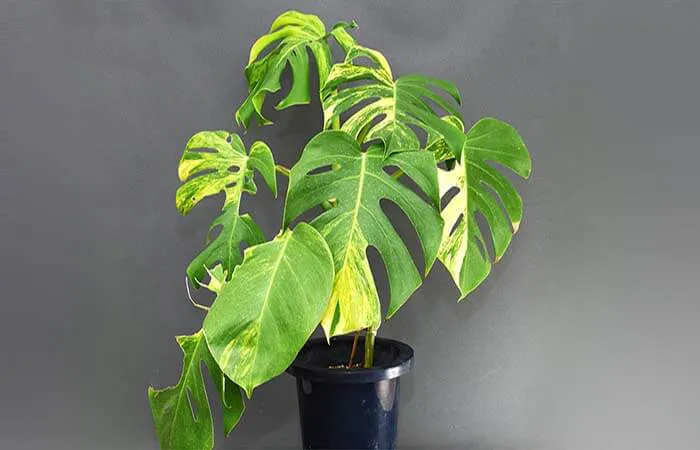
Quick answer: “Monstera Aurea” is a horticultural label generally used for Monstera deliciosa with yellow or golden variegation. It does not identify a separate botanical species. Care for it as a climbing Monstera: bright indirect light, a pot with drainage, an airy mix and a stable support. Protect pale leaf areas from scorching sunlight, and do not assume that yellow variegation is a nutrient deficiency.
What “Aurea” means
The word Aurea refers to golden or yellow variegation in the leaves. Green portions contain more chlorophyll and generally contribute more photosynthesis than yellow areas. Every plant's pattern is different; some leaves may be largely green and others highly variegated. Seller terms such as “Borsigiana Aurea” are not dependable species identifiers on their own.
Before buying, examine the actual plant, its stem and several leaves rather than trusting a listing photo. A heavily pale cutting may be harder to establish because its available green leaf area is limited.
Light: bright enough, not scorching
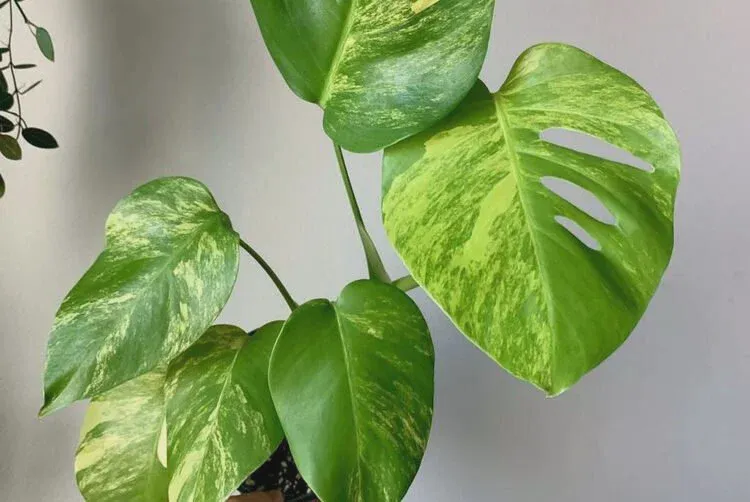
Position the vine where it receives substantial indirect daylight. Inadequate light can slow growth; a sudden move into intense direct sun can bleach and permanently brown pale portions. Acclimate gradually when changing rooms or seasons. A well-positioned grow light can help in dim spaces, but keep foliage at the light's recommended distance and observe its response.
Older scorched tissue will not turn green again. New leaves show whether your light adjustment is working.
Watering and the root-zone check
Use a container with drainage holes and a loose houseplant mix with suitable water and air retention. Check the upper mix and overall pot weight instead of watering on a rigid weekly schedule. When the plant needs water, saturate the root ball and let excess escape. Do not let a decorative cachepot hold runoff.
Both persistent sogginess and extreme drought can damage roots and slow variegated foliage. A very large pot filled with wet medium can remain saturated longer than the roots can tolerate.
Temperature, humidity and climbing support
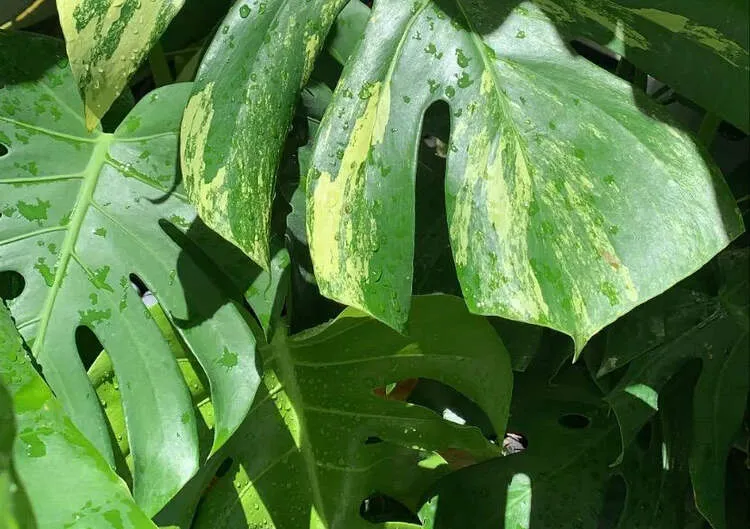
Keep this tropical vine warm and away from cold drafts. Moderately humid rooms are often sufficient, though very dry air can contribute to crisp margins. If humidity is consistently low, a clean humidifier may help more than frequent misting.
As the vine grows, a sturdy vertical support can help it climb. Secure the main stem gently; avoid tying petioles or still-unfurling leaves tightly to the pole.
Feeding variegated Monstera
Use a complete houseplant fertilizer only when the plant is actively growing and the potting medium needs nutrient replenishment, following the product label. Do not increase nitrogen to “fix” golden variegation: the yellow sectors are a foliage characteristic, not evidence of nutrient deficiency. Excess fertilizer can leave salts in the medium and injure roots.
How to propagate Monstera Aurea
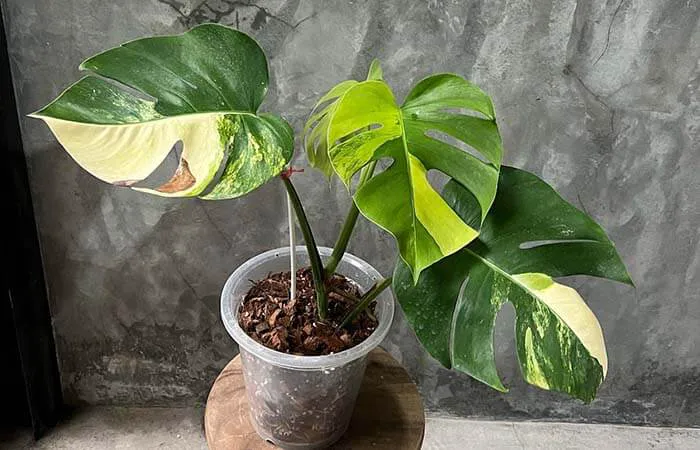
- Choose a healthy stem section with a visible node and enough green tissue to support growth.
- Use clean, sharp tools and protect your hands from irritating sap.
- Root the node in clean water or an airy moist propagation medium under bright indirect light.
- Transfer when usable roots have formed, keeping the new root system aerated and evenly managed.
- Expect variegation patterns to differ on future leaves; a cutting cannot guarantee an exact yellow percentage.
A detached leaf without a piece of stem containing a node will not become a complete climbing vine.
Recognize common problems
| Symptom | Look for | Response |
|---|---|---|
| Pale section develops crisp brown tissue | Strong sun, dry root zone or leaf age | Adjust light and moisture; retain green leaf tissue |
| Whole leaf yellows, mix stays wet | Root stress or decay | Check drainage, root firmness and pot size |
| Stalled new growth | Low light, root loss, cool conditions or pests | Correct the limiting factor instead of overfeeding |
| Leaves become mostly green | Variegation variation and plant growth pattern | Review new growth; do not assume deficiency |
Pet and handling safety
Monstera deliciosa contains calcium oxalate crystals and is unsafe for pets to chew. Keep cuttings and vines out of reach of cats and dogs. If an animal chews the plant and develops drooling, mouth irritation or difficulty swallowing, contact a veterinarian promptly.
Frequently asked questions
Is Monstera Aurea its own species?
No. The trade label usually refers to a yellow-variegated form of Monstera deliciosa.
Should I cut off yellow variegation?
No. Stable golden sectors are the feature of the plant. Remove foliage only if it is seriously damaged or interfering with healthy growth.
Will more fertilizer make the yellow leaves green?
Not reliably, and excess fertilizer may harm the plant. Evaluate overall growth rather than attempting to alter its variegation with feeding.