
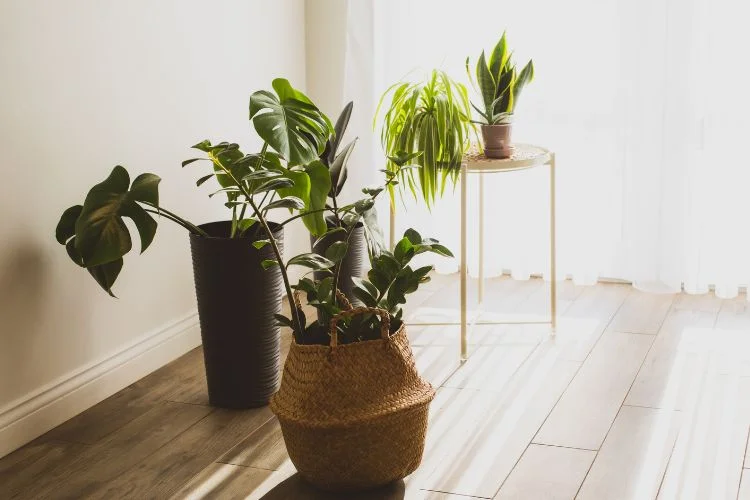
Monstera grows best in bright indirect light. Set a plant near a bright window with filtered or side light, rather than deep inside a dark room or abruptly in strong midday sun. Gentle direct morning sunlight may be tolerated after acclimation, but harsh afternoon exposure can scorch leaves. Light needs depend on species, plant maturity, window direction and season.
How to position Monstera at a window
| Location | Practical guidance |
|---|---|
| East-facing window | Often a useful position for gentle morning light and bright daytime conditions. |
| South- or west-facing window | Can provide ample light, but add a sheer curtain or some distance from the glass if hot afternoon sun hits the leaves directly. |
| North-facing window | May support growth in a bright room, though a very dim position can cause slow growth or stretched stems. |
| Windowless area | Use a correctly sized grow light and regular day/night schedule rather than leaving the plant in darkness. |
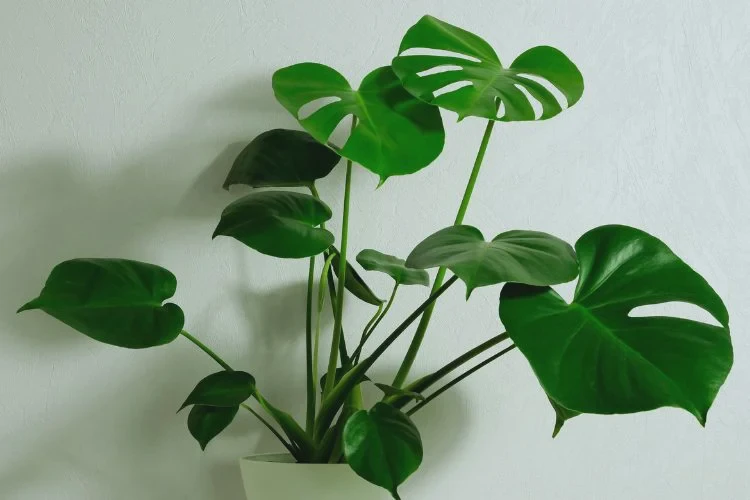
Signs Monstera is not getting enough light
Small new leaves, elongated gaps between nodes, slower leaf production, leaning toward a window and weaker fenestration can suggest inadequate light. Leaf splits also depend on plant age and growth habit: a juvenile Monstera deliciosa will not produce adult leaves merely because it sits under a strong lamp. Climbing support and adequate root care help the plant mature.
Can Monstera receive direct sunlight?
Some gentle morning sun may be acceptable, especially for acclimated plants. Strong afternoon sunlight concentrated through glass can cause bleached tan patches or crispy areas. Move a shaded plant into brighter conditions gradually so that its foliage has time to adapt. The NC State Extension Monstera deliciosa profile recommends moderate brightness without harsh direct exposure.
How long should a grow light run?
There is no single safe lamp distance or duration for every grow light. A fixture's usable plant-light output depends on its design, distance and illuminated area. The University of Minnesota Extension lighting guide recommends matching artificial lighting to the species and fixture. Use the manufacturer's light-output chart to set a suitable position and a timer for a consistent light/dark cycle; do not leave the lamp on around the clock.
A white or full-spectrum LED can work without producing purple light. Confirm manufacturer coverage, mounting and power safety rather than relying on advertising wattage alone. See our Monstera grow-light buyer's guide for comparisons.
How to adjust a Monstera's lighting
- Observe growth and inspect leaves before moving the plant.
- Choose a position with brighter indirect light if new growth looks weak or stretched.
- Move the pot gradually, avoiding sudden harsh exposure.
- Check for heat and bleaching over the following weeks.
- Use plant growth, not only the color of existing damaged leaves, to evaluate the change.
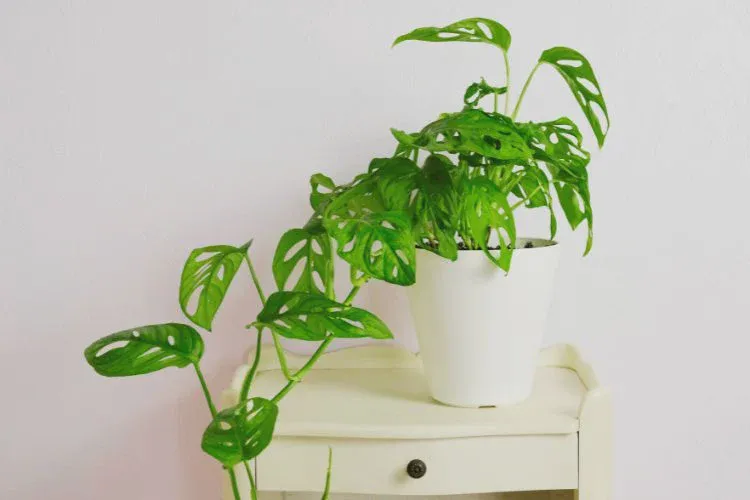
What light cannot fix
Yellowing and drooping can reflect root stress, watering or pests rather than brightness alone. If potting mix stays wet for long periods, better light helps only when root drainage is also corrected. The Penn State Extension Monstera guide recommends a balance of light, watering and well-drained conditions.
Frequently asked questions
Does Monstera need 10 or 12 hours of direct sun?
No. A fixed number of hours of strong direct sunlight can damage leaves. Evaluate total useful light from windows and lamps; brightness and timing matter together.
Why aren't my Monstera leaves splitting?
Leaf fenestrations are influenced by plant maturity, species, climbing support and growing conditions. Low light can slow healthy growth, but it is not the only cause.
Can a Monstera survive far from a window?
Survival and healthy growth are different. Far from a bright window, a properly configured grow light may be necessary to maintain vigorous foliage.
Related Monstera topics
See watering requirements, humidity, and brown leaf spots.