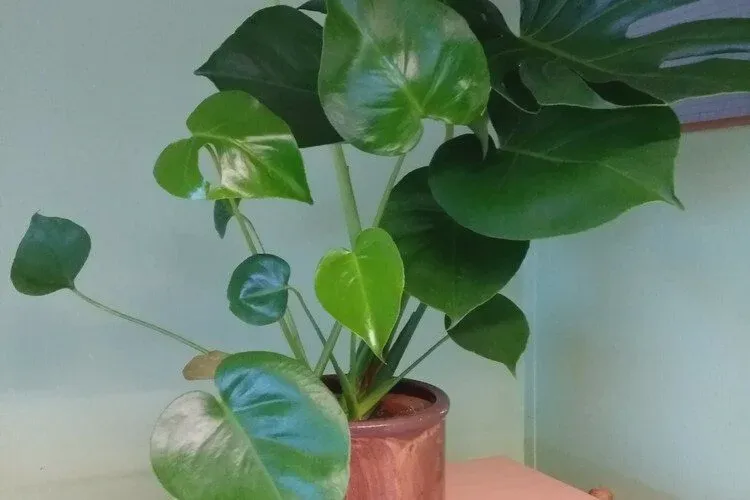
Monstera deliciosa prefers stable indoor warmth. North Carolina State Extension recommends roughly 60–85°F (16–29°C), moderate brightness and protection from harsh direct sun. That range is practical guidance, not a guarantee that every short exposure outside it will kill the plant. How long an extreme lasts, light, moisture and acclimation all matter.
What matters more than one ideal number
A comfortably heated home is generally suitable for Monstera. Keep foliage clear of exterior-door drafts, air-conditioning outlets and heating vents. Leaves pressed against winter glass can be much colder than the room thermometer. Gradual adjustments help more than repeated abrupt relocations. Place a thermometer near the plant if its spot appears unusually hot or cold; also inspect the light reaching leaves at different times of day.
Signs of chilling or cold shock
After exposure to cold air, leaves may droop, develop dark water-soaked-looking patches or later turn brown or black. Injury can appear after the incident. Move the plant to steady warmth and check moisture; do not compensate by saturating a wet pot or adding fertilizer. Wait until the extent of dead tissue is clear before trimming badly damaged leaves. A leaf that has turned fully brown will not become green again, but healthy new growth is possible.
Too much heat and window sun
Intense sunshine through glass can cause papery scorch patches even when room temperature seems moderate. Hot dry conditions also make the potting mix dry faster. Filter midday sunlight or move the pot away from hot glass rather than transferring it into deep shade. Check root-zone moisture before watering: dry-soil wilting and wet-root damage can both cause drooping, so the leaf alone cannot tell you which treatment is appropriate.
Winter and summer adjustments
Short winter days often reduce water use. Feel the mix below the surface before watering and reduce feeding if the plant is not actively growing. Iowa State Extension notes that misting has little lasting effect on room humidity; use a clean humidifier if measured air is persistently too dry. If moving Monstera outside in warm weather, acclimate it gradually in sheltered shade, protect from afternoon sun and move it back inside well before cold nights. Inspect for new pests on return.
When temperature is not the problem
Persistent yellowing can also reflect wet roots, inappropriate light, aging leaves or insect damage. Compare the timeline: a rapid change just after cold exposure supports temperature injury, while a persistently heavy wet pot points elsewhere. For context see Monstera light, overwatering and drooping. Sources: NC State Extension and Iowa State Extension.