
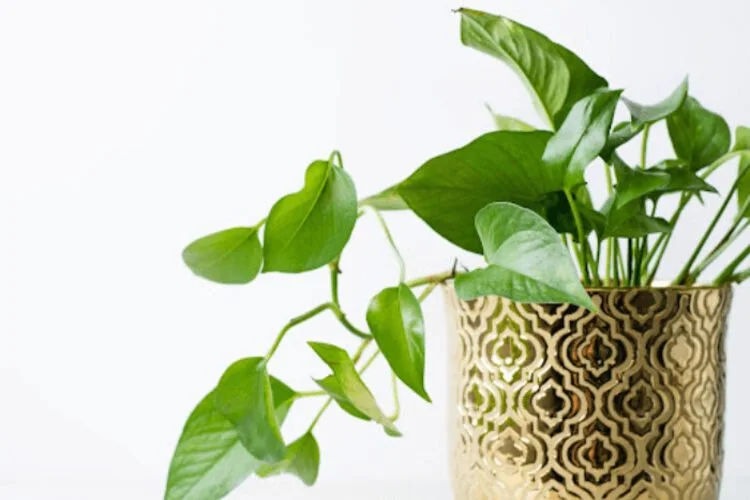
Quick answer: “Types of pothos” usually means nursery cultivars and trade names, not sixteen separate species. Most of the familiar golden, Neon, Marble Queen and N’Joy forms are selections of Epipremnum aureum. Cebu Blue and Baltic Blue are commonly associated with Epipremnum pinnatum, while satin/silver pothos belongs to Scindapsus pictus. Choose by verified scientific label, foliage and care needs.
How to identify pothos accurately
Use the botanical species, cultivar label and several mature leaves, not a single photo or the word “rare.” The University of Florida has documented named E. aureum selections, including ‘Neon’ and ‘Pearls and Jade’. Growth light, age and climbing habit also change leaf size and appearance. The sections below group common market labels without claiming every trade name has equivalent official cultivar documentation.
1. Golden pothos
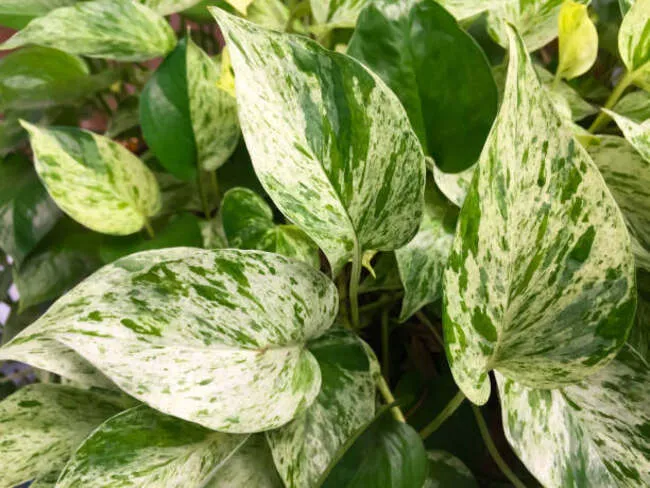
The familiar E. aureum form has medium-green heart-shaped leaves with yellow or gold streaks. Its vigorous trailing or climbing growth suits shelves and poles in bright filtered light. Variegation varies among leaves and light conditions.
2. Marble Queen
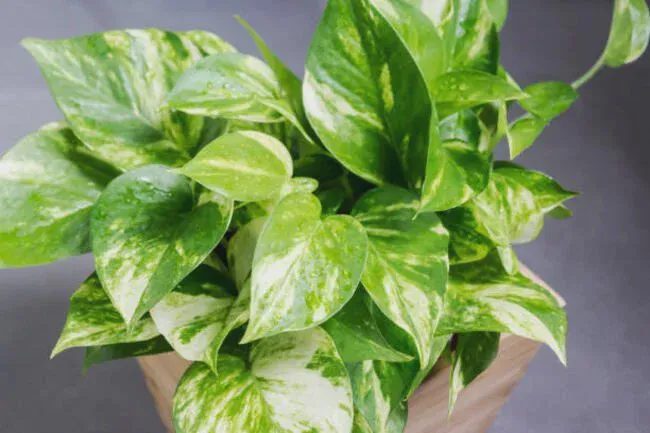
This documented E. aureum cultivar has a green base marbled with white or cream. The pale portions need adequate indirect light but can scorch after abrupt exposure to midday sun.
3. Neon pothos
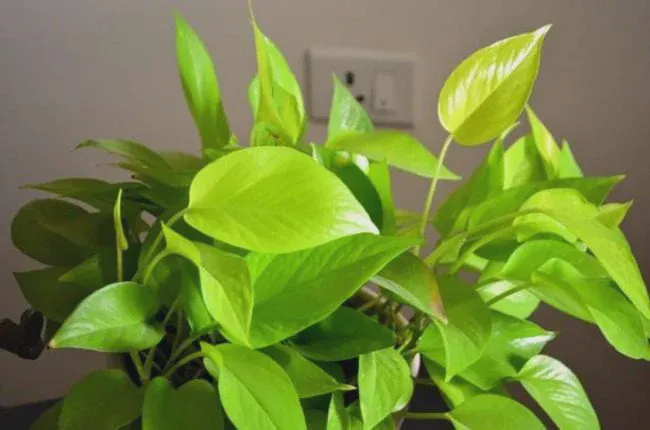
‘Neon’ is a striking chartreuse E. aureum selection with little or no marbling. Bright diffused light supports steady new growth; its hue is primarily a cultivar characteristic, not a fertilizer effect. See Neon pothos care.
4. Jessenia pothos
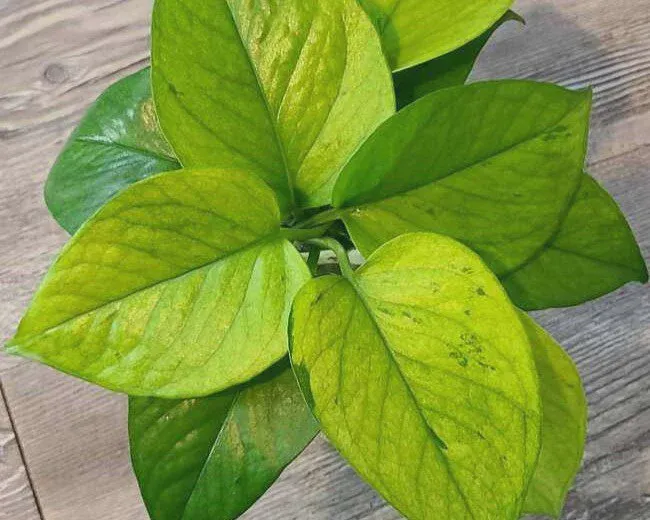
This market name is usually applied to a green-and-yellow-green marbled pothos selection. Leaf patterns can resemble Marble Queen, so compare authenticated nursery information and several leaves before making a confident identification.
5. Snow Queen
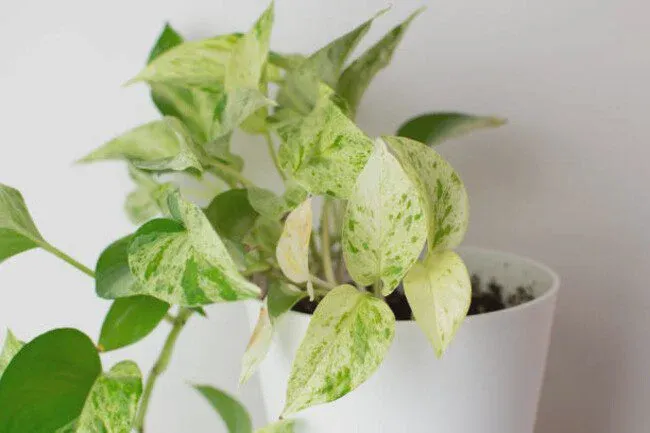
Frequently sold as a highly white-variegated pothos, this trade name is not consistently distinguished from ‘Marble Queen’ by authoritative cultivar sources. High-white tissue leaves less green area for photosynthesis. See the Snow Queen comparison.
6. Manjula
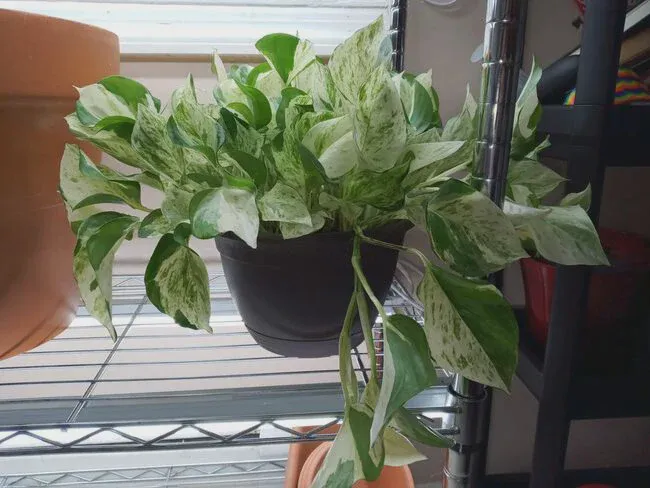
Manjula pothos is marketed for broad green and creamy variegated leaves with variable patches and waves. Different individual plants can have strikingly different patterns. Favor a healthy rooted specimen over a plant chosen solely for one very pale leaf.
7. N’Joy
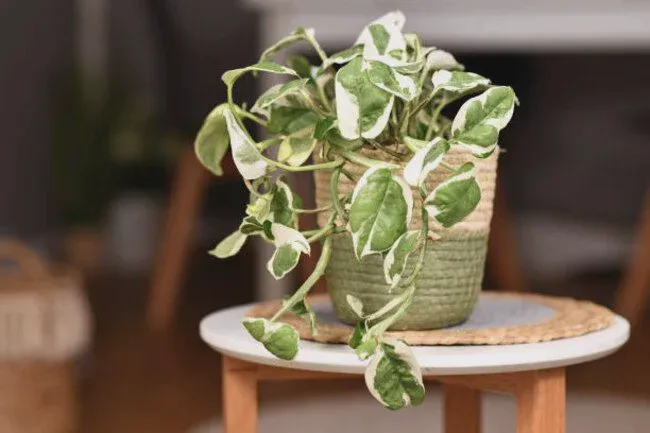
N’Joy is a compact-looking green-and-white variegated pothos label. Leaf patterns can overlap with other selections in shops. Use verified supplier names for precise cultivar decisions, and provide consistent filtered light and careful drainage.
8. Pearls and Jade
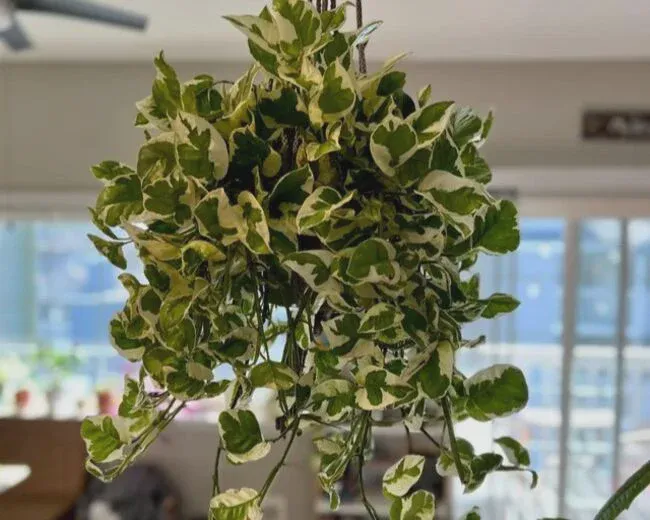
UF/IFAS describes this cultivar as a mutation selection from Marble Queen with smaller leaves and white, gray-green and green flecks on both surfaces. This documented origin provides a stronger identifier than a single comparison photo. See Pearls and Jade care.
9. Hawaiian pothos
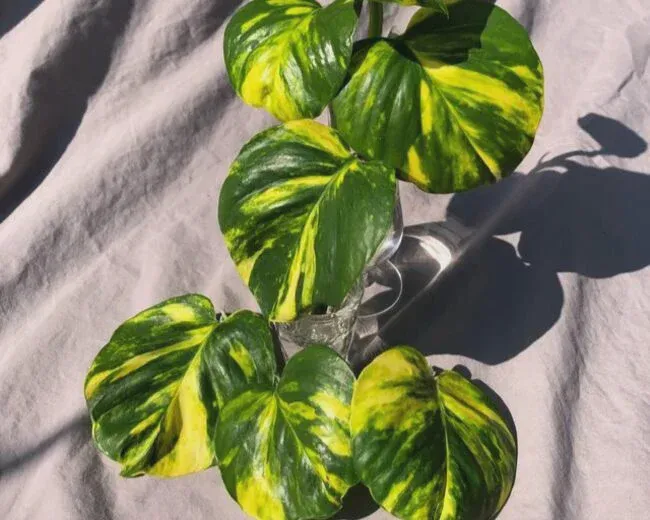
This commercial name is often applied to green-and-gold foliage with larger leaves or pronounced patterning. Leaf size also depends on climbing maturity and growth environment; the name alone does not guarantee a unique species.
10. Satin pothos
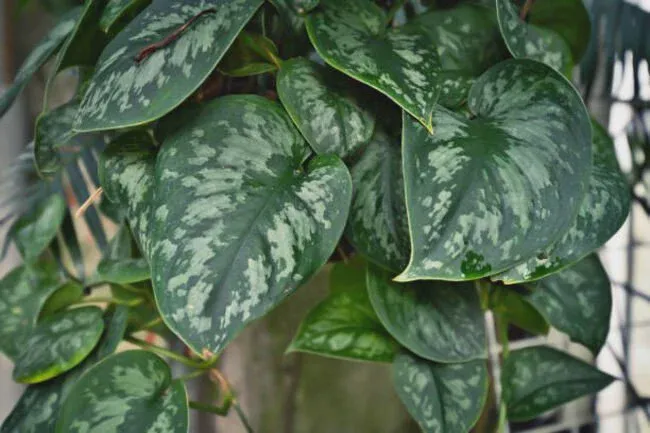
Despite its name, satin pothos is Scindapsus pictus, not E. aureum. Its matte, green leaves have silvery marks. It appreciates bright indirect light, a draining medium and slightly drying surface soil. See Scindapsus care.
11. Cebu Blue
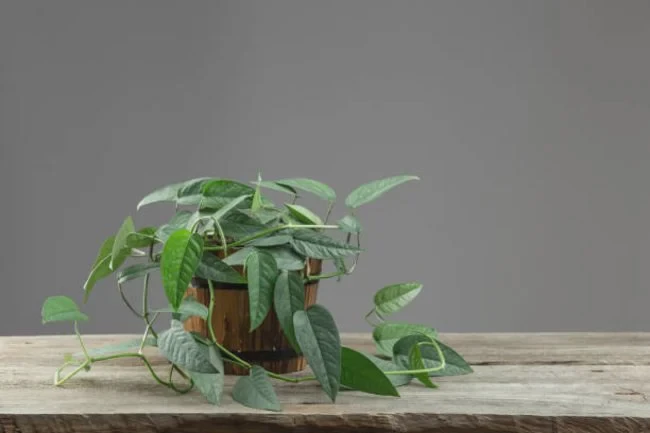
Generally sold as an Epipremnum pinnatum selection, Cebu Blue has elongated juvenile leaves with a blue-green cast. Mature climbing plants can develop a very different leaf shape from young hanging cuttings. Give a climbing support if that growth habit is desired.
12. Baltic Blue
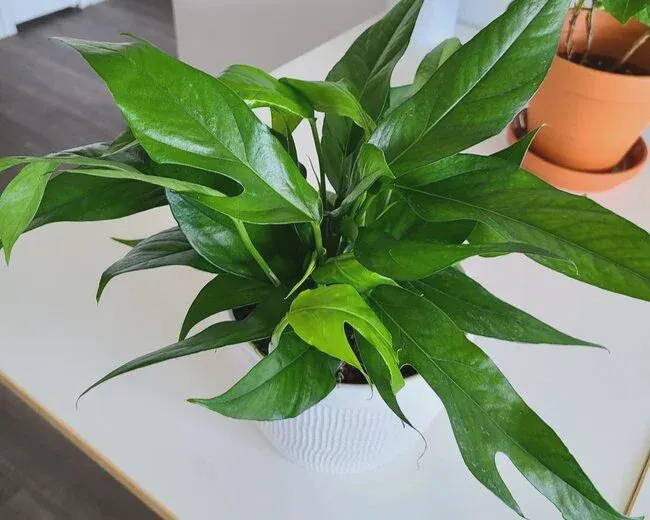
Another blue-green-leaved nursery selection commonly associated with E. pinnatum. Market descriptions emphasize early splits on maturing leaves, but leaf shape varies with age and support. Compare genuine supplier stock rather than assuming all small plants show mature fenestrations.
13. Glacier
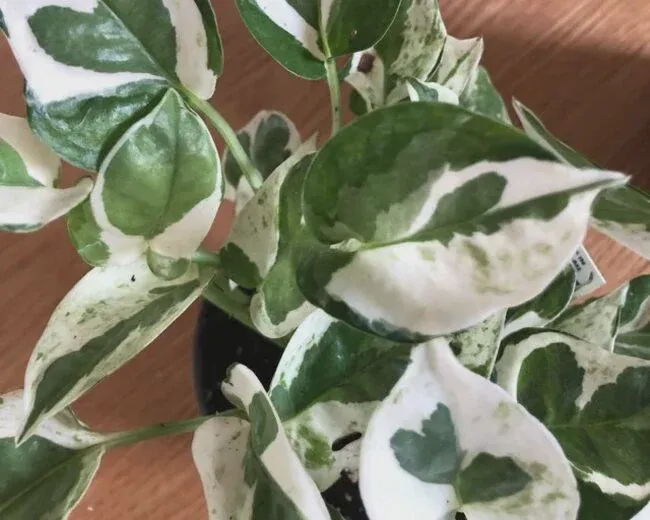
Often used for compact green-and-white variegation, Glacier can overlap visually with N’Joy and Pearls and Jade. A precise cultivar label from the source nursery is more helpful than confidently categorizing a plant by one irregularly patterned leaf.
14. Global Green
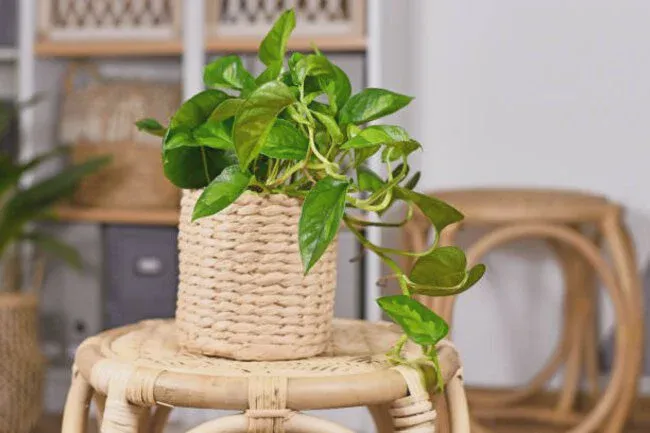
Typically sold as an E. aureum selection with differing shades of green rather than bright white. It can blend into collections of golden or Jade pothos, especially under weak light. Compare multiple leaves and the nursery's cultivar name.
15. Emerald pothos
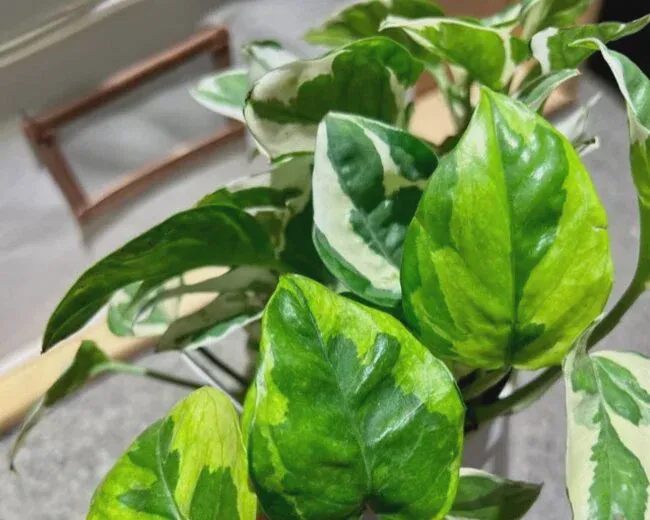
Emerald is a trade name for green-on-green foliage in the pothos market. Marketed pattern and growth habits can resemble Global Green and other sports. Do not assert a precise scientific distinction without provenance.
16. Harlequin
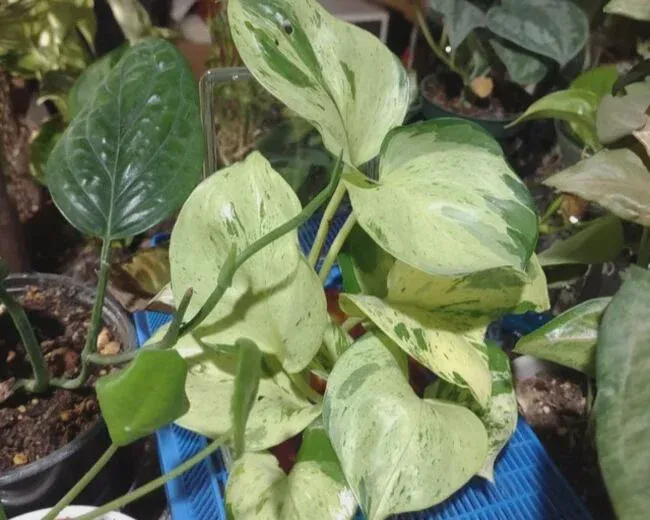
Harlequin is widely used as a high-white variegated pothos trade name, but reliable botanical documentation is limited. Avoid paying a rarity premium solely because a label promises a unique type; ask for cultivar documentation and a healthy rooted cutting.
What all these plants need in common
Most pothos sold as household vines prefer bright filtered light, warmth and a potting medium that drains while retaining some moisture. Water based on the mix rather than a fixed seven-day routine. Support climbing stems if you want larger mature leaves, and avoid overfeeding plants with limited light. Scindapsus pictus has its own care nuances; check the scientific name when comparing species.
Pet safety and buying checklist
Epipremnum contains irritating calcium oxalates and ASPCA lists golden pothos as toxic to cats and dogs. Scindapsus is also listed as potentially harmful by NC State. Inspect for rooted stem nodes, pest-free undersides and clear drainage. Ask for the exact botanical name and source of unusually costly or “rare” plants.
Frequently asked questions
Are there exactly 16 pothos species?
No. These sixteen entries are market cultivar names and lookalikes across several species and genera.
Is satin pothos a true Epipremnum?
No. It belongs to Scindapsus pictus.
Are all these varieties safe for cats?
No. Several contain irritating calcium oxalates and should not be accessible to pets.