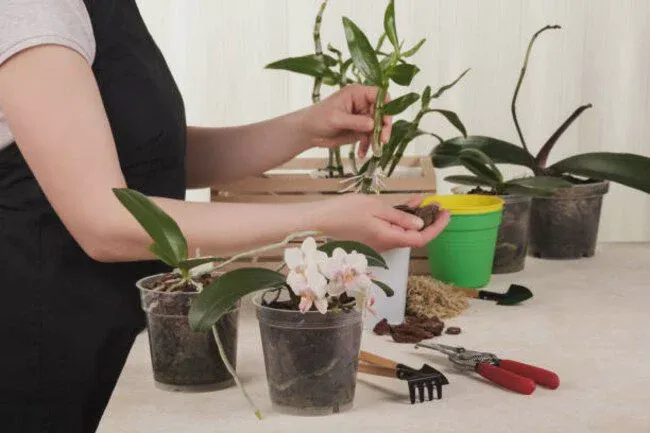
A curling orchid leaf does not identify a single problem. A recently unfolding leaf may be naturally curved; persistent inward curling, accordion-like folds or a change accompanied by wilting can point to moisture stress, root trouble or conditions during leaf development. Start by identifying which type of orchid you have, then check the roots and medium.
The shape of the curl gives useful clues
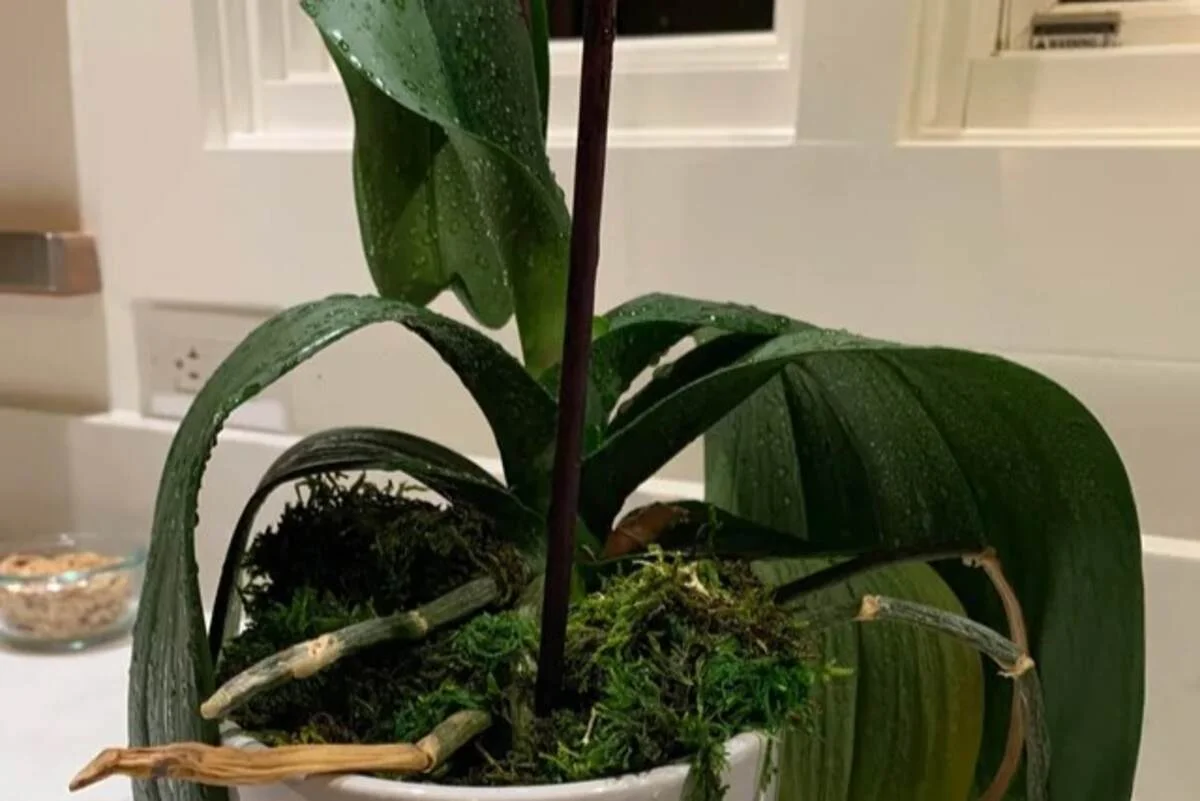
New leaf still unfolding: some temporary curvature is normal. Leaves bending with a limp texture: the plant may not be delivering enough water to the tissue. Accordion or pleated folds across the blade: in some thin-leaved Oncidium and Miltoniopsis types, irregular water availability while a leaf develops is a documented cause. Firm older leaf bent toward a window: growth orientation or a previous physical injury may explain the shape.
The American Orchid Society leaf-problem guide distinguishes persistent tissue changes from routine growth. A split or tear is a separate symptom; see why orchid leaves split.
Check watering and the condition of the roots
Touch the medium below the surface and lift the pot to estimate how much water remains inside. A pot that is very light with dry bark and firm but pale roots may need a thorough watering. A heavy saturated pot combined with soft dark roots is a different problem: damaged roots may prevent uptake even though water is abundant.
Water sound roots thoroughly when the medium needs it and always allow free drainage. If the roots are mushy and the bark or sphagnum has decomposed, inspect them carefully, remove clearly dead tissue using clean tools and repot only when necessary in airy orchid medium. More water will not solve a plant with few living roots.
Check excessive light, temperature and air conditions
Leaves can be stressed by hot direct sun, very dry heated air or cold exposure near a drafty window. Sudden harsh light often leaves visible pale or brown scorch, not just a harmless curve. Moth orchids typically prefer bright indirect light and a stable warm location. Avoid moving a recovering plant repeatedly between a dark room and intense midday sun.
High humidity without air circulation is not a solution either, particularly around foliage and crowns that stay wet. The goal is stable genus-appropriate conditions so new growth is healthy, not permanently wet leaves.
Look for pests and spreading disease
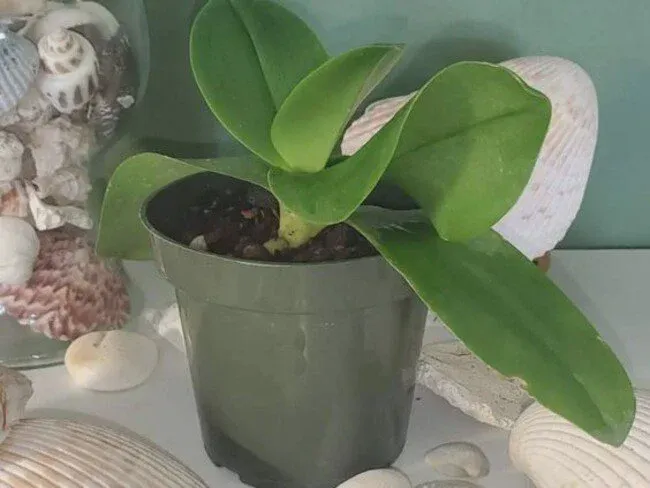
Inspect new growth and the undersides of leaves for scale insects, mealybugs, mites, fine stippling or sticky residue. Feeding damage or some infections may distort young leaves, but an image of one curled blade cannot confirm a pest or pathogen. Isolate the plant if you find a potentially spreading problem and identify the organism before choosing a product labeled for orchids.
Dark water-soaked tissue or rapidly enlarging lesions warrant more urgent attention than dry, unchanged wrinkles. The orchid rescue checklist explains when to investigate root loss and rot.
Five actions in the right order
- Identify the genus and whether the leaf is new or established.
- Photograph the curl and check for soft spots or rapid progression.
- Feel the center of the medium and inspect root firmness rather than watering by the calendar.
- Stabilize light and temperature, avoiding direct harsh sun and cold drafts.
- Observe the next leaves for normal growth; older distortion may remain after correction.
If an entire leaf has gone limp, follow the drooping-leaf guide. If it is leathery with deep ridges, the wrinkled-leaf guide concentrates on root-related dehydration.
Can a curled leaf straighten again?
A young leaf may open normally, and some water-stressed tissue can regain firmness after hydration. A mature leaf scarred or folded during development may remain permanently misshapen even when the root problem is fixed. Do not repeatedly flatten it by hand or cut it off simply for appearance; green healthy tissue still contributes to the plant's growth.