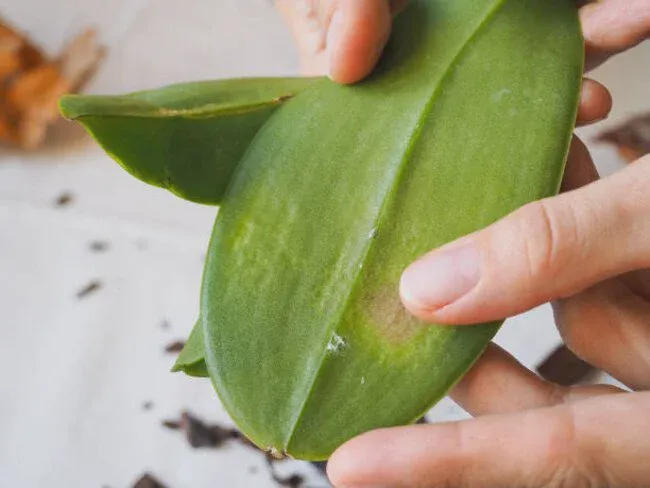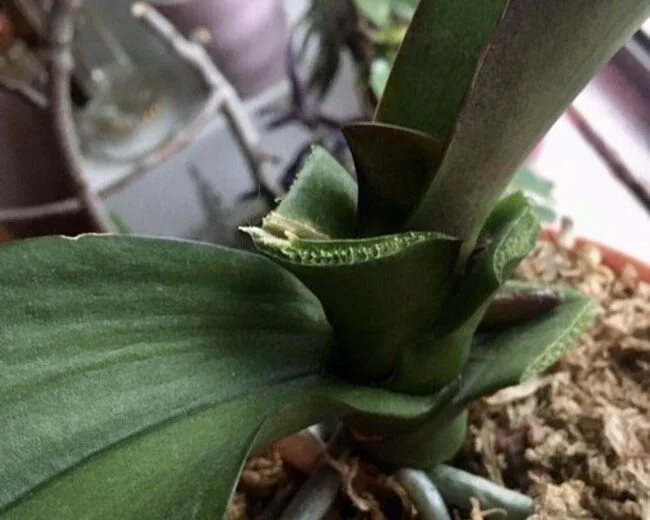
A split or tear in an orchid leaf is usually physical damage, not proof of a contagious disease. Bending, rubbing, rough handling and stress while a new leaf develops can all contribute. The damaged tissue will not close back together; what matters is whether it remains dry and firm or begins to turn soft, dark or rotten.
Identify what kind of damage you are seeing
Clean lengthwise split with dry edges: this may be a mechanical tear along the leaf, sometimes revealed as it expands. Jagged break on a leaf edge: check whether the pot was knocked, pressed against a window or crowded against another plant. Holes or chewed edges: investigate physical damage and possible pests rather than assuming a nutrient deficiency. Wet, blackening or foul-smelling split: inspect promptly for secondary rot.
The American Orchid Society's handling-damage guidance describes how damage from transport and repotting can leave permanent scars and can become an entry point for disease. A tear alone cannot determine why it happened.
Why a leaf may tear
Physical pressure is a common possibility: a leaf caught under a support clip, caught in packaging, rubbed by a window frame or compressed against other plants. Handling a rigid mature leaf or manipulating tender expanding growth can also create damage.
Uneven moisture and expansion while a leaf develops have been proposed as contributors to some splits, but a dry midrib fissure does not prove an exact watering mistake. Do not confidently attribute every split to low humidity, a particular nutrient deficiency or “natural leaf lobing” without further evidence. Orchids differ in leaf shape and growth.
Should you cut off the split leaf?
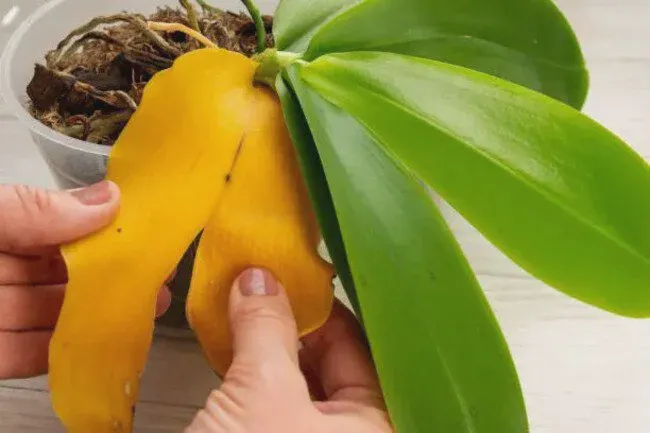
Usually not if the remaining leaf is green, firm and the split is dry and stable. A partially damaged leaf can still photosynthesize and support its roots. Avoid tearing the edges farther to make them look tidy or sealing them with household glue, oil or tape. A leaf scar may remain visible for the rest of its lifespan.
If tissue becomes watery, black, soft or spreads rapidly, separate the plant from others and investigate infection. Removal of actively rotten portions may be appropriate with a clean tool and careful handling, but don't perform aggressive surgery on a dry, stable split.
How to reduce new splits
- Give the plant enough space so leaves are not pinched against furniture, pots or windows.
- Secure flower spikes separately rather than forcing broad leaves under tight clips.
- Carry the orchid with the pot supported and protect leaves when transporting.
- Water as the orchid's medium approaches its appropriate dryness, and do not cycle between severe drought and prolonged waterlogging.
- Keep an appropriate amount of filtered light and stable temperatures.
- Watch developing foliage for distortion or insect activity before it hardens.
For trouble with leaf folding rather than a true tear, see curling orchid leaves.
When a split can signal a larger problem
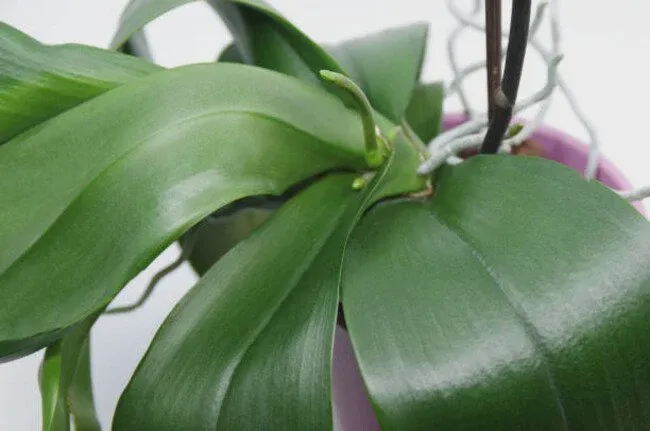
Examine the surrounding tissue. A dry tear in an otherwise vigorous plant usually calls for observation. A tear with brown patches, pus-like ooze or rapidly collapsing sections needs disease evaluation. Orchids may develop bacterial and fungal rots, but a diagnosis based only on the split shape is unreliable.
Check the crown for standing moisture and the roots for rot. Avoid transferring old shears between plants. If necessary, use an extension service or experienced orchid specialist to identify a spreading lesion; household fungicides or homemade mixes are not a universal cure.
What to expect afterward
The split tissue will not knit back to its original smooth appearance. A healthy orchid can grow new leaves despite a damaged older blade. Photograph the tear, keep the environment stable and watch the next leaf as a better indicator of whether a recurring problem persists.
For root- or water-related texture changes, see wrinkled orchid leaves and drooping orchid leaves.