Drooping orchid leaves most often mean the plant is not maintaining normal water pressure in its tissues. That can happen because it is too dry—or because overwatered, damaged roots cannot absorb water. Before watering again, examine the inner pot, root firmness and growing medium. Some orchids naturally arch, so compare the current leaf shape with earlier healthy growth.
First distinguish a naturally arching leaf from wilting
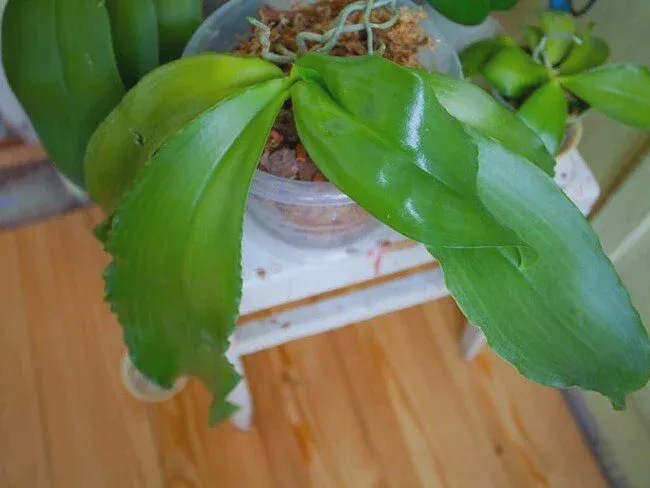
Moth orchids commonly have broad leaves that extend outward and may slope under their own weight. A healthy leaf generally feels firm rather than limp or leathery. A leaf that was once firm but has become soft, floppy or wrinkled deserves a water-and-root check. One old lower leaf loosening over time is different from most leaves collapsing together.
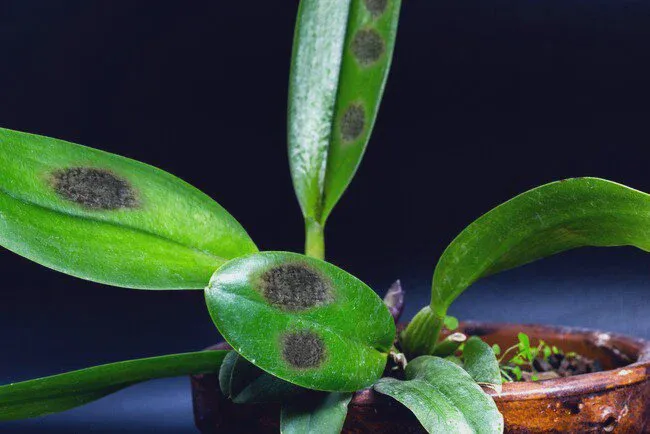
Make note of any yellowing, black spots or sudden flower drop. Those accompanying clues are often more useful than the leaf's angle alone. If old leaves turn uniformly yellow, compare the normal aging and disease patterns.
Case 1: the medium is dry and the roots are healthy
Lift the pot and look through a clear orchid container if available. Healthy Phalaenopsis roots are generally plump and firm, often pale or silvery when dry and green when wet. If the bark has dried substantially and the pot is very light, the orchid may need water. Dampen the medium thoroughly with room-temperature water and let all runoff escape.
Very dry bark may be difficult to rewet at once; use gentle repeated watering or a short, supervised soak of the inner pot, then drain completely. Do not leave the pot soaking overnight, and avoid standing water in the crown. Follow the orchid watering instructions for a repeatable check.
Case 2: the medium is wet and roots are failing
If the pot remains heavy and wet, especially when leaves continue to droop, consider root loss. Rotten roots can be dark, mushy or hollow, and decomposed moss or bark can suffocate them. A root-damaged orchid may wilt despite apparently plentiful moisture because it no longer has a functional way to absorb water.
Remove the plant carefully only when the signs justify inspection. Trim clearly dead roots with disinfected tools, replace badly degraded medium with an appropriate well-drained orchid mix, and keep the plant in stable gentle light. More water or high-dose fertilizer is not the cure for a lost root system.
Other possible contributors
Cold damage may leave leaves limp, dark or watery after low-temperature exposure. Harsh summer sunlight can damage leaf tissue. Serious pests or spreading rot can also weaken a plant. Inspect undersides, the crown and the base of the plant for sticky residues, mealybugs, dark soft patches or a foul smell.
Do not assume that insufficient humidity is the only issue. Warm but stagnant and very humid conditions may encourage disease, particularly if water collects in leaf joints. Appropriate air movement and a stable environment matter.
What recovery looks like
After watering a thirsty orchid with functioning roots, leaves may become firmer. If roots have been lost, recovery takes longer and depends on new root development. Old severely creased leaves may not become smooth even when the orchid recovers. Watch for healthy root tips and new leaves rather than repeatedly changing conditions to make one old leaf perfect.
Read what wrinkled leaves indicate for the difference between an over-dry pot and root decay. If the crown or many roots are damaged, see orchid recovery steps.
A straightforward diagnosis checklist
- Is the leaf actually limp or simply naturally arching?
- Is the center of the mix dry, damp or persistently wet?
- Are visible roots firm and plump, or soft, dark and hollow?
- Was there recent cold exposure, harsh sun, relocation or repotting?
- Are dark lesions or pests present?
Treat the confirmed problem, allow drainage, and adjust frequency only after observing how the potting medium changes between waterings.