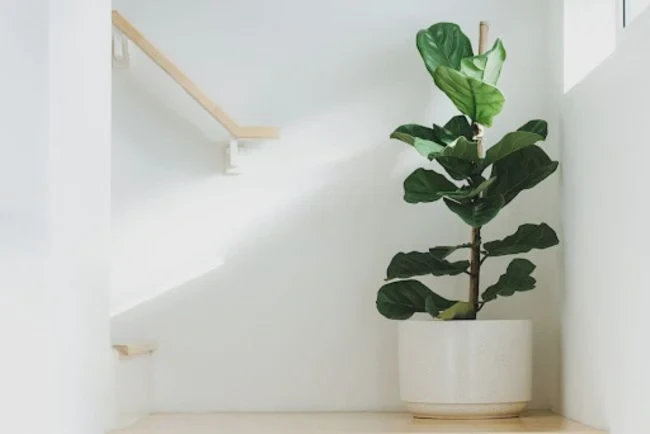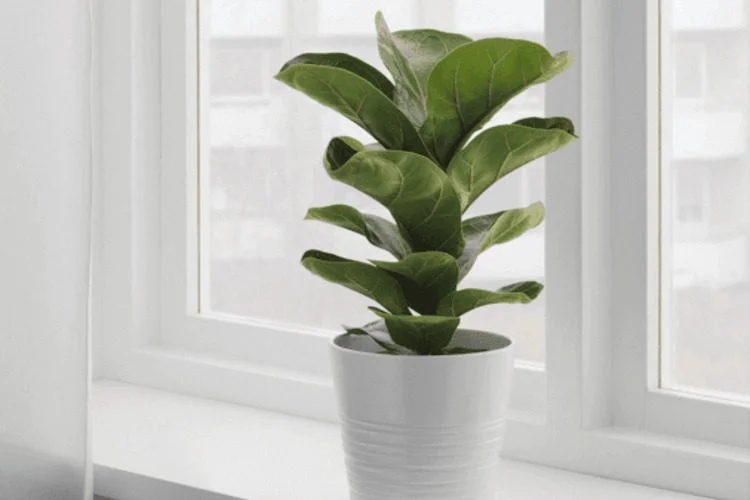
The biggest benefits of a fiddle-leaf fig (Ficus lyrata) are visual: large, sculptural leaves, a tree-like shape and the pleasure of caring for a living plant. It can bring greenery into an indoor space, but one pot is not a substitute for ventilation, a dehumidifier or an air purifier.
A dramatic indoor focal point
The broad, lyre-shaped leaves and upright woody stems can make a single fiddle-leaf fig feel like a substantial piece of living decor. Young plants fit on sturdy stands; mature specimens work as floor plants where they have room to spread. The species comes from tropical western and central Africa and is typically grown indoors in climates with cold winters.
Choose a place with bright, mostly indirect light and enough clearance to avoid brushing or bending the leaves every time someone passes. Turning the pot slightly from time to time helps new growth develop more evenly toward the light.
A satisfying, learnable care routine
Looking after a fig encourages a simple habit: checking the potting mix, observing new leaves and inspecting the undersides for pests. That engagement may make the plant personally rewarding, but it is not evidence that this particular species treats stress, insomnia or any medical condition.
Focus on predictable care rather than complicated rituals. Feel the soil a couple of inches down before watering, use a pot with a drainage hole, and keep the plant away from harsh cold drafts. If the fig has not grown for several weeks, see the growth troubleshooting guide before adding fertilizer.
Does a fiddle-leaf fig clean indoor air?
Plants can take up some airborne compounds in controlled chamber experiments, but that does not translate into meaningful purification of an ordinary room. A peer-reviewed analysis of plant studies found that normal outdoor-air exchange outperforms the removal achieved by typical collections of potted plants. Enjoy your fig for its appearance; improve indoor air quality through source control, ventilation and appropriate filtration.
Plants photosynthesize when they receive light. That fact does not support claims that a single fiddle-leaf fig noticeably increases bedroom oxygen or guarantees better sleep. Its presence may make a room feel more inviting, which is a different and more modest benefit.

Care requirements behind a good-looking plant
Light: Aim for abundant filtered daylight; avoid a sudden move into scorching afternoon sun. Water: Check the soil rather than the calendar and water thoroughly only when the upper mix has dried appropriately, then empty the saucer. Soil: Use a porous houseplant mix in a pot that drains freely. Food: Fertilize sparingly during active growth following the label, not every time you water by default.
Watch for changes in leaves rather than trying to achieve a permanent showroom finish. For shaping, read how to encourage branching; for tight roots, see when repotting is useful.
Safety and suitability
The milky sap may irritate skin, and this plant is toxic if chewed or swallowed by cats, dogs or people. Keep it away from curious pets and young children, and use gloves when pruning. For households where ingestion is likely, a pet-safe plant is a better choice. A beautiful houseplant is a good fit only when the light, room and household are right for it.