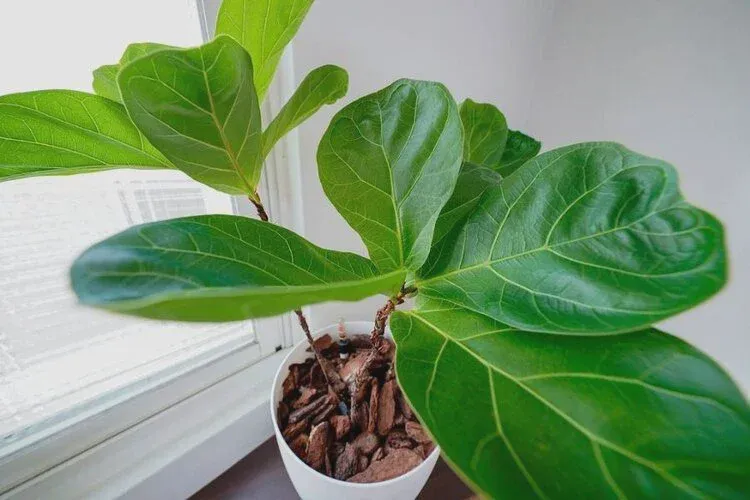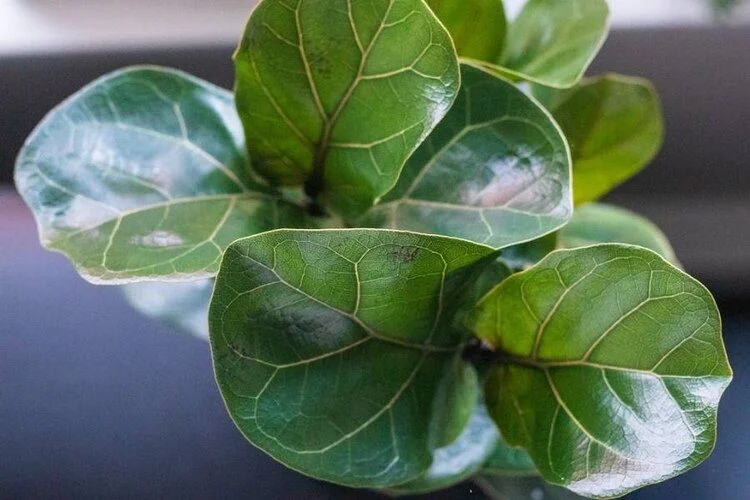
Curled fiddle-leaf fig leaves often reflect water stress or abrupt environmental changes, but a curl alone does not identify the cause. Check the soil, recent light and temperature changes, and leaf undersides before reaching for fertilizer or a pest spray.
First, examine the leaf and the pot
Some newly unfurling leaves look puckered temporarily. In an established leaf, inspect where it curls and whether it also browns, yellows or feels limp. Curling with bone-dry mix suggests insufficient water. Curling with wet soil and a drooping canopy needs a root check. Curling accompanied by fine speckles or webbing points toward spider mites or another pest.
Compare several leaves, including the undersides and newest growth. If the problem started immediately after a move outdoors or beside a hot window, light and heat exposure may be the main trigger.
If the soil is too dry
Use a finger or wooden skewer to check moisture below the surface. If the root ball is dry, water thoroughly and allow excess to drain. Very dry mix may repel water; rewet gradually until the root ball is evenly moist. Do not leave the pot soaking permanently. Repeat the moisture check before the next watering instead of adopting a rigid schedule.
Once the plant is hydrated, some leaves may relax; leaves with permanent deformation can remain curled. More water will not fix a leaf scarred by past damage.
If the soil is wet but leaves still curl
Roots can be unable to take up water when potting mix stays saturated. Confirm the pot has a drainage opening and inspect the roots if the plant continues to wilt or curl. Soft, dark, decaying roots require a different response from a thirsty, otherwise healthy plant. See how to assess and manage root rot.
When repotting is needed, choose a well-draining houseplant mix and a container only slightly larger than the remaining sound root ball. Oversized pots hold extra damp mix.
Check pests, temperature and fertilizer
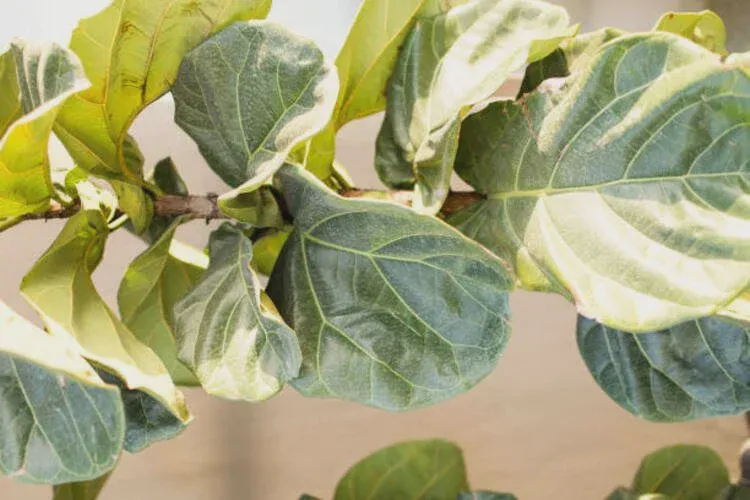
Spider mites can leave a fine, pale stippled appearance; scale and mealybugs may leave visible insects or sticky residues. Isolate a suspected infestation and identify the pest before selecting a product labeled for indoor plants. Avoid improvised soap concentrations that may burn foliage.
Keep the fig away from heaters, air-conditioning drafts and scorching afternoon sun. If leaf tips also brown, check whether the mix has accumulated fertilizer salts; more fertilizer is not a first-line fix for curled leaves.
An orderly recovery plan
- Document affected leaves and any new symptoms.
- Correct the moisture problem first, using drainage and a soil check.
- Give bright, filtered light and a stable warm location.
- Inspect pests weekly and treat only when identified.
- Judge progress by the health of leaves that develop next.
Related care guides: yellow leaves and bleached leaves and sunburn.