
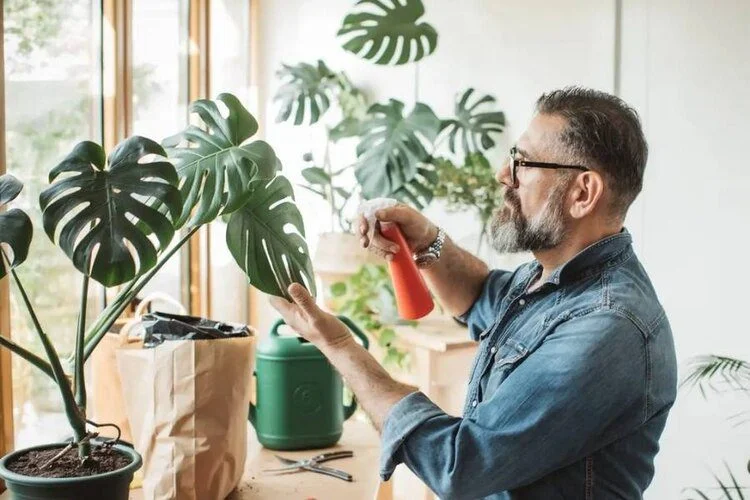
Quick answer: For steady Monstera growth, prioritize bright indirect light, a stable climbing support, well-aerated roots and a consistent wet-dry watering cycle. Fertilizer can help when nutrients are limiting, but extra feeding cannot compensate for a dark room or unhealthy roots. Growth rate varies widely with season, age, light and the plant's condition.
Start by judging the light, not the calendar
Light is one of the most common limiting factors indoors. A Monstera kept far from a window may survive while producing long internodes and smaller leaves. Move it toward brighter indirect light, allowing it to acclimate instead of placing previously shaded leaves in harsh midday sun. A suitable grow light may help where daylight is inadequate, but choose it based on actual output and distance, not marketing wattage alone.
Look for gradual improvements: tighter healthy new growth and steady leaf development. Existing stretched internodes do not shrink after lighting improves.
Give a mature climbing vine real support
Monstera deliciosa is naturally a climber. In homes it can sprawl when its growing stem has nothing secure to attach to. Add a stable stake, plank, trellis or moss pole appropriate for the vine's weight. Secure the main stem loosely with soft ties, without pinning delicate new leaves or petioles against the support.
A climbing plant may develop larger, more divided leaves as it matures when light and overall care are sufficient. A pole alone does not guarantee holes or rapid growth.
Water deeply, then check before watering again
Do not water every fixed number of days. Check the mix below the surface, the pot's weight and the plant's recent usage. When the upper portion has begun to dry and the plant needs water, thoroughly wet the mix and let surplus run out through a drainage hole. Empty the saucer or outer pot rather than allowing the roots to sit in water.
Overly large pots and compacted substrate can remain wet for too long; tiny pots can dry far too quickly. Choose an appropriate pot size and a good-quality airy houseplant substrate.
Repot when the roots need space—not by an annual rule
Inspect the root ball if water runs straight through, roots crowd the drainage holes, or the plant appears to need irrigation very frequently. Repot modestly rather than jumping to an oversized container. Fresh mix with suitable aeration often helps roots establish, but repotting creates a temporary adjustment period, not instant growth.
Do not routinely cut healthy roots to stimulate growth. Address root damage or pests first when they are actually present.
Use fertilizer as a supplement, not a shortcut
During active growth, a balanced houseplant fertilizer used according to its label can support foliage when the existing mix no longer supplies enough nutrients. Avoid stacking liquid, slow-release and home-remedy products. Pale or slow leaves can result from inadequate light, water problems or root loss, not just nutrition. Overfeeding can damage roots and leave salt deposits.
Reduce or pause feeding when light is weak and growth slows. Recently repotted plants often have nutrients in the new medium; check the product instructions before adding more.
Humidity, warmth and clean foliage
Keep the plant away from cold drafts and blast zones near heaters or air conditioners. Average indoor humidity is often tolerated, while very dry air may worsen leaf edges. A clean room humidifier can help if humidity is consistently low. Misting does not sustainably raise room humidity and can keep foliage wet.
Clean dusty leaves gently with a damp cloth when needed so the plant can use available light; this is maintenance, not a proven way to force a fixed number of extra leaves.
Troubleshoot when a Monstera stops growing
| Sign | What to investigate |
|---|---|
| Long gaps between leaves | Low light, lack of vertical support and season |
| Yellowing with continually wet mix | Excess water, poor drainage or root injury |
| Burnt leaf margins | Strong sun, salts, dry mix, cold damage or pests |
| Young healthy plant with small leaves | Juvenile stage—maturity takes time |
| New leaves distorted or silvered | Inspect for insects, particularly thrips |
Make one change at a time and observe several new growth cycles. Do not infer failure from a single week without a leaf.
Frequently asked questions
How fast should a Monstera produce leaves?
There is no universal number of leaves per month. Growth depends on species, season, maturity, light and root health. Claims of a guaranteed leaf every few weeks are not reliable.
Does cutting the vine make it grow faster?
Pruning can direct new shoots or manage shape, but removing healthy foliage also reduces the plant's photosynthetic area. Do it for a clear goal rather than as a routine growth hack.
What is the first thing to change?
After ruling out pests and root damage, evaluate whether the plant receives enough bright indirect light.