
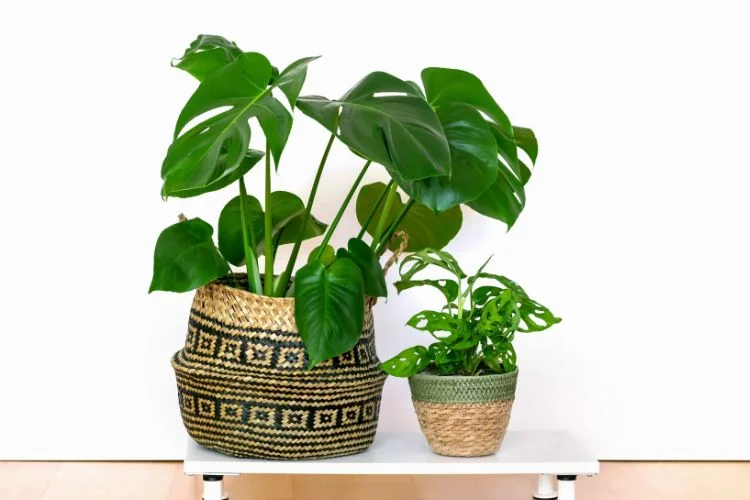
Quick answer: Monstera pinnatipartita is an accepted species of climbing tropical aroid. Young plants often have relatively simple leaves, while more mature climbing growth can develop deeply divided foliage. Give it bright indirect light, vertical support, warm conditions and an airy potting mix that drains well. Do not expect a juvenile plant to look like a mature collector specimen immediately.
Recognizing the species and its native range
Royal Botanic Gardens, Kew lists Monstera pinnatipartita as an accepted species native to Central and South Tropical America. It is distinct from Monstera deliciosa and M. adansonii. Both genus names and commercial photographs can be confusing, so compare a plant's entire growth habit rather than identifying it from one small leaf.
Retail specimens can vary because young and older leaves differ substantially. A seller photograph of a mature fenestrated vine is not a guarantee that the small plant you receive already has the same leaf form.
Juvenile leaves versus mature foliage
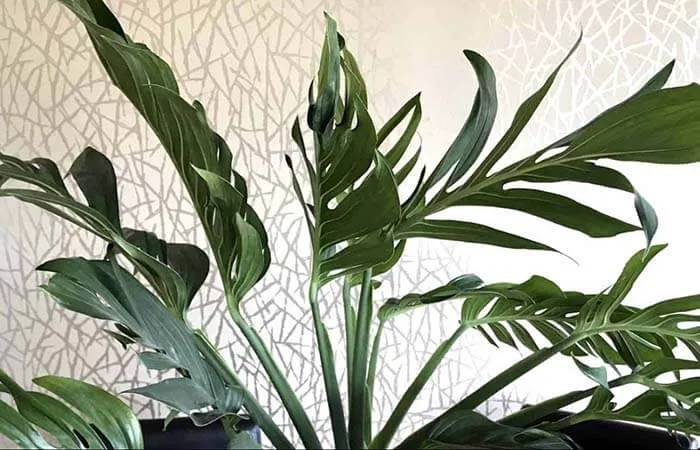
Many climbing aroids change leaf shape as they grow, a developmental pattern called heteroblasty. In M. pinnatipartita, juvenile blades may be fairly simple, while mature foliage can show strong divisions toward the midrib. Support, light and healthy ongoing growth help a climbing plant reach its mature appearance, but age and genetics remain important.
Do not cut slots in young leaves to imitate mature foliage. Such damage cannot produce true developmental fenestration and can expose leaf tissue to disease.
The best indoor light position
Set the pot in bright filtered daylight—close enough to a suitable window that the vine produces healthy leaves, but protected from sudden full midday sun. Too little light may cause slow growth and extended gaps between leaves; overexposure can cause bleached or brown patches. Change the plant's placement gradually and watch new foliage.
If natural light is limited, a properly positioned grow light can supplement it. Compare plant response with actual light output and distance rather than wattage alone.
Watering and substrate for healthy roots
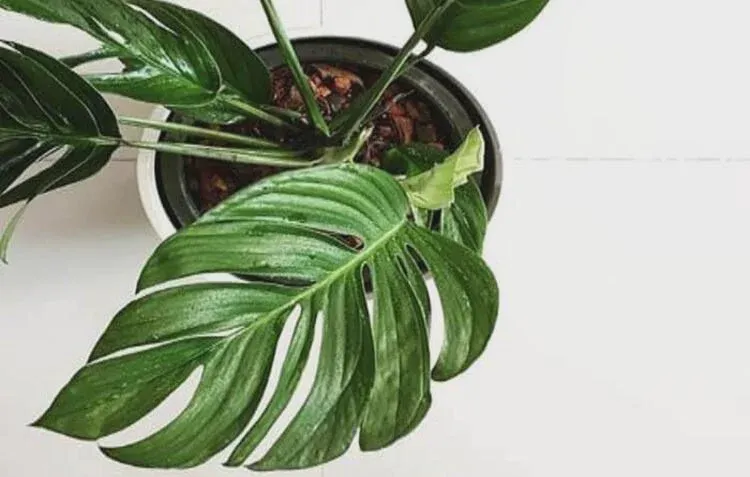
Use a container with an open drainage hole and a loose indoor potting mix with good air spaces. Bark, perlite and other appropriate soilless ingredients can assist drainage and aeration without requiring a proprietary recipe.
Check pot weight and root-zone moisture before watering. When the plant needs moisture, water thoroughly until it drains, then empty the saucer. Constantly wet substrate can harm roots; extreme drying can cause wilting and crispy foliage. The interval depends on light, season, mix and container—not an arbitrary weekly schedule.
A support that follows the climbing stem
A stable stake, plank or moss pole helps guide the main vine vertically. Attach the stem with soft ties and allow new leaves to unfold freely. Aerial roots may grow toward a support, but do not force them into gaps or cut healthy roots routinely.
If the plant outgrows its current support, expand it before the heavy stem falls or twists. Supporting its habit is generally more useful than continually chopping back healthy leaves.
Temperature, humidity and feeding
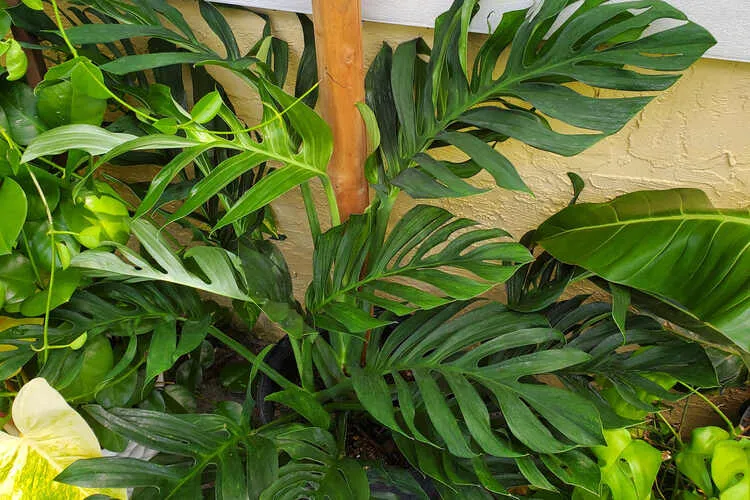
Keep this tropical climber warm and away from cold drafts and direct heating blasts. Moderate indoor humidity may be enough; dry air sometimes worsens leaf margins. If a hygrometer shows persistently low humidity, a clean humidifier can help, but misting is not a substitute for managing room conditions.
During active growth, a balanced houseplant fertilizer may be useful when nutrients are limiting. Follow label directions and reduce feeding during slow growth. Never use extra fertilizer to force splits into young leaves.
How to propagate Monstera pinnatipartita
- Choose a healthy vine section with at least one visible, viable stem node.
- Use clean tools to cut just below the node without destroying the growth point.
- Root the node in fresh water or a moist aerated medium in bright indirect light.
- Watch for usable roots, and transplant into a small draining container rather than a huge wet pot.
- Give the cutting a support as its new vine develops.
Air layering before cutting is another approach for larger climbing stems. A single leaf without a node is not an adequate cutting for a new plant.
Common problems and what to check
| Observation | Investigation |
|---|---|
| Yellow leaves with heavy wet soil | Drainage, compacted media, root health |
| Leaf margins brown or crispy | Water stress, sunlight, salts, hot drafts, humidity |
| Black or wet expanding patches | Possible leaf disease; improve airflow and seek identification |
| Distorted young growth | Inspect for thrips and other pests |
| Juvenile leaf shape persists | Age, light, support and overall plant vigor |
Frequently asked questions
Is this the same plant as Monstera deliciosa?
No. Kew treats M. pinnatipartita as its own accepted species.
When will the leaves split deeply?
There is no guaranteed timetable. Mature foliage develops as the vine grows under favorable conditions.
Should I repot every year?
No. Repot when root crowding or substrate condition warrants it, using a suitable draining container.
Is the plant safe for pets?
Keep Monstera foliage away from pets that might chew it. Members of this aroid group can contain irritating calcium oxalate crystals; seek veterinary advice after suspected ingestion.