
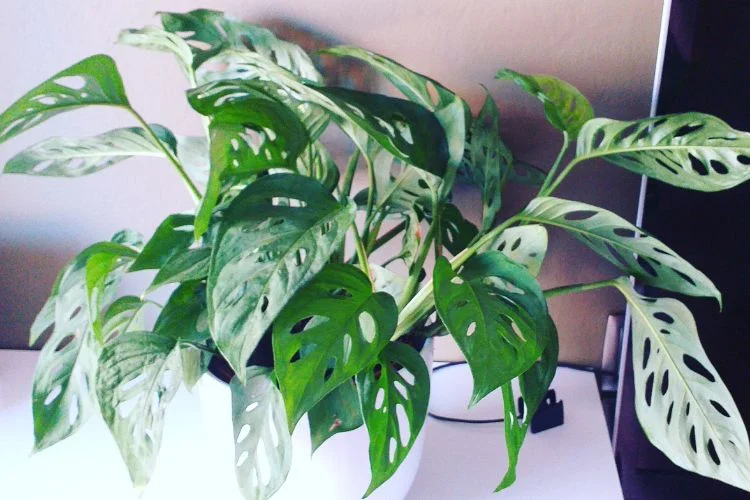
Quick answer: A plant sold as “Monstera Esqueleto” is typically valued for highly perforated leaves and a climbing habit. Esqueleto is a trade label, not proof of a particular botanical species. Listings may compare it with Monstera epipremnoides or M. adansonii; verify the plant's nursery provenance and identification if species-level accuracy matters. For routine care, provide bright indirect light, an airy draining mix, warmth and vertical support.
Esqueleto, epipremnoides and adansonii: not identical labels
Royal Botanic Gardens, Kew recognizes Monstera epipremnoides as an accepted species native to Costa Rica and Panama, and recognizes M. adansonii as a different species native to tropical America. Retail labels do not guarantee that the plant sold is either taxon. Compare mature foliage, stem details and reliable botanical provenance; leaf holes alone cannot establish identity.
The size and distribution of openings also depend on leaf maturity, growth conditions and genetics. A young climbing vine may look quite different from a mature specimen.
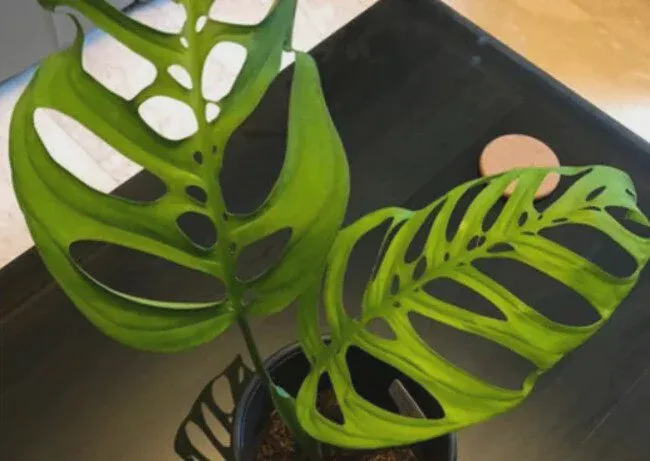
Find a place with good light
Bright filtered daylight is generally suitable for these climbing aroids. Deep shade can produce slow, stretched growth and smaller foliage. Direct intense sun, especially after a sudden move, can scorch leaves. Adjust placement gradually and observe the next leaves rather than treating existing perforations as an automatic light meter.
Use a draining substrate and a correct-size pot
Choose a container with an open drainage hole. An airy indoor mix containing materials such as bark and perlite can balance moisture with root oxygen. Mix choice matters more than a branded “rare aroid” recipe. The pot should fit the existing roots without leaving a huge volume of wet substrate around them.
When irrigation is needed, water thoroughly and empty runoff. Use the upper-root-zone moisture and pot weight as guides instead of watering every fixed number of days.
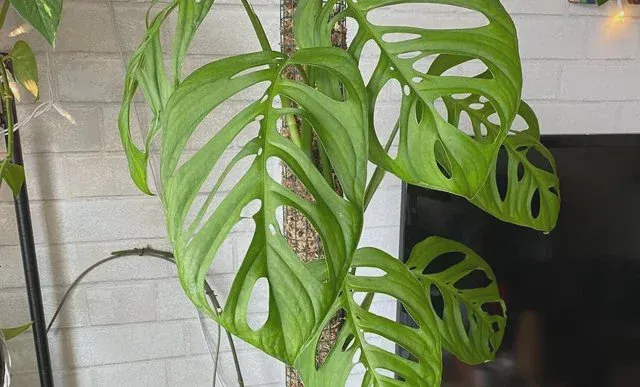
Support the vine as it matures
A sturdy stake, plank, trellis or moss pole keeps a vigorous vine from sprawling. Gently secure the main stem rather than the delicate leaf stalks. Aerial roots may attach to an appropriately maintained support, but do not push or staple roots into surfaces where they can be damaged.
Mature foliage may gain more perforations as the plant climbs in suitable light, but no pole or fertilizer can guarantee a particular leaf shape.
Humidity, temperature and feeding
A moderately humid room is often workable. If leaf tips dry in winter, measure humidity and check for heater drafts, underwatering and salts; a humidifier may help if air is persistently dry. Avoid wetting the leaves repeatedly because lingering moisture can encourage disease.
Use modest amounts of a balanced houseplant fertilizer when the plant is actively growing and appears to need nutrients, following label rates. Avoid routine heavy feeding of newly rooted cuttings or weak plants.
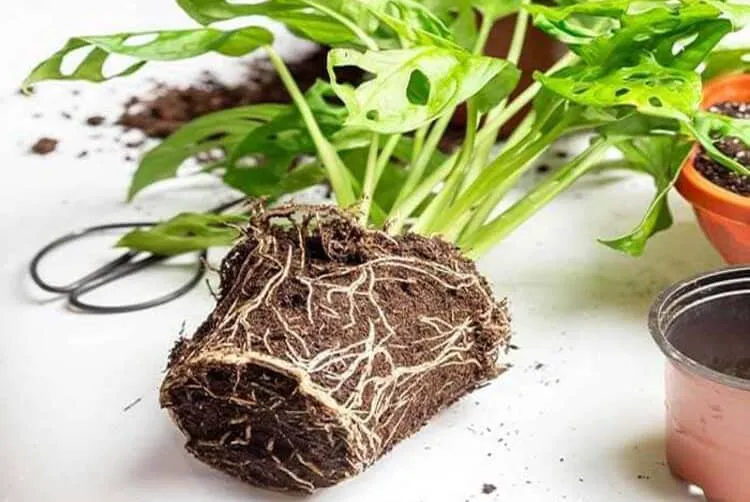
How to propagate a healthy climbing stem
- Identify a viable node where a leaf attaches to the main stem.
- Take a clean stem cutting with the node intact; a leaf-only cutting cannot make a new climbing vine.
- Root in fresh water or a moist, airy medium under bright indirect light.
- Watch for healthy roots, then transplant carefully into a well-draining container.
- Keep new cuttings isolated from pest-infested stock, and do not divide a single vine as if it were an already rooted clump.
What common symptoms mean
| Symptom | What to check |
|---|---|
| Lower leaves yellow and pot feels heavy | Waterlogging, drainage, root decay |
| Dry brown margins | Dry mix, sun, salts, hot drafts and humidity |
| Deformed or scarred new leaves | Thrips and other pests, physical damage |
| No new leaf openings | Plant maturity, correct identification, light and support |
Several causes can produce the same symptom. Avoid applying pest treatments or fertilizer without checking the evidence.
Safety and buying precautions
As with other commonly grown Monstera, keep foliage away from pets and children who might chew it. A nursery's “rare” label does not establish conservation status or justify collecting wild specimens. For an expensive plant, request photos of the actual rooted stem and its mature foliage, plus seller provenance.
Frequently asked questions
Is Esqueleto exactly the same as Monstera epipremnoides?
Not necessarily. The trade name has been associated with that species, but a label by itself is not reliable identification.
Are the large holes pest damage?
Regular, well-formed holes that develop with leaf growth are natural fenestrations. Irregular scars or expanding wet lesions need separate inspection.
Can it grow without a moss pole?
It can grow as a vine, but support helps manage its shape and provides a climbing route.